• ABOUT THE AUTHOR
  • Sustainability
  • CSR
  • CSR reporting

In Good Company: Singh on CSR

~ Connecting the dots between Business, Society & the Environment

Tag Archives: aman singh

Integrated Thinking: SAP Refocuses Sustainability Targets to Maximize Impact

11 Friday Jul 2014

Posted by Aman Singh in CSR, CSR reporting, CSRwire, ESG

≈ 1 Comment

Tags

aman singh, Brand Management, BSR, cdp, cloud computing, CSR, CSR reporting, CSRwire, data, Disclosure & Transparency, employee engagement, ESG, green cloud, impact, Innovation, integrated reporting, nigel topping, peter graf, renewable energy, sap, Social Media, social media, Stakeholder Engagement, strategy, Sustainability, sustainability, sustybiz, technology, Twitter


How do you continually increase your positive social and environmental impact while growing your economic bottom line?

It’s a question that has many sustainability professionals preoccupied as global business returns to some sense of stability amid a rising urgency to curtail its footprint and address critical issues like climate change.

For technology companies, which are targeting emerging markets for growth and increasingly touting the efficacy of the cloud as a solution, this is a particularly precarious question. Peter Graf, chief sustainability officer at SAP, believes integrated thinking can help.

We chatted live with Graf and sustainability heavyweights BSR CEO Aron Cramer and CDP Executive Director Nigel Topping on April 11, 2014, at #SustyBiz.

But before you grab the recap, here’s some context.

Green Consumption: SAP Shifts to Cloud

In its second Integrated Report, SAP offered more context regarding its decision to shift to a cloud business model. The technology giant also announced it has started to power all its data centers and facilities globally with 100 percent renewable electricity as of January 1, 2014, which it predicts will help “eliminate carbon emissions caused by its customers’ systems by moving them into SAP’s green cloud.”

SAP_integratedreport_2013

Ambitious or not, the new goals indicate a significant shift for the company as it figures out how to involve its consumers in its sustainability targets without compromising on its growth ambitions. And according to Graf, switching to Integrated Reporting was important to help move the company closer to thinking in a more integrated manner about its business model, its impact and its long-term future.

As he stated in an interview last year, they didn’t have to change tracks. But it was time.

“We have been reporting on our sustainability performance since 2008. The report has grown in sophistication over the years and we even won several awards in the last two years for our report’s interactive nature, etc. So technically, we could have continued on that road.”

Creating Value

So how has Integrated Reporting helped SAP integrate its sustainability goals with its business strategy?

“One, it has brought business strategy closer to how we create value – our green cloud is a perfect example of that. Second, we have aligned the structure of our report with the IIRC framework, including new navigation that allows people to filter content according to different types of capital (ESG). We’re also continuing to support the G4 framework and have become better at explaining the short-, mid- and long-term impact of integrated reporting than last year,” said Graf.

And how does SAP’s performance stack up for 2013?

For one, as its business has grown so have its emissions and environmental footprint. “As a cloud company, we acquired Ariba and Success Factors but kept our budget stable to buy renewables, which is why renewables reduced [from] 51% in 2012 to 43 % 2013. It is clear that we want to put sustainability into the core of how we create value. So moving to 100% renewable electricity is a natural consequence of the shift of our business model into the cloud.”

Retention is marginally down as is employee engagement.

“While employee engagement was slightly down by 2%, our overall score of 77% continues to represent an industry leading performance. We believe the small reduction is due to our shift in strategy to the cloud. The good news is that we have already taken steps to drive employee engagement up toward our goal of 82% by 2015.”

Debating the Efficacy of Cloud

Which brought us back to the question of cloud computing. With mixed feedback from the media, how does the company explain the rationale? “The cloud has a variety of advantages. First of all, you achieve better economies of scale. The entire data center is shared between all customers using our servers, network, storage, etc. We have also been implementing a wide variety of energy efficiency measures, such as cold isle containment, more efficient hardware, and detailed energy consumption transparency,” he said.

And because SAP now has a green cloud, the carbon emissions of its customers get eliminated.

But it’s also key to put all of this against the lens of consumption. As Graf noted, while energy consumption of IT is growing at 3.8%, data centers usage is growing 7.1%. “Data centers are doubling in growth vs. IT as a whole when it comes to energy consumption. That’s why a green cloud is critical.”

How? By leveraging multiple routes to get to its goal of 100% renewable energy. “First of all, we are producing some of the renewable electricity ourselves in solar plants in the U.S. and Germany. Second, we are procuring renewable energy and renewable electricity certificates from a small, select group of providers.” SAP is working with CDP and the WWF to determine criteria that the production of renewables the company acquires will have to meet. “Finally, we are producing carbon offsets ourselves by investing into the Lifelihoods Fund, an investment fund that literally plants hundreds of millions of trees and returns carbon offsets rather than financial returns,” he added.

A Triple Bottom Line Conversation

From carbon credits to direct investment in renewables, SAP is implementing a comprehensive strategy aimed at taking advantage of all available avenues to reduce its negative impact. But Graf’s emphasis on influencing end-user impact also brings us full circle back to where we started: How can technology companies most demonstrably and positively influence consumption and development?

For Graf, it’s about going back to basics – and embedding sustainability into the core of your  tweet-jam-sap-sustybizbusiness strategy.
“Sustainability and growth are not contradicting. The problem is that most companies run a “sustainability strategy” in parallel to their corporate growth strategy. In such a setup, sustainability goals are often perceived to be in contradiction to growth aspirations. The trick is to evolve from having a sustainability strategy to a corporate strategy that is sustainable. It’s about taking a broader point of view, understanding the impact of decisions not only on financials, but also on the environmental or social capital of the company,” he said, adding, “Any conversation of growth needs to be a triple bottom line conversation. ”

So is the way forward for companies to decouple sustainability from growth? How can companies continue to grow and expand their business profiles—profitability—while reducing their negative impact? It was a compelling conversation – grab the details at #SustyBiz!

Originally written for and published on CSRwire’s Commentary section Talkback on April 10, 2014.

Share this:

  • Tweet
  • Email a link to a friend (Opens in new window) Email
  • Share on Reddit (Opens in new window) Reddit
  • Print (Opens in new window) Print
Like Loading...

#SodexoCR: A Conversation on Integrated Reporting, Responsible Supply Chain Management, Values, Ethics & More…

09 Wednesday Jul 2014

Posted by Aman Singh in CSR, CSR reporting, ESG

≈ Leave a comment

Tags

aman singh, Brand Management, community development, CSR, CSR reporting, Disclosure & Transparency, diversity, employee engagement, Environment, ESG, ethics, integrated reporting, marketing, Social Media, social media, sodexo, stakeholder engagement, supply chain, Sustainability, sustainability, Sustainability Report, Twitter


https://storify.com/AmanSinghCSR/sodexocr-a-conversation-on-integrated-reporting


Share this:

  • Tweet
  • Email a link to a friend (Opens in new window) Email
  • Share on Reddit (Opens in new window) Reddit
  • Print (Opens in new window) Print
Like Loading...

Changing Gears at JPMorgan Chase as a CSR Strategy Evolves

09 Wednesday Jul 2014

Posted by Aman Singh in CSR, CSR reporting, CSRwire

≈ Leave a comment

Tags

000 jobs mission, 100, aman singh, Brand Management, Business, clean energy investment, community development, Corporate Governance, CSR, CSR report, CSR reporting, CSR strategy, CSRwire, Disclosure & Transparency, ESG, impact investing, jamie dimon, jobs, jpmorgan chase, Leadership, mark tercek, peter scher, small business investment, social finance, Social Responsibility, Stakeholder Engagement, Sustainability, Sustainability Report, the nature conservancy, transparency, Wall Street, Work culture


In the wake of the financial crisis, your industry continues to face high scrutiny and low trust. How is society better off because of what JPMorgan Chase does?

That’s how The Nature Conservancy CEO Mark Tercek starts off his interview with JPMorgan Chase CEO Jamie Dimon – featured prominently at the beginning of the financial behemoth’s latest Corporate Responsibility Report. While the interview is meant to address the heightened focus on transparency improvements in risk management and operational sustainability, the key idea is to highlight one main issue: trust.

In fact Tercek’s first question is telling of the intent and content of the interview that follows.

To drill deeper and learn more about JPMorgan Chase’s sustainability activities in 2012 as well as how the institution prioritizes intangibles like customer trust, ethics and responsible leadership into its business strategy and operations, I turned to Peter Scher, EVP and Global Head of Corporate Responsibility.

Leveraging all of its Assets to Invest in Communities: A Bank’s Citizenship Journey

“The most important thing we want to convey through the Report is that we’re using more than just our money and resources to make a positive impact. [Our]scale and global reach puts us in a unique  Peter_Scher_JPMChaseposition to not just spend money, but use the core expertise of our company and employees to make a difference for our clients and communities,” he started, adding, “We want to focus on using all of our resources to support our communities.”

In 2012, JPMorgan Chase raised and provided $2 trillion in capital and credit for its clients worldwide. It also donated more than $190 million to nonprofits in 37 countries while its employees volunteered 468,000 hours in local communities.

“We’ve helped over 77,000 U.S. veterans find jobs working with other companies through the 100,000 Jobs Mission. We see investments in our community as long-term investments, just like we would look at investments into our business,” Scher explained alluding to CEO Dimon’s quote in the report:

If we can help our clients grow around the world, they will in turn generate the jobs, small business growth and other economic activity that builds strong, vibrant communities and generates more sustainable economic growth and prosperity for all.

But how does that contextualize into day-to-day operations at the bank?

A couple of ways. Our clients and our business are key components of our communities, not just pieces of a balance sheet. For example, some of our clients are municipal governments, hospitals, and healthcare institutions. We help them provide vital services to people,” he said.

“In 2012, we provided $85 billion to nearly 1,500 nonprofit and government entities in the U.S. and around the world. Despite the crisis in Europe, we didn’t pull out of our investment commitments. We continued to provide billions of dollars in credit and financing to European clients – corporate and sovereign. That was a testament to our values as a company and underlined how we approach business. We are part of these communities for the long run.

At the height of the financial crisis in the U.S. three years ago when lending was lean, JPMorgan Chase announced increased lending to small businesses to boost the economy. It made good on that commitment and today is one of the largest lenders to small businesses in the country. “We also hired 1,000 small business bankers to help us find small businesses to invest in. This commitment has small business lendingincreased every year since then – from $7 billion in 2009 to $11 billion in 2010 and $17 billion in 2012,” explained Scher.

Despite the increased lending and a resolute desire to beat a deepening crisis by focusing on core competencies and a community-based approach, 2012 was a tough year for the financial leader.

We had significant trading losses which cost us money and embarrassment – more the latter since we made record profits in 2012. It also showed that we weren’t immune to making the mistakes other companies made. What we were proud of was that we didn’t try to hide any of it or explain it away,” he said.

For example, the bank – after Dimon’s very public apology – made its Control agenda a top priority leading to a re-prioritization of its major projects and initiatives, deploying massive new resources, and dedicating critical managerial time and focus to the effort. Specifically, the bank:

  • Established a new firm-wide Oversight and Control Group separately staffed and reporting directly to the Chief Operating Officer with the authority to make decisions top down, in command and control fashion.
  • Appointed a business control officer in every line of business to report jointly to the line of business CEO and the firm-wide Oversight and Control Group.
  • Staffed every major enterprise-wide control initiative with program managers and oversight group managers, including COOs.
  • Made it mandatory for the Operating committee to meet regularly with regulators to share information and hear any criticisms.

I have worked in a lot of different public and private institutions during the course of my own career and have not found one that doesn’t make mistakes. The real test is how we address them. And at JPMorgan Chase, starting with the senior leadership, there was never any effort to hide or explain away our mistakes. In fact, there was a commitment that we were going to use them as an opportunity to become a stronger company,” Scher added.

Building a Culture of Responsibility

Corporate responsibility can be challenging at any company. Particularly for one that belongs to a sector that remains as tarnished for its dealings of the past decade today as it were in 2008. What is JPMorgan Chase doing to shift the mindset and modus operandi of its industry?

Well, we’re starting at home, with our 260,000 employees in more than 60 countries – and we’re letting our employees know how the firm contributes to their communities,” he said.

Are JPMorgan Chase employees driving the demand for non-financial disclosure?

Yes, there’s demand from many of our stakeholders, including our employees, to know how we match up in our actions versus our commitments. We’re also starting to see demand from our clients. The financial crisis really focused people’s attention on what companies are doing and could do to help contribute in a positive way to the community,” Scher emphasized.

“The fact is, if our communities are growing, that’s good for us as a business. More growth means more banking services – and we want to be a part of their future. Besides, clients want to know that companies they work with are responsible and thinking of their impact on society.

Global Footprint, A Comprehensive CSR Strategy

With a substantial community investment commitment as well as programs to rehire military veterans, bolster investment ties among cities in the US and worldwide through its Global Cities Initiative, and impact investing goals – principal investments focused on emerging markets added up to $50 million in 2012, clean energy investments –over $6 billion in clean energy investments in 2012 deployed, the bank is leveraging its global footprint effectively to grow the global economy.

JPMorgan Chase CSR ReportIt’s also trying to help address some of the world’s most pressing challenges.

For example, urbanization.

Half the world’s population already lives in or around cities. That’s going to increase to 70 percent in the next few years. That translates into a lot of challenges for what our infrastructure can support: energy, healthcare, water, job creation, etc. And for us as one of the largest lenders for these projects, that has significant ramifications.”

“So we’re trying to use our resources and expertise to help address these challenges. We’re working on understanding how policymakers are dealing with these across the world and trying to bring in some creative thinking to help them shift as the economies transform. We’re also thinking of how we can finance energy exploration and development in a more sustainable way.”

“In the U.S., for example, a lot of these investments have focused on natural gas. We’re identifying best practices and creating a risk assessment framework to help us influence our clients’ policies and procedures and help them conduct their energy operations in a sustainable manner,” he explained.

And how is the bank’s Social Finance arm faring? It launched in 2007 to serve the new and growing market for impact investments – new business models that deliver market-based solutions for social impact.

According to Scher, JPMorgan grew its Social Finance principal investments to nearly $50 million in commitments for funds focused on helping improve the livelihoods and quality of life of people living in poverty around the world, with a particular focus in emerging markets. “In addition to making principal investments, we’re also working to help shape and grow the field of impact investing, by providing client advisory services and data-driven thought leadership,” he added.

At the end of the day, with a Report that runs into 90 pages replete with data, interviews and the makings of a comprehensive CSR strategy, JPMorgan Chase seems to be pulling all the strings it has available to make a positive impact on its constituents – with some appreciable humility thrown in for good measure.

Originally written for and published on CSRwire’s Commentary section Talkback on August  1, 2013.

Share this:

  • Tweet
  • Email a link to a friend (Opens in new window) Email
  • Share on Reddit (Opens in new window) Reddit
  • Print (Opens in new window) Print
Like Loading...

Stakeholder vs. Shareholder Value: Connecting the Sustainability Dots With Philips, Drexel University & Profits4Purpose

09 Wednesday Jul 2014

Posted by Aman Singh in CSR, CSRwire

≈ Leave a comment

Tags

aman singh, cause marketing, corporate citizenship, corporate social responsibility, CSR, CSR communications, CSRwire, employee engagement, ESG, HR, Leadership, philanthropy, phillips, profits4purpose, shareholder value, social media, Stakeholder Engagement, Sustainability, sustainability, transparency, Work culture, workplace giving


Is there a connection between employee engagement and shareholder value?

Several similar questions came up in a recent webinar I facilitated, held in partnership with Profits 4 Purpose with guests Philips and Drexel University. While the question doesn’t have a linear answer – as is often the case with sustainability – it did take us through quite a conversation on connecting engagement with value, how CSR strategies affect business performance, the whole conundrum of measurement as well as what the latest research suggests.

Daniel Korschun, Assistant Professor and Fellow at the Center for Corporate Reputation Management at Drexel University, led the conversation by sharing some of his research with our audience.

“We’re moving into a new phase …since the 1950s we have had a debate about whether more CSR is better than less. While I don’t think this debate has been completely settled, there is general agreement among most practitioners that the core issue today is how we do it, not the quantity. That means we need to concentrate on effectiveness, which is where I have focused my research,” he started.

Employee Engagement: All About Signals

Employees are paying attention to CSR, he said.

And they notice when managers or customers support the company’s CSR initiatives.  When they notice this support, they are more likely to develop CSR and business performance“feelings of membership with a company.” In its most powerful form, we may begin to hear things like “I am an IBMer or a UPSer.” This feeling of membership then translates into a whole host of measurable outcomes like job performance, intent to stay in the job, or intent to volunteer.

For example, Korschun said he finds that people who feel this sense of membership are 87 percent more likely than others to be among the top performers of their company. And these effects hold even after controlling for pay satisfaction, personality traits, tenure, and work experience. The big lesson then?

  • Make CSR an open secret! “The more people who are discussing your behavior, the better.”
  • Have upper management act as champions: “If people don’t feel that management is aligned with your CSR strategy, impact will be muted. Executives don’t need to dictate CSR from the ivory tower but employees must know definitively that their leaders are on the same page, and are committed to social responsibility.”
  • Encourage contagion across stakeholders: “Engage customers in the same CSR programs as employees? Programs that get customers and employees to join forces (especially on volunteering sites) can create a bond…and that sort of contagion can lead to both happy employees and happy customers.”

Philip Cares: Formalizing Responsibility

Melanie Michaud, Senior Manager for Internal Communications with Philips North America took the baton from Daniel to evidence his data and research with how the practice and implementation of employee engagement maps out across a corporation. Emphasizing that Philips USA did not have a process in place till 2010 to vet requests and manage engagement across the company. “It was sporadic and led by employees who cared about various causes,” she said.

After several acquisitions, the company realized they needed a more formal process to align all its community development work with its business and employee base. That led to Philips Cares, through which, the company focuses on environment, education and health.

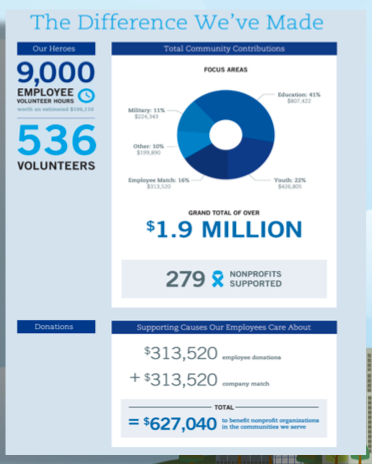
With tremendous uptick in the number of volunteers [over 8,000 volunteers] and donations in the 15 months since the program launched, Michaud highlighted the following keys to the success of Philips Philips caresCares – crucial for those managing relatively new programs or on the verge of launching one:
  • Do your research
  • Have a clear vision
  • Engage leadership
  • Have a volunteer tracking mechanism
  • Align with nonprofit partners
  • Emphasize local champions
  • Have consistent program branding
  • Engage in storytelling
  • Give employees a voice
  • Walk the talk

Setting a Global Strategy With Local Impact

So how does Philips ensure its CSR strategy is global in scope while local enough to support its communities?

That’s something we’re continually challenged with. We’re always tying everything back to our vision and mission of improving lives through innovation. We’re also doing some research now about rolling out a program like Philip Cares globally. In some areas there is greater interest than others and we’re currently working out how that will all work out,” Michaud responded.

One of the questions that came up during the webinar was around the survey Philips uses to seek feedback and make changes to its program. Emphasizing that the survey was a work in progress, Michaud said questions revolved around identifying causes, target audiences, types of volunteering activities as well as a bunch of open-ended questions for more elaborate feedback.

Practice vs. Software: Connecting Volunteerism With Impact

For Jason Burns, CEO of Profits 4 Purpose, the task was to connect Korschun’s research and Michaud’s practical perspective to how companies can best measure and track CSR and employee engagement activities. “We’re focused on helping companies make employee engagement simple, innovative and relational,” he started.

What are the key components to capture their attention? Burns summarized his comments in three neat categories:

  • Inspiring vision with easy execution: “We see a lot of companies starting with the end goal in mind, asking employees to focus on tracking…that’s less than inspiring. As human beings, we desire to be part of something bigger than ourselves so its important we start with a vision.”
  • Measuring impact: “Excel kills impact…how can we launch a strategy and review it for impact in real time and in alignment with employee engagement, mission and partners? Can we solve a specific problem that fits within the mission of a business? Can we cast a ‘what if’ scenario for employees to be motivated, to make a difference and get involved in a real easy and seamless way?”
  • Sharing a compelling story: “You’ve executed the strategy, and achieved great impact but why is it important? The most powerful piece for an employee when they volunteer is being part of that impact firsthand. The next powerful piece for those who might not be on the ground is communication, the story. It goes beyond the numbers.”

While the P4P platform helps companies do all of the above in one centralized place, what stood out was the fact that it also leverages the data into meaningful stories, disclosure commitments and  p4p_webinar_5filings. As Burns explained, “We saw companies that had the vision but were having difficulty making the management seamless with vendors, contractors and excel sheets. Things were duct taped and often a nightmare and we wanted to open that up to make the process productive and inspiring for all involved.”

Connecting The Dots Between Engagement & Shareholder Value…

But Jason’s iteration of execution versus measurement and reporting brought us back to a core question we began the panel with: how are companies like Phillips connecting the dots between volunteerism, engagement, retention and business growth?

“In terms of definitive links all the way to shareholder value, we have research connecting the steps of a CSR program all the way through. There is, however, no one study out there that links the end point with any one of the steps along the way. My research connects job performance with CSR and others have linked that to shareholder value. So while the connections are there, there is no one study that we can point to,” offered Korschun.

For Philips, it’s still to be determined, said Michaud.

“It is still a bit fragmented but we have moved from a theory to a practical emphasis on measurement and tracking. And the research being conducted is definitely encouraging, albeit complex,” added Burns, highlighting a trend we’ve been seeing on CSRwire as well where researchers are now, finally, being able to grab data on voluntary disclosures and link the connections between measurement, the various threads of sustainability and the question of value.

…Regardless of the Economic Climate…

What does the research then say about the impact of CSR programs on shareholder perspective and behavior irrespective of the economic climate? [Audience question]

While Korschun said he wasn’t aware of any studies that have looked at the influence of economic climate on how CSR drives value, “we generally find that for customers, the effects are clearest when CSR and employee engagementmost other product features are at parity. This suggests that CSR might become a little less important for consumers during a recession, when price becomes more critical.”

He added: “However, for employees, the company is a big part of their identity. So as long as a person feels fairly secure in their job, CSR should still have a similar effect. Putting this together, I would conjecture that ROI might drop a bit overall during a recession, but the drop would be uneven across stakeholders.”

…And Company Performance

“The weight of the evidence in academic studies suggests that there is a small positive effect of overall CSR on overall company performance. In my view, each company will have programs that are more and less effective. Since employees can express their commitment to the company in many ways, it is very difficult to put an ROI figure on any single program. The best way to measure it is usually to choose a couple of outcomes that are critical to shareholder value and then examine the link between CSR program(s) and these outcomes,” Korschun offered.

Final word on the erstwhile ROI of social contributions and impact?

For Michaud, this is a toss-up.

“We have some of the basics in place about measurement but I think qualitative measures are as significant. They’re really the next level of ROI. Of course, media stories help as well but we’re this is a discussion that is really ongoing for us.”

“A lot of companies are surveying employees and getting positive results. Now we need to work on finding the stories of impact,” added Burns while Korschun recommended systemic thinking:

I ‘d like to recommend [to companies] that they start with the goals. If one of your business challenges is employee retention, start with that and work backwards. Ask yourselves what is the right program that can have social/environmental impact and create business value at the same time?

Download the slides.

Originally written for and published on CSRwire’s Commentary sectionTalkback on June 25, 2013.

Share this:

  • Tweet
  • Email a link to a friend (Opens in new window) Email
  • Share on Reddit (Opens in new window) Reddit
  • Print (Opens in new window) Print
Like Loading...

Decoding Nestlé Waters North America’s Sustainability Journey: Environmental Villain or Facts vs. Emotions?

09 Wednesday Jul 2014

Posted by Aman Singh in CSR, CSR reporting, CSRwire, ESG

≈ Leave a comment

Tags

aman singh, Brand Management, Business, corporate social responsibility, CSR, CSR reporting, CSRwire, Disclosure & Transparency, environment, Environment, ESG, extended producer responsibility, heidi paul, kim jeffery, nestle waters, nestle waters north america, Net Impact, packaging, Philanthropy, recycling, shared value, Stakeholder Engagement, Supply chain management, Sustainability, sustainability, transparency, water conservation, watershed management


When a company labels its Annual CSR Report as Creating Shared Value, you have to stop and wonder if they’re responding to the latest buzzword in the market or leveraging its potential by truly embedding it into their reporting and cultural framework.

In its third cycle, Nestlé Waters North America’s [NWNA] latest Creating Shared Value Report attempts to accomplish the latter. Among its headlines:

  • What the company is doing to advance recycling in the U.S.
  • The company’s path to achieving a zero-waste future
  • Its continued efforts to be the most efficient user of water within the beverage industry

To gain some firsthand perspective and background on these goals and the accompanying challenges for North America’s largest seller of bottled water, I reached out to EVP for Corporate Affairs Heidi Paul [Join us for a Twitter Chat today, June 18th, at 1:00pm ET to connect with Paul directly at #SharedValue!].

NWNA_2012_CSR_Report_coverAmong my questions: how does the company balance criticism for selling bottled water while promoting healthy choices, what it is doing to shift its supply chain and use of plastic, its  well-acknowledged work in the area of Extended Producer Responsibility, and how her team plans on including consumers in its drive for sustainability.

Defining “Shared Value”

Paul started the conversation by setting the record straight on the company’s definition of what’s quickly gained momentum as a replacement for CSR: Creating Shared Value.

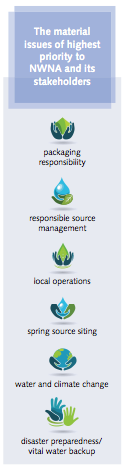
“We define CSV as a strategic way to achieve triple bottom line sustainability. In other words, be financially, environmentally and socially sustainable.  At the end of the day, Nestlé seeks to create shared value in those areas where we can make the most impact and that are material to our business. Globally, that is in the areas of Nutrition, Water and Rural Development. For our bottled water business in North America, our focus is on healthy hydration, packaging responsibility and watershed management.”

Has the terminology helped NWNA’s citizenship team – 28 people strong across the company – integrate its sustainability goals more effectively within its business units?

“It has done wonders. When you’re looking at philanthropy unconnected to business, it is not really sustainable. CSV focuses our engagement on the three critical topics and asks the whole company to see what can be improved for society and ourselves. We get the benefit of input from our supply chain, employee groups, community partners, etc.,” she said.

Coding the Impact of Bottled Water

Let’s get to NWNA’s main product then: bottled water. Does it feel the twinge of irony every time that is said in the same sentence as “shared value”? Paul chose to answer that with some data:

“Seventy percent of what Americans drink – according to the Beverage Marketing Corporation – today comes from a package, not from a cup or the tap. In fact, our research indicates that if people don’t have access to bottled water, 63 percent say they will buy some other beverage from a package instead, often a sugared or caloric drink with a greater environmental impact.”

“We play a key role in increasing Americans’ consumption of water, which is the healthiest beverage choice. As the data indicates, there is a crucial role that bottled water plays in consumer choice. Everywhere there is a high-calorie sugary, packaged drink available; we want to make sure there is water as well,” she emphasized.

Does the company’s sales data support Paul’s emphasis? “The volume sales increase for 2012 for the bottled water industry was 6.2 percent. And per capita consumption reached nearly 31 gallons, up more than 5 percent from 2011. Further, 51 percent of people who stop drinking sugared soft drinks are switching to bottled water. In fact, bottled water is outselling sugared soft drinks in grocery stores in eight major markets across the country,” she supplied.

At the end of the day, Paul believes, the company’s job is to talk about why bottled water is a choice – nestle waters north america brandsan amply available one – and why it should be available anywhere packaged beverages are being sold.
Is Nestlé Waters North America’s Business Model Sustainable?

That brought us to the next obvious thread: the plastic being used to produce the bottles. Recalling a keynote given by former NWNA CEO Kim Jeffery at a Net Impact conference years ago, I asked Paul how the company handles its fiercest critics regarding its use of plastic.

In a jungle of facts, fiction and emotions around environmental issues, Jeffery confronted the audience back in 2009 with a firm and resolute stand: we sell bottled water and we are doing everything we can to make that process sustainable.

Where there was a finality of “take it or leave it” to Jeffery’s remarks four years ago, Paul took a more nuanced approach to respond.

“Limited resources need to be used again and again. We have taken the mantle of becoming part of that solution. The larger point is there are billions of servings of beverages being sold everyday in some sort of package. Some populations are getting most of their calories from bottled drinks. And every time they choose water over a different drink, they’re making a more healthy and environmentally friendly choice,” she said.

And is a goal of reaching 60 percent recycling ambitious enough considering the climate and environmental challenges we face?

“At the time we were setting the goals, the nation was at a 28 percent recycling rate for PET plastic and thought that a goal to double that rate was ambitious and would require big changes. We had a lot to learn. We began to study recycling programs and the patchwork of policies and systems that were in place but were not moving overall recycling rates very much. There are big opportunities for increasing recycling by improving collection in public places, business and industry and in urban residential buildings. Today, however, there is no money going to fund this expansion of infrastructure.”

“There is also the issue of competing systems. Bottle bills for example do raise the recycling rates for bottles and cans, but actually reduce the efficiency of curbside because it is taking the most valuable commodities, which reduce the revenue, potential from curbside. Our goal was to work with others and find the most efficient system with the highest impact,” she emphasized. “

Environmental Villain or a Case of Facts vs. Emotions?

Of course the plastic of the bottled water we consume is bad for the environment. But so is almost every other product and consumer packaging we use in our day-to-day lives as study after study has shown.

Turning the argument on its head though, would we be wasting as much or filling up landfills as quickly as we are if we didn’t have the choice of bottled water to begin with? Where does consumer choice end and producer responsibility kick in?

Identifying that as another area for impact, Paul picked up:

“If bottled water isn’t available, people routinely purchase another packaged drink, one with calories and with a heavier environmental footprint. The availability of bottled water in times of natural disasters, where often tap water can be compromised, also creates a role for bottled water that goes beyond most product categories. Bottled water provides a reliable second source of water in these situations – that’s something everyone in our company is proud of.”

So when your business model is set around selling a product that is healthy and encourages nutrition while understanding and targeting its impacts through a well laid out sustainability strategy NWNA_priorities– as  Jeffery succinctly put it in his exit interview with Greenbiz Publisher Joel Makower earlier this year – is it fair to be labeled an environmental villain?

Perhaps, perhaps not.

The Challenges of Sustainability

As Paul reiterated, the journey of tackling facts vs. reality has been full of challenges and continues to be an uphill task. “Like anything else, our work in the area of recycling, water conservation and reducing our social and environmental footprint has been a constant education,” she said, citing the lack of modern and efficient recycling system as one of the company’s top challenges.

“Not too many people understand the current system in place. There are numerous questions like who is funding what, how does it work, who are the middle men, how do we get to the next stage, where can we build in efficiencies, etc. And if the goal is to accept our responsibility as a producer to recycle efficiently toward a goal of zero waste, then we need answers to these questions.”

“We’ve always said we’re open to options, and so far the option that we have seen with the highest potential to be low-cost and efficient is a well-constructed EPR system, run by industry. What makes this complicated is there are a dozen different ways EPR has been implemented globally. Many of those are not efficient. This uncertainty about the ability to do it “right” makes others in the dialogue want to take more of a “wait and see” approach. Even if you convince people who, done well, EPR in the form being proposed is the best solution, there are doubts about implementation across the board,” she said.

Other challenges?

Consumer vs. Producer Responsibility

Paul cited the potential of collaboration in building more sources for wind and solar energy, as well [“we’re not there yet but this is definitely on our radar”].

There is also a need for collaboration in the area of water stewardship. “Improving watersheds will require collaborations among the various stakeholders within a watershed, be that users, scientists, environmental groups or government. Nestlé Waters North America manages the watershed areas around the 40 springs we use that are overseen by our 10 Natural Resource Managers. We have also made a commitment to collaborate on two watershed projects per year,” Paul said.

And what about NWNA’s consumers? How does the company leverage its brand to shift consumer behavior?

“In the 1970s, recycling meant ‘putting it in the bin.’ Today, this is old news. What motivates people now is when they understand its benefits. If a consumer recycles a water bottle after use, the greenhouse gas impact of that bottle is estimated to be reduced by more than 15 percent.”

“Also, we need to close the loop on what happens to the bottles after they are recycled. They are not trash; they are a resource that can be used again and again. Right now our 50 percent r-pet bottles in our Arrowhead, Deer Park and Resource brands shows consumers what happens when they recycle. It becomes a new bottle. The visibility of this message on our bottles helps us tell the story that we need much better recycling to become a more sustainable world.”

The company’s top challenge moving forward?

“At the end of the day, you want zero impact, but is that possible? Our challenge is to keep finding those ways to improve when it feels like you’ve reduced the impact to the minimum,” she said, finishing with a flourish: “You need to find the next frontier every time – that’s the goal. And the challenge.”

Originally written for and published on CSRwire’s Commentary section Talkback on June 18, 2013.

Share this:

  • Tweet
  • Email a link to a friend (Opens in new window) Email
  • Share on Reddit (Opens in new window) Reddit
  • Print (Opens in new window) Print
Like Loading...

#SustLiving: In Conversation with Unilever’s Chief Sustainability Officer

09 Wednesday Jul 2014

Posted by Aman Singh in CSR reporting, CSRwire, ESG

≈ Leave a comment

Tags

#sustliving, aman singh, Brand Management, Chief sustainability officer, consumption, CSR reporting, CSRwire, Disclosure & Transparency, Environment, ESG, gail klintworth, Leadership, Stakeholder Engagement, stakeholder engagement, supply chain, Supply chain management, Sustainability, triplepundit, Twitter, unilever


A conversation with Unilever’s Chief Sustainability Officer Gail Klintworth on the Sustainable Living Plan’s progress, challenges, what’s necessary to shift global & local consumer mindsets and more: Moderated in partnership with Triple Pundit’s editorial duo Jennifer Boynton and Nick Aster.

[View the story “Unilever’s #SustLiving Trends Worldwide: Goals, Challenges & the Way Forward” on Storify]

Share this:

  • Tweet
  • Email a link to a friend (Opens in new window) Email
  • Share on Reddit (Opens in new window) Reddit
  • Print (Opens in new window) Print
Like Loading...

Conflict Minerals & Supply Chain Responsibility: Spotlight on the EICC

03 Thursday Jul 2014

Posted by Aman Singh in CSRwire

≈ Leave a comment

Tags

aman singh, conflict minerals, corporate social responsibility, CSR, CSRwire, dodd frank, eicc, Environment, Events, Global e-Sustainability Initiative, ibm, supply chain audit, supply chain management, Supply chain management, Sustainability, sustainability


The Electronics Industry Citizenship Coalition (EICC) was formed in 2004 and incorporated in 2007 as a nonprofit industry trade group focused on the electronics sector. The aim: To help drive the industry collaboratively toward higher levels of socially responsible business practices.

It does so with a code of conduct and intensive means for implementation of the Code.  With over 65 members, the Coalition’s mission is simply stated: to “improve efficiency and social, ethical, and environmental responsibility in the global supply chain.”

Conflict Minerals & Supply Chain Responsibility

Recent U.S. laws and continued pressure from activists has pushed companies to focus on not only how they source their materials but also what they are doing to educate, empower and sustain their suppliers. For the electronics industry, this has become a major piece of work with conflict minerals and extractives playing a significant role.

In a webinar I conducted with Best Buy last year on the release of their latest sustainability report, for example, several questions from the live audience targeted the electronics retailers’ complex supply chain. With ethics dilemmas aplenty and multifold regulations across regions, how is the industry coping with the pressure to improve its sourcing practices while continually pushing themselves to do better?

John Gabriel, chairman of the EICC’s board of directors, will be joining Metalor Technologies, Research In Motion, Responsible Jewelry Association, the International Trade Centre, Chrysler and the CSR Group, in a workshop on Collaboration as an approach to Supply Chain Responsibility at the upcoming Ethical Sourcing Forum in New York City. We sat down for a chat.

Supply Chain Complexities: Compliance vs. Collaboration

As corporate manager of IBM‘s supply chain social responsibility program – a position he has held since 2004 – Gabriel is no stranger to the complexities of auditing, discipline, sustainability and compliance.

“The approach we have taken as an industry group [at the EICC] is to tackle this very challenging topic by engaging with a broad spectrum of our stakeholders directly,” he said.

“Work began a number of years ago with the Global e-Sustainability Initiative (GeSI). We also engaged leading NGOs and researchers on the topic in order to begin the task of developing solutions to this very complex challenge,” he added.

“We have developed a number of tools to help the process along including a smelter certification scheme and a due diligence survey application that enables companies to survey their suppliers for materiality knowledge” he continued.

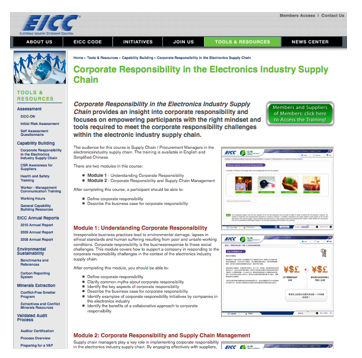
EICCJointly developed by the EICC and GeSI members and other industry participants, the survey allows for industry-wide aggregation of responses in order to highlight upstream smelters being used and ultimately country of origin for the minerals in question.”

It’s, of course, easy to over simplify the complications – and the kind of progress needed across sectors – Gabriel is referring to.

In fact, verification of entire supply chains to ensure they are completely free of conflict minerals will require not only exemplary leadership among the industry but, according to Gabriel, a significant amount of out of the box thinking.

“For companies to be able to deploy this is a huge task. We are talking about years’ worth of work before all levels of the supply chain are vetted,” he emphasized, adding, “The infrastructure we are developing will enable this work, but it requires an even larger group of end users to adopt and deploy in order to drive the effort.”

Regulatory Pressure: Rising to the Challenge

With the Dodd-Frank bill ensuring that supply chain reporting on Conflict Minerals becomes mandatory for companies required to file SEC disclosures, Gabriel believes coordination and collaboration is the best way forward on the path to demonstrate regulatory compliance.

And this is what he hopes attendees at the upcoming Ethical Sourcing Forum can take back to their organizations.

Originally written for and published on CSRwire’s Commentary sectionTalkback on March 28, 2012.

Share this:

  • Tweet
  • Email a link to a friend (Opens in new window) Email
  • Share on Reddit (Opens in new window) Reddit
  • Print (Opens in new window) Print
Like Loading...

Link

Translating Business Responsibility: An interview with Warner Bros. CEO & Chairman Barry Meyer: Now LIVE on CSRwire!

24 Tuesday Jan 2012

Posted by Aman Singh in CSR, Uncategorized

≈ Leave a comment

Tags

aman singh, Barry Meyer, Brand Management, Business, cause marketing, CEO Network, corporate social responsibility, CSR, CSRwire, Ethics, Events, Justice League, Leadership, Management, Nonprofits, Social Enterprise, Social Impact, Social Media, Social Responsibility, Uncategorized, We Can Be Heroes


Translating Business Responsibility: An interview with Warner Bros. CEO & Chairman Barry Meyer: Now LIVE on CSRwire!

When the Justice League comes together to fight evil, evil stands little chance. In a world of economic uncertainty and social unrest, superheroes provide children with mentors, entrepreneurs with lessons in responsibility, and the rest of us with inspiration. Now, DC Entertainment has joined hands with Time Warner and Warner Bros. to launch We Can Be Heroes.

Their target: The hunger crisis in the Horn of Africa.

Their spokescharacters: The Justice League

Share this:

  • Tweet
  • Email a link to a friend (Opens in new window) Email
  • Share on Reddit (Opens in new window) Reddit
  • Print (Opens in new window) Print
Like Loading...

CSRwire In Conversation with BCLC: The 2012 CSR Outlook

10 Tuesday Jan 2012

Posted by Aman Singh in Uncategorized

≈ Leave a comment

Tags

aman singh, aman singh das, BCLC, Business, Career advice, careers, CSR, CSR communications, CSRwire, editorial director csrwire, Ethics, Events, Leadership, Management, Social Media, Social Responsibility, Stakeholder Engagement, stephen jordan, Sustainability, sustainability, Uncategorized


Join CSRwire’s Editorial Director Aman Singh in conversation with Stephen Jordan, Executive Director of the U.S. Chamber Business Civic Leadership Center and a group of MBA graduates virtually for an intimate conversation about what happened in corporate social responsibility (CSR) in 2011 and what the field has in store for 2012.

When: Friday, January 13, 2012; 9:00am EST

Where: Livestream & Twitter

Register for the FREE live stream and join the tweetchat at #BCLConCSR!

The 2012 CSR Outlook is the first in a FREE six-part forum series being conducted by the Center. The U.S. Chamber BCLC’s Conversations with Stephen series is produced and moderated by founder and executive director Stephen Jordan. Guests engage in thoughtful, solution-oriented discussions and debates about the CSR field. The six-part 2012 series is offered at no charge as part of BCLC’s commitment to share knowledge and best practices with current and upcoming CSR practitioners.

We look forward to hearing from all of you @AmanSinghCSR, @CSRwire and #CSRwire or #BCLConCSR!

Related:
2011: The Year Business Learned to Say Mea Culpa

Share this:

  • Tweet
  • Email a link to a friend (Opens in new window) Email
  • Share on Reddit (Opens in new window) Reddit
  • Print (Opens in new window) Print
Like Loading...

2011 in review @ Singh on CSR: 5 Months, 31 Blog Posts, 9,500 Visits

08 Sunday Jan 2012

Posted by Aman Singh in CSR

≈ Leave a comment

Tags

aman singh, aman singh das, Brand Management, BSR 2011, citizen journalism, corporate citizenship, corporate social responsibility, CSR, CSR communication, CSR journalist, CSR reporting, CSR strategy, economic value, employee engagement, In Good Company, mainstream media, net impact 2011, Occupy Wall Street, shared value, social media, sustainability, sustainable business, sustainable business practices


The WordPress.com stats helper monkeys prepared a 2011 annual report for this blog.

Here’s an excerpt:

The concert hall at the Sydney Opera House holds 2,700 people. This blog was viewed about 9,500 times in 2011. If it were a concert at Sydney Opera House, it would take about 4 sold-out performances for that many people to see it.

While I won’t bore you with the stats, here are the top three winners of 2011:

  1. Net Impact and BSR 2011: 7 Days, 2 Conferences, 5 Trends in CSR & Sustainability
  2. Does Expending Resources on CSR and Sustainability Destroy Economic Value?
  3. CSR and Sustainability in Mainstream Media: Citizen Journalism Or Simply Shared Value?

Thank you to all of you for a tremendous year! I value your support, trust, readership, comments, courage and enthusiasm to say, do and compel others toward the right action.

Here’s to expanding our “small world” of CSR and sustainability slowly but surely, one person at a time in 2012!

– Aman

Share this:

  • Tweet
  • Email a link to a friend (Opens in new window) Email
  • Share on Reddit (Opens in new window) Reddit
  • Print (Opens in new window) Print
Like Loading...
← Older posts
Newer posts →

Let's Talk!

Virtual
732-322-7797
amansinghdas@gmail.com

Blogs I Follow

  • Nonprofit Chronicles
  • Learned On by Andrea Learned
  • Angry African on the Loose™
  • csr-reporting
  • The CSR Blog
  • In Good Company: Singh on CSR

My Cloud

Capitalism 2.0 CSR CSR reporting CSRwire ESG Guest Author HR Stakeholder Engagement Sustainability Uncategorized

Recently written…

  • Rationality is Ruining Us: Mayors, presidents and governors join major businesses in charting way forward on climate change
  • 2015: the year businesses recognize that climate change is real – and 4 other themes
  • Hardcore lessons of sustainability – ’10 Words or Less’
  • Brewing a Better Future [#BaBF] with Heineken: Examining the Many Flavors of Local Sourcing
  • From Conflict to Collaboration: Kimberly-Clark and Greenpeace Participate in LIVE Twitter Chat

What others are reading

aman singh aman singh das Brand Management Business corporate social responsibility CSR CSR reporting CSRwire ESG Leadership Stakeholder Engagement supply chain Sustainability sustainability Work culture

Categories

Most Read

  • None

Blog at WordPress.com.

Nonprofit Chronicles

Journalism about foundations, nonprofits and their impact

Learned On by Andrea Learned

Angry African on the Loose™

I have opinions. I am from Africa. I live here now. I blog.

csr-reporting

Connecting the dots between Business, Society & the Environment

The CSR Blog

Connecting the dots between Business, Society & the Environment

In Good Company: Singh on CSR

Connecting the dots between Business, Society & the Environment

Privacy & Cookies: This site uses cookies. By continuing to use this website, you agree to their use.
To find out more, including how to control cookies, see here: Cookie Policy
  • Subscribe Subscribed
    • In Good Company: Singh on CSR
    • Join 119 other subscribers
    • Already have a WordPress.com account? Log in now.
    • In Good Company: Singh on CSR
    • Subscribe Subscribed
    • Sign up
    • Log in
    • Report this content
    • View site in Reader
    • Manage subscriptions
    • Collapse this bar
 

Loading Comments...
 

    %d