• ABOUT THE AUTHOR
  • Sustainability
  • CSR
  • CSR reporting

In Good Company: Singh on CSR

~ Connecting the dots between Business, Society & the Environment

Category Archives: CSR

PwC Canada Releases 3rd Annual CSR Report: Staying the Course

03 Thursday Jul 2014

Posted by Aman Singh in CSR, CSR reporting, CSRwire, ESG

≈ Leave a comment

Tags

CSR, CSR report, CSR reporting, CSRwire, ESG, GRI, james temple, non-financial reporting, philanthropy, Philanthropy, pwc, Social Impact, Stakeholder Engagement, Sustainability, volunteerism, Work culture


PricewaterhouseCoopers (PwC) Canada released their third annual corporate responsibility report today. It’s nothing groundbreaking. But nor is it pages and pages of images and quotes from top leadership interspersed with hard-to-evaluate statistics.PwC_CR_Report_2011

In true PwC fashion, the report details commitments and achievements in 2011 only to quickly move on to highlighting challenges and the firm’s key plans for 2012 followed by an affirmation of the firm’s social and environmental strategy.

The pressure on firms big and small to report on their non-financial activities is significant. With the Global Reporting Initiative (GRI) officially launching in North America last year, CSR and sustainability reports are set to multiply in coming years. What always challenges me are the motivations behind the reporting: Is it simply peer pressure or do firms learn something from the process? Moreover, is the act of reporting an exercise in external communication or more of an introspective activity to improve processes and strategies?

I caught up with James Temple, PwC Canada’s Director of Corporate Responsibility for some insights:

What was the most important lesson learned from the often stressful exercise of putting this report together?

Every time we work on our Corporate Responsibility Report, we’re reminded that this is an evolving journey and one that requires us to be open to adapting to changing ideas, personalities and approaches to developing the most transparent narrative possible.

When you involve such a large number of stakeholders in such a rigorous process, all of whom are passionate about their work and the cause, it can prove to be a balancing act that requires a balance of leadership, managing expectations, and the ability to communicate with empathy and effectiveness.

Most importantly, the process has helped us finesse a blended approach that respects standard reporting frameworks and our unique firm culture and structure to develop a narrative that is representative of the success (and the challenges) we face along the way.”

The report mentions plans for a new three-year strategic plan to guide the next phase of PwC Canada’s CSR program. Any insights you can provide into that?

Over the next few months, we will be completing our environmental scan and a strengths, weaknesses, opportunities and threats (SWOT) analysis to ensure that we are being thoughtful about our dynamic marketplace conditions along with gaining valuable input from our Global Network of Firms.

Philanthropy plays a crucial role in targeting social and environmental challenges through nonprofit partnerships but it’s often the strategy behind these donations that helps make them effective. Any insights on what works well for PwC’s B2B industry?

From the 2011 CR Report: “In 2011, PwC contributed a total of $2,533,000 in charitable donations and sponsorships to community organizations across Canada.”

At PwC Canada, we have adopted a strategy that focuses on educating employees and other stakeholders about the most effective ways to give back to their communities.

We encourage people to utilize our PwC Canada Volunteer Continuum that spells out how a person or organization can deepen their engagement with the charitable sector while developing their skills and experiences.

This could include the ways people use their skills to volunteer, how they look at sharing their community experiences, calling on their business networks for support, or how to allocate their personal or organizational resources in the most effective way possible.  Our approach is rooted in the regular feedback we receive from the not-for-profit sector and considers impact (not just dollars and cents).

What are some points of achievements from the report that you feel especially proud of?

In the fall of 2010, PwC hosted a series of roundtable discussions with representatives from the not-for-profit sector, public and private foundations and major corporations called the Capacity Building Roundtable Project.

The purpose of the project was to raise awareness about how corporate funders could better allocate their resources to help the not-for-profit sector become more sustainable and deliver lasting results within their communities.

The report concluded with a step-by-step process that addressed critical needs identified by the community that could have the most immediate and scalable impacts.

One of the critical findings was the need to encourage other corporations to provide not-for-profits support for core operational expenditures, and ensure they build time for grant recipients to reflect, take risks and test new innovations into grant proposals.

How do you define success in CSR reporting? Metrics? Media mentions? Or a set of internal goals?

We encourage our employees and other stakeholders to integrate a CR mind-set into their day-to-day business operations.  We want to inspire and empower people to look for ways to embed good CR practices into their decision-making frameworks.

A great example of how we’ve engaged our stakeholders in a CR dialogue was through the Citizen’s Reference Panel. PwC Canada brought together people from across Ontario to discuss their views on how to build a more sustainable and cost-effective healthcare system across the province.   We published a piece of thought leadership outlining the results, and it’s something that will help our business, the public and governments have better insights into the development of new healthcare strategies.

Our firm can play in helping to shape the debate on sustainability issues impacting businesses today.

Success means knowing you’ve done everything you can to help develop the CR conversation.

Originally written for and published on CSRwire’s Commentary sectionTalkback on February 27, 2012..

Share this:

  • Tweet
  • Email a link to a friend (Opens in new window) Email
  • Share on Reddit (Opens in new window) Reddit
  • Print (Opens in new window) Print
Like Loading...

The Justice League’s Latest Mission: Famine & Hunger in Africa

03 Thursday Jul 2014

Posted by Aman Singh in CSR, CSRwire

≈ Leave a comment

Tags

Brand Management, cause marketing, CSR, CSRwire, humanitarian crisis, Justice League, nonprofit, Occupy Wall Street, philanthropy, Stakeholder Engagement, time warner, unemployment, warner brothers


When the Justice League comes together to fight evil, evil stands little chance.

In a world of economic uncertainty and social unrest, superheroes provide children with mentors, entrepreneurs with lessons in responsibility, and the rest of us with inspiration.

Now, DC Entertainment, the creators of renowned characters like Batman, Superman and Wonder Woman, has joined hands with Time Warner and Warner Brothers to leverage the collective power of these superheroes to tackle the troubles of the real world.

Their target: The hunger crisis in the Horn of Africa, an epidemic that has reached frightening proportions while being sparsely reported by the media.

We Can Be Heroes comes with immense leverage [thousands of employees, millions of canvases and platforms, a global fan base] and aspirational goals. In collaboration with three global nonprofits – Save the Children, Mercy Corps and International Rescue Committee – the conglomerates will match dollar for dollar up to a million dollars.

Their two-year goal: $2 million spread evenly among the three NGOs.

“13 million people go hungry in Africa. That is unimaginable. How are we letting this happen?” asked Cokie Roberts, prominent NPR journalist, author and board trustee for international nonprofit Save the Children, at a press junket Monday morning in New York City.

We_Can_Be_HeroesIntegrated Corporate Social Responsibility

Jeff Bewkes, CEO of Time Warner, who opened the event iterated that this cause marketing campaign is much more than straight up philanthropy for the company. “This is our corporate responsibility,” he said, adding, “We Can Be Heroes will capitalize on 90 years of storytelling to a global audience. We can help create far reaching awareness on a famine that can be fixed.”

Alluding to a consumer base already saturated with information, diffused by competitive branding exercises and weakening attention spans, Bewkes said, “Today consumer engagement is more important than ever before. Hunger isn’t geographically bound and our humanitarian care shouldn’t be either. Like the Justice League, together we can be heroes.”

everaging The Power of Herosim — and Interactive Media

This well thought out campaign – there is a merchandising component, a well-designed website and plans to integrate the message on all possible Warner and DC platforms globally – will capitalize on two leverage points: 1) The potent power of our collective strength in making a difference, and 2) The effectiveness of rich storytelling through a vast platform of interactive media.

I often say that half the battle of doing the right thing is telling your story effectively. In today’s connected world, stories matter. And this is where “having the opportunity to do something bigger than ourselves” can prove inspirational and monumental.

Diane Nelson, President of DC Entertainment, put it well: “This [campaign] is about awareness and using the intellectual property our companies own to make consumers aware of the crisis.” Nelson was picking up on something Roberts alluded to in our earlier conversation:

“Americans just need to know about this. We are a wonderful people and once we know that people are in dire need, we respond. Getting that information out there will really save millions of lives.”

There is no arguing that the need for help is indeed great.

As Barry Meyer, Chairman and CEO of Warner Bros., who sat down with CSRwire exclusively for an interview said, it is a perfect fit for the entertainment conglomerates.

“We thought it was a very good fit: Both the messaging and the corporate commitment. We are a big company and we have a lot of ways to communicate with people…to get the message out on what’s going on in Africa. I certainly know many people who are anxious to find ways and mechanisms to help with problems like this including many of our employees outside the United States, who are more aware of the hunger crisis in Africa than frankly, our US employees are.”

With domestic unemployment stoically high, the stock market continuing to rollercoaster and a distracting election year in the U.S., attracting domestic consumers to engage, learn and perhaps most importantly, donate, will not be easy. “That’s where collaborating with three international Justice_LeagueNGOs with feet on the ground is crucial. We expect them to keep us on track, tell us what is working and what isn’t,” said Jeff Robinov, President of Warner Bros. Pictures Group.

For Robinov and team, this campaign falls fair and square within their corporate social responsibility strategy by fluidly integrating philanthropy, engagement, business units with their core competencies – story telling – to drive results for a humanitarian crisis.

I asked Meyer what his hopes are with activating the company’s internal audience:

“We have a significant employee population outside the U.S. We want them to know that we are behind these issues and working on them. As for the employees inside the US, where awareness is low, the aim is to raise that awareness. Make them aware of a huge humanitarian crisis that’s happening halfway around the world.”

With consumer confidence and employee morale low in recent years, it is no surprise that companies are looking for innovative ways to keep their employees motivated and loyal. Referring to the recent Occupy Wall Street protests, Robinov told me:

“See what’s going on with the protests across the country, a lot of that for me personally is related to a lack of human faces for corporations today. We need to be respectful of our bottom-line and our reputation but we are really moved and we really want to help these people. As a company, Time Warner has always reached out to people in times of need. We have a moral obligation to do this.”

CSR: Deploying Core Competencies To Target a Social Issue

At the end of the day, for the companies — and their nonprofit partners — involved, We Can Be Heroes is emblematic of what integrated CSR can look like: Knowing your strengths as a business entity and leveraging them and your stakeholders to target a social issue.

As Meyer told me, “Social responsibility in a certain way speaks for itself. The word responsibility implies an obligation. Big companies have an obligation to society. They make a lot of money and have an obligation to deal with issues that are important to their employee bases…and we feel the obligation very, very deeply.”

He also emphasized that this marks the first time the global brands have come together to target an issue that is long standing and will therefore require long term commitment and out of the box thinking that goes beyond one stop solutions.

The success of WeCanBeHeroes.org will ultimately rely on a global consumer awakening and the belief that together we can all be heroes. Who doesn’t believe in the power of that?

Originally written for and published on CSRwire’s Commentary section Talkback on January 24, 2012.

Share this:

  • Tweet
  • Email a link to a friend (Opens in new window) Email
  • Share on Reddit (Opens in new window) Reddit
  • Print (Opens in new window) Print
Like Loading...

The Power of Hiring Right: A Value Proposition that Most Recruiters Continue to Ignore

03 Thursday Jul 2014

Posted by Aman Singh in CSR, HR

≈ Leave a comment

Tags

corporate social responsibility, CSR, HR, Job search, jobs, Jobs in CSR, leadership, recruitment, sustainability


Sustainability isn’t the most favorable of topics with recruiters. But ask them about the sustainability of their hires and you’ll instantly hear a litany of complaints and frustrations.

Yesterday, Vault kicked off a series of seminars on this very important, if not the most popular, topic for the recruitment sector: The increasing role of CSR and sustainability in recruitment.

Sponsored by Madrid’s IE Business School, these seminars have been planned exclusively for recruiters and HR managers and align well with the School’s overarching commitment to sustainability (they have a master’s program dedicated to environmental change), social entrepreneurship, and CSR.

But what makes sense on college campuses doesn’t necessarily align with recruiters whose objective is much more linear: To hire the best talent based on a specific list of behavioral and technical skills, with the hope that they will stick around for at least a few years.

Retention? That’s an HR function.

This disconnect became the focus of my planning when I was approached by Vault to design the seminars. I came up with three distinct objectives:

  • Demonstrate how a growing consciousness about corporate social responsibility is changing expectations among prospective job candidates and employees;
  • Question whether recruitment teams are responding to this change in CSR awareness by modifying their outreach and strategy; and
  • Offer examples – and best practices – of how recruiters can best illustrate their company’s corporate citizenship before the candidate comes aboard.

In all my years at Vault (I left in July to start Singh Solutions, a research and advisory firm offering CSR communications and social media strategy services – and continue to write for CSRwire and Forbes), I have always put a premium on the efficacy of a responsible and innovative culture in attracting candidates. But when you bring in terms like CSR, sustainability, inclusion, things begin to get murky.

While no one can argue that a business’ corporate and social behavior is a POWERFUL tool in attracting talent, especially in the current recession, how do you convey as much in a job interview?

This is where the real disconnect then emerges, indicated amply by a series of interviews I conducted last year with four MBA candidates committed to pursuing work that aligned with their sense of corporate social responsibility: Boston University MBA Candidate Ashley Jablow, Geet Singh, Whit Tice and Larry Furman.

Jablow told me then:

“I have chosen to go to business school so that I can create change and be an ethical and responsible contributor to business.”

But who’s responding? Not a lot of companies, I found. As Tice put it:

“Without awareness, there is no sense of urgency.”

This lack of urgency became the underlying theme of session number one on Tuesday. Joined by PwC’s HR and Administrative Leader for Florida Kimberly Jones and Guillermo Montes, Managing Director for South US, Puerto Rico and the Caribbean region for IE Business School, I offered the audience an alternative view: A reality where recruiters are not only responsible for hiring the most skilled talent but also the best fit based on their values.

“Retention after all is half the battle. Getting the candidate in is hard but retention becomes equally challenging if we don’t invest in aligning the candidate’s personality to the company’s core values,” said Jones. For PwC, this has meant organizing initiatives like Project Belize and Project New Orleans, where summer interns get to participate in community building exercises, and the team hopes, get a real close look at the firm’s culture.

“The average age of a PwC employee is 26 years old. So demands and expectations are quite different from older generations,” she emphasized, adding that a brand that not only commits to CSR but also makes it a priority becomes an increasingly valuable ally in attracting candidates.

In a globalized economy where work can be outsourced at a click of a button and entrepreneurship is emerging as a serious alternative for many graduates, organizations have it tough, even if they don’t recognize it just yet. While recruiters might erroneously believe that the market is to their advantage, the fight for top talent remains fierce. This is where your organization’s culture, values, and social and environmental commitments can emerge as key differentiators for a generation that is demanding fairness, ethical behavior and responsibility from business.

While the debate was spirited and the conversation heated at times, it was clear that the panel had been well received. We ran over time with questions pouring in. Examples include the impact of globalization on recruitment, how companies are dealing with an increasingly age diverse candidate pool, and whether we should expect reformulation of job profiles and descriptions in coming years.

Suffice it to say, we together – the panel and the audience – shared something powerful this Tuesday: We experienced a crowd-sourced change in mentality. We made a commitment. Together. To bring back some of the equilibrium lost in recent years between business, society and the environment by focusing on a company’s most powerful assets: It’s human resources.

Are you ready to have a real conversation?

Originally written for and published on CSRwire’s Commentary section Talkback on September 29, 2011.

Share this:

  • Tweet
  • Email a link to a friend (Opens in new window) Email
  • Share on Reddit (Opens in new window) Reddit
  • Print (Opens in new window) Print
Like Loading...

Ceres Investor Summit 2012: 5 Trends Not to Bet Against

03 Thursday Jul 2014

Posted by Aman Singh in CSR, CSRwire

≈ Leave a comment

Tags

bank of america, bill gates, Brand Management, Business, carbon, carol sanford, CEO Network, ceres, chad holliday, climate change, CSR, CSRwire, dupont, energy, ESG, Events, investor relations, Leadership, Management, Social Responsibility, stem, Sustainability, sustainability


Last week, Ceres and the United Nations came together to host the 2012 Investor Summit on Climate Risk & Energy Solutions in New York City. With several announcements marking the day—a record $260 billion was invested in clean energy in 2011—it was Bank of America Chairman Chad Holliday’s pre-lunch presentation that stood out for its aspirational message.

I had the opportunity to host Holliday last year for a keynote on responsible business practices. The occasion: The release of Carol Sanford‘s book The Responsible Business, for which Holliday provided an articulate Foreword.

This time around too, Holliday chose to focus on lessons learned from his years leading DuPont, which saw record growth, transition from a chemical company to a science-based products company, as well as the country’s first chief sustainability officer appointment.

“As you listen, make sure you’re not inadvertently betting against something,” he cautioned adding, “Whether you want to own it or not is merely situational. But listen.”

Here then are Holliday’s five things to not bet against:

1. Don’t Bet Against Breakthroughs

“Don’t bet against a major breakthrough or a series of breakthroughs that create clean, cheap energy.” Holliday followed this warning by a reminder that “the price of natural gas in the Middle East” used to be our prime concern.

“No one was talking about shale energy, tidal [energy] 10 years ago. Somehow we missed that,” he added. Holliday also alluded to the American Energy Innovation Council he set up when at DuPont that counts Bill Gates, Xerox CEO Ursula Burns, GE’s Jeff Immelt and others as members: “We
really felt that such a breakthrough was probable so don’t discount the power of innovation.”

2. Don’t Bet Against America

“Particularly American engineers and research universities,” he continued. “Thirty five of the 50 top research institutions worldwide are located in the U.S. Seventeen of the top 20 are in the U.S.,” he said

Bank of America Chairman Chad Holliday Admission rates in Science, Technology, Engineering and Mathematics (STEM) have been declining for years in the U.S., and several sectors are ramping up their community development and research dollars to invest in STEM initiatives and academic institutions. While it is true that graduates from Asian countries have increasingly filled STEM jobs—and have an incredible presence in Silicon Valley—in recent years, Holliday was quite right to point out that “it will require other countries to grow awfully fast to catch up with us.”

“What we see in the press is that China is overtaking us in engineering. In fact, there is no question that China is indeed leading us in the number of graduating engineers. But when it comes to quality and diversity—biotechnology, nanotechnology, quality control, systems engineering—we are hands down champions,” Holliday said.

3. Don’t Bet Against Sustainable Energy For All

“One of the three commitments of the United Nations General Secretary was to provide electricity to the 1.3 billion people globally who still don’t have access to electricity,” said Holliday. “Now let’s discuss the 1.3 billion-strong population of China: How productive would they be without access to electricity?”

His message: That’s opportunity to deliver value for business, investors and entrepreneurs.

4. Don’t Bet Against Dramatic Events Driving Dramatic Government Action

“One nuclear fallout after the tsunami that struck Japan was enough to compel Germany to take the decision to go completely nuclear-free for their energy supply,” he said.

Emphasizing that one must increasingly view business and investment in the context of their social and environmental setting, Holliday offered a glimpse into his role on Shell’s CR committee: “I regularly meet with NGO groups and investors to understand what they are thinking. I then coordinate with Shell’s corporate responsibility committee to visit sites to really check and see if they are doing what they commit to. Then it makes a difference,” he said, adding, “We cannot measure growth and success from afar because that’s just PR.”

5. Don’t Bet Against People in This Room

Putting the onus on the over 500 investors in attendance, Holliday said: “You’re here today because you think private money can make a difference in this sector. You’ve made a good decision.”

Indicating to his recent appointment as Bank of America’s chairman, he continued:

“I joined Bank of America in the time of a recession. I didn’t have much time to do any due diligence so I decided to find out what they were doing on sustainability. And I’m proud to say that I was impressed. They have already made an 18 percent deduction in greenhouse gases (GHG), made a $20 million commitment to loans for sustainable projects and nurture a working culture that prioritizes sustainability.”

Many other firms in the room could probably tell similar stories, he added, warning: “But don’t bet against each other.”

Emphasizing the need for public private partnerships, he concluded: “Working with the public sector and other stakeholders is going to be key in our goal of sustainable energy for all.” There too, he had the same warning: “Don’t bet against each other.”

Originally written for and published on CSRwire’s Commentary section Talkback on January 18, 2012.

Share this:

  • Tweet
  • Email a link to a friend (Opens in new window) Email
  • Share on Reddit (Opens in new window) Reddit
  • Print (Opens in new window) Print
Like Loading...

2011: The Year Business Learned to Say Mea Culpa

02 Wednesday Jul 2014

Posted by Aman Singh in CSR, CSRwire

≈ Leave a comment

Tags

Accountability, Best Buy, Brand Management, Carol Cone, climate corps, corporate governance, CSR, CSRwire, edf, Ethics, jobs, Leadership, Management, McDonald's, Ofra Strauss, Social Media, social media, Stakeholder Engagement, Sustainability, sustainability, timberland, transparency, UPS


Image

These were just some of the things that kept us busy in 2011. While some represent the changing marketplace, others are age-old struggles between activists, consumers, employees and corporations. Yet, they all represented the emergence of new forces at play in our corporate corridors.

Yes, 2011 represented despair for many – the jobseekers, the underemployed, the single parent, the shopper, the CEO, the trader – but with despair, as CSRwire’s CEO Joe Sibilia noted, comes hope, adaptability and often, solutions.

And it is at that stage that most of us converged in 2011.

Transparency: Is Business Ready?

Take, for example, the recent BSR conference held in San Francisco. My panel addressed a topic that is bound to get most of us shifting in our chairs: Sustainability in a Hyper-Transparent World. Ouch, right? Joined by executives from Oxfam, Intel and SourceMap, the conversation included several uncomfortable moments (I offered up Zappos as an example to the audience, citing that the company livestreams its all hands meeting in order to live its mission of “building open and honest communications.”) and featured several probabilities, suggestions, and potential solutions by a group that included lawyers, sustainability executives, CSR officers, reporters, strategists, entrepreneurs as well as nonprofit leaders.

“When you are increasingly naked, fitness if not optional.” – Macrowikinomics

That the panel attracted a full room of senior executives willing to discuss difficult issues like privacy, corporate governance and stakeholder responsibility is a start.

The C-Suite Headlines Sustainability

Till last year, while much was being written about CSR and sustainability, executives were largely absent from the dialogue. In 2011, this changed ever so subtly. Earlier in the year, Best Buy CEO Brian Dunn took the stage at one of the year’s most prolific conferences, the Boston College Center for Corporate Citizenship’s annual conference. He discussed the importance of employee wellbeing, organizational design, transparency (Kathleen Edmond was the first Chief Ethics Officer to start a blog on ethical issues in the workplace) and the importance of stakeholder engagement.

“The more you peel the onion, the more you realize there is to be done. You just need to be constantly excited about peeling the onion.” – Brian Dunn, CEO, Best Buy

At Net Impact, Nike’s Hannah Jones took the stage as did REI CEO Sally Jewell. BSR kept the momentum going by featuring Ofra Strauss, CEO of the Strauss Group, Autodesk CEO Carl Bass and Anheuser-Busch CEO Carlos Brito.

These chiefs weren’t exactly looking to gain brownie points. They were after all speaking to the choir in some respects and to an audience that for the most part, gets business and social responsibility. But what made each of them stand out was their honesty about the difficult problems facing us today – a first? – agreement on the role of business in adding to today’s social and environmental mess.

“In the last few years, business has lost tremendous trust in the marketplace. That we are GOOD now rests on us.” – Ofra Strauss, Chairperson and former CEO, The Strauss Group

Mea culpa, they all said. Followed by: Here’s how we are trying to change ways, rethink growth, repurpose missions and reengage stakeholders.

That’s a start.

Social Media Engagement: 140 Characters Rule

Despite all the naysayers of social media, there is no denying that for any organization that sells a product or service today, having a dedicated presence on Facebook and Twitter is a prerequisite. With engagement reaching never-seen-before proportions, even Chief Sustainability Officers are learning to communicate in 140 characters or less.

“We must see social problems as business opportunities.” – Carol Cone, EVP, Edelman

But several companies dipped their toes in active engagement by trying out new formulae: Best Buy released their annual CSR report by hosting a live webinar (that I moderated) with their Sustainability team and a parallel conversation on Twitter. As I quizzed them about the report, questions poured in from Twitter: What was Best Buy doing in the area of conflict minerals? What about human rights? Recycling? How about consumer education? And why the low diversity ratio of employees?

Squirm they did, admitting that the issues were complex they did, but answer they also did.

They weren’t the only ones though.

Timberland (that was acquired by VF earlier in the year) launched their new Communications portal, McDonald’s hosted a live chat on Twitter with VP of CSR Bob Langert, UPS held several chats during the holiday season from sustainable gifting to green packaging choices.

Communicating your sustainability story is an important cog in the wheel called trust and the choice to engage is no longer a valid option. How you choose to do so, however, will continue to differentiate you from your competitor.

Making Business Sense out of Sustainability

Several large organizations came forward in 2011 asking jobseekers and students applying for jobs in sustainability and CSR to understand how to relate their core competencies and knowledge to the issues facing us today, i.e., water depletion, carbon emissions, climate change, etc.

How can depleting levels of water relate to a professional services firm, for example, or a bank? Why must a software company invest in engaging and educating its supply chain?

Climate Corps: Creating Jobs & Savings

The Environmental Defense Fund’s Climate Corps program is one of very few initiatives that have managed to tie sustainability with business strategy and growth while creating jobs out of the process.

From placing seven MBA candidates as summer fellows in 2008, the program has quickly grown in popularity, placing 96 students at 78 companies in 2011. The fellows spend an entire summer working with their host companies on identifying energy efficiency solutions, implementing carbon management processes and helping diverse businesses embed environmental sustainability into their strategies.

The results: Millions in savings. While few get direct job offers from the Fellowship, most have had success finding jobs where their unique mix of experience, passion, and the ability to tie business strategy with sustainability, is appreciated and utilized in changing processes, setting standards and adapting organizations to a fast-changing reality of limited resources.

This is a start.

Organizational Design & Sustainability

Where does sustainability fit in your organization?

Everywhere, really, is the only correct answer, irrespective of where the chief sustainability officer sits. This, finally is getting addressed by what I consider a crucial component at any company: The HR and recruitment teams. In collaboration with IE Business School, I moderated seminars with recruiters, HR directors and organization design consultants on the value of CSR in candidate recruitment and retention.

We discussed the relationship between productivity, values, respect and growth. We heard from students who want to work for socially responsible companies and executives who are redirecting their organizations to instill a culture of ethics, responsibility, accountability and pride.

Mea culpa, most of them said. That’s a start.

Originally written for and published on CSRwire’s Commentary section Talkback on December 30, 2011.

Share this:

  • Tweet
  • Email a link to a friend (Opens in new window) Email
  • Share on Reddit (Opens in new window) Reddit
  • Print (Opens in new window) Print
Like Loading...

The Makings of a CSR Program: In Conversation with Avon, LinkedIn & Jones Lang LaSalle

02 Wednesday Jul 2014

Posted by Aman Singh in CSR, CSR reporting

≈ Leave a comment

Tags

avon, business, career advice, careers, corporate responsibility, CSR, CSR reporting, employees, HR, Jobs in CSR, Jones Lang LaSalle, Leadership, LinkedIn, Management, Net Impact, social impact, Sustainability, sustainability, Work culture


That was the focus of one of the panels at Net Impact 2011 featuring Avon’s VP of Sustainability and Corporate Responsibility, Tod Arbogast; LinkedIn’s Head of Employment, Branding and Community, Meg Garlinghouse; and Jones Lang LaSalle’s SVP of Sustainability Strategy, Michael Jordan.

Representing companies that are often called out for their out of the box thinking on social responsibility and sustainability, the speakers discussed a range of topics including the always debatable definition of corporate social responsiblity, measuring employee engagement as well as the skill sets that go into the makings of a CSR director.

Main highlights:

CSR: Burden or Boon?

“CSR should die as a term. CSR departments tend to take away from possible impact. Just like ‘global’ is part of everything we do at LinkedIn, so is CSR,” Garlinghouse emphasized, noting, “Employee engagement is key for CSR, not separate departments.”

Jordan picked up where Garlinghouse left off adding that businesses must leverage engaged employees and identify champions early on for successful CSR programs.

“CSR has a direct tie-in with our business. After you’ve built the business case and identified regional champions, work together on identifying and building in efficiencies,” he advised.

“Build friendships, be seen as pragmatic and capture early wins. Then leverage those to go further and faster,” Arbogast said.

Measuring Employee Engagement

But how do you measure the efficacy of employee engagement?

A survey I conducted a few months ago with Smartbrief on Sustainability asked whether companies were measuring employee engagement on CSR. With over 70 percent of respondents saying they did not measure employee engagement, how were these panelists identifying wins and scale?

Once again, there was a healthy difference of opinion across the panel. While Garlinghouse emphasized company mission, the other two focused on operational procedures and policies.

“We recruit on the notion of social impact. These conversations happen during the interview process,” Garlinghouse alluded, noting LinkedIn’s entire modus operandi is based on “creating economic opportunities.” LinkedIn also offers employees the opportunity to do whatever they feel passionate about one Friday a month. “They have to come to work but they can pursue whatever they are interested in,” she said.

“For us, measuring the progress of your platform from awareness to implementation to operational strategy has always been key,” added Jordan.

Defining CSR With Strong Stakeholders

Responding to an audience question about resourcing for CSR initiatives, Jordan emphasized that most of Jones Lang LaSalle’s sustainability activities have been client-driven. “There is a clear business case because our clients are demanding sustainability strategies,” he said.

For Garlinghouse, employees have been the most forthcoming about corporate social responsibility initiatives. “Our CEO is very involved. Also, our employees are really committed to our company mission,” she said.

Skill Sets for a CSR Officer

Arbogast, who joined Avon in late 2009 after successfully leading Dell’s Giving program for a number of years, is a well-sought after speaker at the Net Impact conference each year. This year too, he was asked what aspiring professionals could do to become effective CSR officers. He laid out three crucial skills sets:

  1. People’s Person: Know how to communicate with people from all kinds of backgrounds and perspectives.
  2. Conflict Resolution: You must be a skilled mediator. Know that business cases will vary from group to group and you must be willing and diplomatic enough to finesse the tension lines and bring about resolution.
  3. Business Pragmatism: You must be a realist and know the business inside out. For CSR and sustainability programs to be effective, you need to understand what drives decisions and action.

Originally written for and published on CSRwire’s Commentary section Talkback on November 9, 2011.

Share this:

  • Tweet
  • Email a link to a friend (Opens in new window) Email
  • Share on Reddit (Opens in new window) Reddit
  • Print (Opens in new window) Print
Like Loading...

Link

Translating Business Responsibility: An interview with Warner Bros. CEO & Chairman Barry Meyer: Now LIVE on CSRwire!

24 Tuesday Jan 2012

Posted by Aman Singh in CSR, Uncategorized

≈ Leave a comment

Tags

aman singh, Barry Meyer, Brand Management, Business, cause marketing, CEO Network, corporate social responsibility, CSR, CSRwire, Ethics, Events, Justice League, Leadership, Management, Nonprofits, Social Enterprise, Social Impact, Social Media, Social Responsibility, Uncategorized, We Can Be Heroes


Translating Business Responsibility: An interview with Warner Bros. CEO & Chairman Barry Meyer: Now LIVE on CSRwire!

When the Justice League comes together to fight evil, evil stands little chance. In a world of economic uncertainty and social unrest, superheroes provide children with mentors, entrepreneurs with lessons in responsibility, and the rest of us with inspiration. Now, DC Entertainment has joined hands with Time Warner and Warner Bros. to launch We Can Be Heroes.

Their target: The hunger crisis in the Horn of Africa.

Their spokescharacters: The Justice League

Share this:

  • Tweet
  • Email a link to a friend (Opens in new window) Email
  • Share on Reddit (Opens in new window) Reddit
  • Print (Opens in new window) Print
Like Loading...

2011 in review @ Singh on CSR: 5 Months, 31 Blog Posts, 9,500 Visits

08 Sunday Jan 2012

Posted by Aman Singh in CSR

≈ Leave a comment

Tags

aman singh, aman singh das, Brand Management, BSR 2011, citizen journalism, corporate citizenship, corporate social responsibility, CSR, CSR communication, CSR journalist, CSR reporting, CSR strategy, economic value, employee engagement, In Good Company, mainstream media, net impact 2011, Occupy Wall Street, shared value, social media, sustainability, sustainable business, sustainable business practices


The WordPress.com stats helper monkeys prepared a 2011 annual report for this blog.

Here’s an excerpt:

The concert hall at the Sydney Opera House holds 2,700 people. This blog was viewed about 9,500 times in 2011. If it were a concert at Sydney Opera House, it would take about 4 sold-out performances for that many people to see it.

While I won’t bore you with the stats, here are the top three winners of 2011:

  1. Net Impact and BSR 2011: 7 Days, 2 Conferences, 5 Trends in CSR & Sustainability
  2. Does Expending Resources on CSR and Sustainability Destroy Economic Value?
  3. CSR and Sustainability in Mainstream Media: Citizen Journalism Or Simply Shared Value?

Thank you to all of you for a tremendous year! I value your support, trust, readership, comments, courage and enthusiasm to say, do and compel others toward the right action.

Here’s to expanding our “small world” of CSR and sustainability slowly but surely, one person at a time in 2012!

– Aman

Share this:

  • Tweet
  • Email a link to a friend (Opens in new window) Email
  • Share on Reddit (Opens in new window) Reddit
  • Print (Opens in new window) Print
Like Loading...

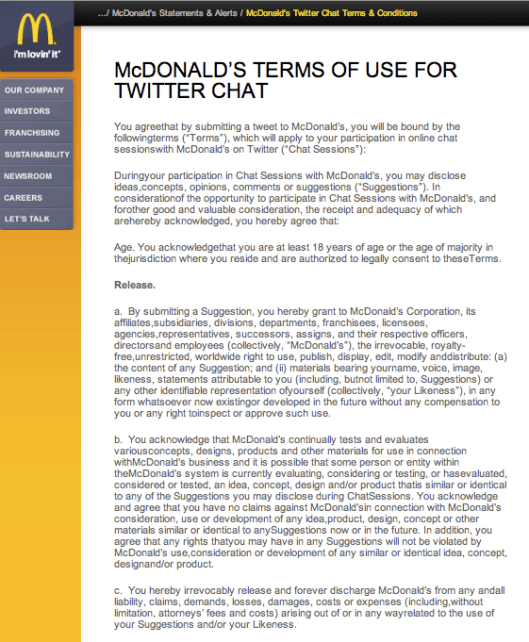
Social Media Tactics: McDonald’s Hosts Twitter Chat. And Issues a Policy.

09 Friday Dec 2011

Posted by Aman Singh in CSR

≈ Leave a comment

Tags

aman singh, aman singh das, Bob Langert, Brand Management, consumer education, corporate social responsibility, CSR, CSR communications, CSR report, Management, McDonald's, McDonald's CSR report, PR, risk management, social media, Stakeholder Engagement, stakeholder engagement, Sustainability, sustainability, transparency, Twitter, Twitter chat


Certainly not the blog post I planned on writing after spending two weeks in New Delhi, India but I am compelled.

Today, McDonald’s hosted a Twitter chat with VP of CSR Bob Langert. The motivations are many for a company that is besieged for its product line and constantly under fire.

In fact, last year at a diversity benchmarking event at Hamburger University, I had the opportunity to hear the McDonald’s executive team discuss a whole host of business practices and strategies, including diversity (led by Global Chief Diversity Officer Pat Harris), employee learning and corporate social responsibility (CSR).

Here’s a snapshot of what I wrote then:

There is an argument that some companies–such as those that deal in weapons and tobacco–just can’t do corporate responsibility in a meaningful way. As a result, they are often excluded from CSR rankings and benchmarking exercises.

But what about a company like McDonald’s constantly under fire for its products? How does the world’s largest fast-food chain practice corporate social responsibility that is both contextual and real?

Led by Senior Manager for Corporate Social Responsibility Kathleen Bannan, who began her presentation by saying “CSR is everybody’s business,” the day-long event proved both thought-provoking (how does a company who doesn’t enjoy corporate America’s most favorable retention rates or the public’s uniform love tackle responsibility and that ever-amorphous doing the right thing?) and insightful (McDonald’s is among very few companies to institute an employee resource group for its white male workforce).

What happened today, however, was an effort at cautious transparency and an attempt at crowd sourcing corporate social responsibility.

The questions were introspective:

And the answers, alternatively useful, creative and critical.

But then I saw this:

Now McDonald’s is not the first company to host a Twitter chat by any means. I have personally attended several as well as hosted a few — including one coming up next week with UPS’ Chief Sustainability Officer Scott Wicker — with varying levels of participation from a usually diverse set of activists, journalists, executives and consumers.

Never before, however, have I been handed a “Twitter Chat Policy.”

An indication of things to come or…?

Continue reading →

Share this:

  • Tweet
  • Email a link to a friend (Opens in new window) Email
  • Share on Reddit (Opens in new window) Reddit
  • Print (Opens in new window) Print
Like Loading...

The Unruliness of Corporate Responsibility & Hyper Transparency: Quotable Quotes from Net Impact & BSR 2011

09 Wednesday Nov 2011

Posted by Aman Singh in CSR, CSR reporting

≈ Leave a comment

Tags

aman singh, aman singh das, Autodesk, Bea Perez, brand management, Brian Dunn, BSR, BSR 2011, Business for Social Responsibility, Carol Cone, cause marketing, Chris Jochnick, corporate citizenship, corporate social responsibility, CSR, CSR reporting, Deloitte, Edelman, Events, Gregory Unruh, hyper trasnparency, integrated reporting, Jessica Fries, Kate Heiny, Leadership, LinkedIn, Lynelle Cameron, Management, Meg Garlinghouse, Net Impact, Occupy Wall Street, Ofra Strauss, Social Responsibility, Stakeholder Engagement, Sustainability, sustainability reporting


I spent the last two weeks attending and speaking at the Net Impact and BSR conferences. As is typical at both conferences there is always too much to choose from and a lot to absorb. Since I cannot offer you a summary of each and every panel I attended/spoke at, here are some of the top line quotes heard at the conferences:

CSR: Always a Difference in Opinions

“CSR used to be about doing the right thing. Now it’s all about how it makes business sense.” – Campbell Soup’s VP for CSR Dave Stangis

“I hate the term CSR. It has slowed the movement and in many ways ensured that it is not built into systems, accounting, etc. I prefer [the term] sustainability although that’s not a big favorite either.” – Lynelle Cameron, Director of Sustainability, Autodesk

“We think CSR is good business.” – Suzanne Keel-Eckmann, National Director for Corporate Responsibility and Sustainability, Deloitte

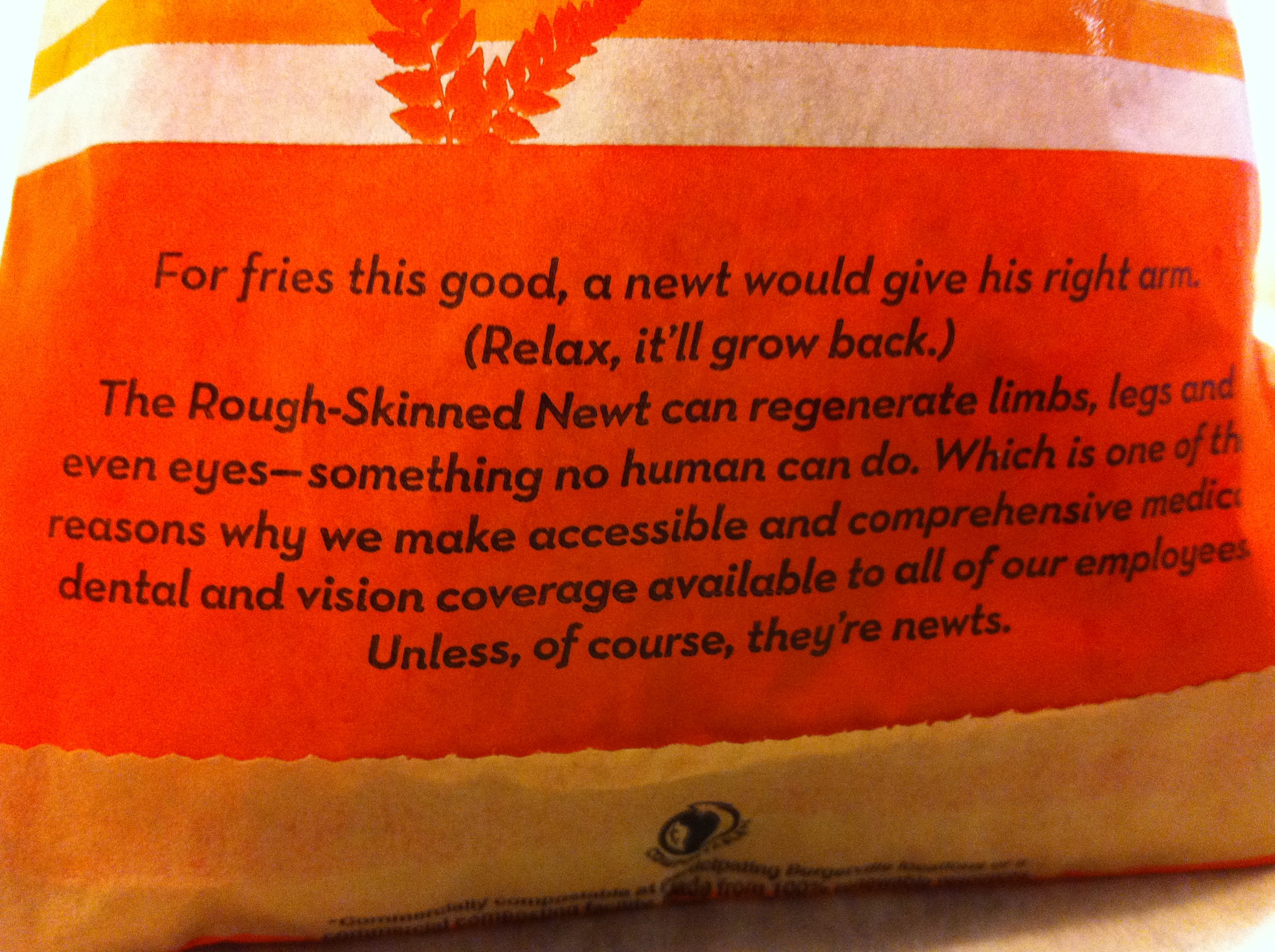
A bag of sweet potato fries at Burgerville in Portland, Oregon: Social messaging done right?

“CSR should be led by charity and employee engagement, not CSR departments.” – Meg Garlinghouse, Head of Employment Branding and Community, LinkedIn

“Our CEO still believes that he is the company’s chief sustainability officer. But he realized that we need to be more organized and structured in our efforts because there is a lot to be done.” – Bea Perez, Chief Sustainability Officer, Coca-Cola in response to Reverse Cause Marketing: Coca Cola’s Pursuits in the Middle East

The Role of Business in Social Enterprise

“We must see social problems as business opportunities.” – Carol Cone, EVP, Edelman

“I worked on Wall Street, driven by greed. Regardless of what anyone says, greed is not good. You get so immersed in the system you forget what all you can do with your life.” – Charles Kane, Former CEO and Board Member, One Laptop Per Child

“A lot of charities are beginning to worry that a lot of the problems they have been trying to solve are not going away. Business still tends to be more sustainable.” – Steve Andrews, CEO, SolarAid

“In the last few years, business has lost tremendous trust in the marketplace. That we are GOOD now rests on us.” – Ofra Strauss, Chairperson and former CEO, The Strauss Group 

Personal Responsibility

“When you know what you’re doing is helping thousands, the payback is so much more fulfilling than any number of stock options and bonuses.” – Charles Kane, Former CEO and Board Member, One Laptop Per Child

“We need to change without giving up who we are. There are no riots against business that are profitable. We need to talk with them, not talk to them.” – Ofra Strauss, Chairperson and former CEO, The Strauss Group

“The more you peel the onion, the more you realize there is to be done. You just need to be constantly excited about peeling the onion.” – Brian Dunn, CEO, Best Buy

The Role of an MBA

“No profession exists to make the practitioners rich. There is always a higher purpose.” – Gregory Unruh, Director, Lincoln Center for Ethics, Thunderbird School of Global Management

“I don’t know if its [The MBA Oath] is going to work. But it is in the right direction and symbolizes a complete shift in mentality.” – Max Anderson, President and Cofounder, The MBA Oath

“I’m waiting to see the day when a new employee tells me they attended a class in college called Change Agent 101.” – Anonymous 

Transparency

“We’re from the Midwest. We don’t advertise our initiatives. But lately there has been a shift in this thinking and our communication style. Transparency is a journey and we are in the early stages of that.” – Kate Heiny, Group Manager of Sustainability, Target

“The priority should always be why not disclose instead of why disclose.” – Chris Jochnick, Director, Oxfam America

“When you are increasingly naked, fitness is not optional.” – Quoted by yours truly during a BSR panel on hyper-transparency. Citation: Macrowikinomics

Integrated Reporting

“For us, integrated reporting starts with the thinking within the company on how they will sustain their value in the future. Integrated reporting starts with integrated thinking.” – Jessica Fries, Director, International Integrated Reporting Committee

Share this:

  • Tweet
  • Email a link to a friend (Opens in new window) Email
  • Share on Reddit (Opens in new window) Reddit
  • Print (Opens in new window) Print
Like Loading...
← Older posts
Newer posts →

Let's Talk!

Virtual
732-322-7797
amansinghdas@gmail.com

Blogs I Follow

  • Nonprofit Chronicles
  • Learned On by Andrea Learned
  • Angry African on the Loose™
  • csr-reporting
  • The CSR Blog
  • In Good Company: Singh on CSR

My Cloud

Capitalism 2.0 CSR CSR reporting CSRwire ESG Guest Author HR Stakeholder Engagement Sustainability Uncategorized

Recently written…

  • Rationality is Ruining Us: Mayors, presidents and governors join major businesses in charting way forward on climate change
  • 2015: the year businesses recognize that climate change is real – and 4 other themes
  • Hardcore lessons of sustainability – ’10 Words or Less’
  • Brewing a Better Future [#BaBF] with Heineken: Examining the Many Flavors of Local Sourcing
  • From Conflict to Collaboration: Kimberly-Clark and Greenpeace Participate in LIVE Twitter Chat

What others are reading

aman singh aman singh das Brand Management Business corporate social responsibility CSR CSR reporting CSRwire ESG Leadership Stakeholder Engagement supply chain Sustainability sustainability Work culture

Categories

Most Read

  • None

Create a free website or blog at WordPress.com.

Nonprofit Chronicles

Journalism about foundations, nonprofits and their impact

Learned On by Andrea Learned

Angry African on the Loose™

I have opinions. I am from Africa. I live here now. I blog.

csr-reporting

Connecting the dots between Business, Society & the Environment

The CSR Blog

Connecting the dots between Business, Society & the Environment

In Good Company: Singh on CSR

Connecting the dots between Business, Society & the Environment

Privacy & Cookies: This site uses cookies. By continuing to use this website, you agree to their use.
To find out more, including how to control cookies, see here: Cookie Policy
  • Subscribe Subscribed
    • In Good Company: Singh on CSR
    • Join 119 other subscribers
    • Already have a WordPress.com account? Log in now.
    • In Good Company: Singh on CSR
    • Subscribe Subscribed
    • Sign up
    • Log in
    • Report this content
    • View site in Reader
    • Manage subscriptions
    • Collapse this bar
 

Loading Comments...
 

    %d