• ABOUT THE AUTHOR
  • Sustainability
  • CSR
  • CSR reporting

In Good Company: Singh on CSR

~ Connecting the dots between Business, Society & the Environment

Tag Archives: Stakeholder Engagement

Crowdfunding for Capital Creation: Fad or Business Opportunity?

03 Thursday Jul 2014

Posted by Aman Singh in CSR, CSRwire, Guest Author

≈ Leave a comment

Tags

capitalism, cityville, clay christensen, crowdfunding, CSR, CSRwire, donorschoose, Facebook, kickstarter, klout, LinkedIn, pinterest, small business, social enterprise, Social Media, social media, soho loft events, Stakeholder Engagement, tumblr, Twitter, youtube


Co-written with Patricia Smith

“You can’t evolve into being a social media company. You have to be born social,” began Lou Kerner, veteran internet analyst and former managing director of the Private Shares Group at LiquidNet, an institutional equities marketplace. {Kerner departed LiquidNet within three months of taking the job citing differences in views with upper management.]SoHo_Loft_Capital_Creation

The event: The SoHo Loft conference on capital creation and crowdfunding at law firm Reed Smith’s palatial New York City office.

The topic: Crowdfunding and social media, i.e., how investors, analysts and executives can now use the power of social crowds to raise capital.

Crowdfunding isn’t just the newest — and hippest — way of raising capital for entrepreneurs today. It is also a wide open opportunity for investors, analysts and activists to build new enterprise and address the change they continue to seek from traditional business. Crowdfunding, essentially, builds on our hunger for social connections to raise awareness, pique interest and channel that into opening access to capital for worthy projects.

Case in point: Kickstarter, RocketHub, Seedmatch, etc. Some would even put DonorsChoose in the same category.

Congressman Patrick McHenry, R-NC, who opened the conference, alluded to President Obama’s recent appeal to pass the crowdfunding legislation, titled The Entrepreneurs’ Access to Capital Act, to free up capital for entrepreneurs. A firm and emphatic supporter of the bill, he added:

“The marketplace desires this. Why else would so many people come here on such a gloomy day if you didn’t want this? Capital must flow where it is best used. This is what is at the heart of capital formation. Get to the point where the American dream was to grow a business and eventually access our public markets.”

Choosing to use Innovator Dilemma author Clay Christensen’s theory of disruptive innovation, Kerten exemplified Wal-Mart and Amazon not dominating the fast-growing social media space today despite their size and history because “you have to be born social to be social.”

Web 2.0: Banking on Social

KickstarterPrimarily “Second Internet” or Web 2.0 companies are all about facilitating sharing, he emphasized. Facebook is the dominant platform for these activities, he continued, adding that Twitter, Tumblr, LinkedIn, Pinterest and YouTube represent formidable platforms in their own user following and growth.

In this landscape, brands can no longer buy audiences. “They have to earn them because users choose what messages they’ll share with their social network,” he argued. Example: Gaming company Zynga’s ability to drive Cityville to 100 million users in just seven weeks by leveraging Facebook users’ willingness to share their passion.

Smart brands understand people with high social media influence can do a lot to help or hurt their brand with a simple tweet or Facebook post. Klout is the perfect example of this growing niche of influencers. In its short existence, Klout has rated over 100 million individuals’ influence on social media and devised a score that Kerner termed as the equivalent of a FICO score for the Internet.

The Palms Hotel in California, in fact, is using these scores to decide who gets an upgrade. Some airlines are using it to decide who gets bumped from a flight, he added.

Social Media: Fad or Opportunity?

Offering up a recent study of Facebook usage, Kerner noted that 16 percent of Facebook users’ time spent online was on Facebook. Further, that time spent online was up 40 percent from the year before. Compare this, he said to Facebook’s latest product, Frictionless Sharing, which allows you to share content with your Facebook network without actually being on the Facebook platform. The opportunities? Endless.Zynga_s_Cityville

Twitter’s uniqueness, on the other hand, is in the immediacy it offers users. This, according to Kerner, is only going to grow. Pointing out that news organizations were one of the weaker members when it comes to using social media, he added: “Of the top news organizations, 93 percent have Twitter links going back to their own content and only 2 percent have links that send them someplace else.” For Kerner, this emphasis on pushing out content and resulting failure in engaging their audience in real dialogue translates as lost revenue.

We’re already using social media to channel our passions, thoughts and build deeper relationships. So, why not also to fund projects and new ideas?

What do you think? Could crowdfunding be the way forward for budding entrepreneurs tired of working in a closed-door market?

Originally written for and published on CSRwire’s Commentary sectionTalkback on February 28, 2012.

Share this:

  • Tweet
  • Email a link to a friend (Opens in new window) Email
  • Share on Reddit (Opens in new window) Reddit
  • Print (Opens in new window) Print
Like Loading...

PwC Canada Releases 3rd Annual CSR Report: Staying the Course

03 Thursday Jul 2014

Posted by Aman Singh in CSR, CSR reporting, CSRwire, ESG

≈ Leave a comment

Tags

CSR, CSR report, CSR reporting, CSRwire, ESG, GRI, james temple, non-financial reporting, philanthropy, Philanthropy, pwc, Social Impact, Stakeholder Engagement, Sustainability, volunteerism, Work culture


PricewaterhouseCoopers (PwC) Canada released their third annual corporate responsibility report today. It’s nothing groundbreaking. But nor is it pages and pages of images and quotes from top leadership interspersed with hard-to-evaluate statistics.PwC_CR_Report_2011

In true PwC fashion, the report details commitments and achievements in 2011 only to quickly move on to highlighting challenges and the firm’s key plans for 2012 followed by an affirmation of the firm’s social and environmental strategy.

The pressure on firms big and small to report on their non-financial activities is significant. With the Global Reporting Initiative (GRI) officially launching in North America last year, CSR and sustainability reports are set to multiply in coming years. What always challenges me are the motivations behind the reporting: Is it simply peer pressure or do firms learn something from the process? Moreover, is the act of reporting an exercise in external communication or more of an introspective activity to improve processes and strategies?

I caught up with James Temple, PwC Canada’s Director of Corporate Responsibility for some insights:

What was the most important lesson learned from the often stressful exercise of putting this report together?

Every time we work on our Corporate Responsibility Report, we’re reminded that this is an evolving journey and one that requires us to be open to adapting to changing ideas, personalities and approaches to developing the most transparent narrative possible.

When you involve such a large number of stakeholders in such a rigorous process, all of whom are passionate about their work and the cause, it can prove to be a balancing act that requires a balance of leadership, managing expectations, and the ability to communicate with empathy and effectiveness.

Most importantly, the process has helped us finesse a blended approach that respects standard reporting frameworks and our unique firm culture and structure to develop a narrative that is representative of the success (and the challenges) we face along the way.”

The report mentions plans for a new three-year strategic plan to guide the next phase of PwC Canada’s CSR program. Any insights you can provide into that?

Over the next few months, we will be completing our environmental scan and a strengths, weaknesses, opportunities and threats (SWOT) analysis to ensure that we are being thoughtful about our dynamic marketplace conditions along with gaining valuable input from our Global Network of Firms.

Philanthropy plays a crucial role in targeting social and environmental challenges through nonprofit partnerships but it’s often the strategy behind these donations that helps make them effective. Any insights on what works well for PwC’s B2B industry?

From the 2011 CR Report: “In 2011, PwC contributed a total of $2,533,000 in charitable donations and sponsorships to community organizations across Canada.”

At PwC Canada, we have adopted a strategy that focuses on educating employees and other stakeholders about the most effective ways to give back to their communities.

We encourage people to utilize our PwC Canada Volunteer Continuum that spells out how a person or organization can deepen their engagement with the charitable sector while developing their skills and experiences.

This could include the ways people use their skills to volunteer, how they look at sharing their community experiences, calling on their business networks for support, or how to allocate their personal or organizational resources in the most effective way possible.  Our approach is rooted in the regular feedback we receive from the not-for-profit sector and considers impact (not just dollars and cents).

What are some points of achievements from the report that you feel especially proud of?

In the fall of 2010, PwC hosted a series of roundtable discussions with representatives from the not-for-profit sector, public and private foundations and major corporations called the Capacity Building Roundtable Project.

The purpose of the project was to raise awareness about how corporate funders could better allocate their resources to help the not-for-profit sector become more sustainable and deliver lasting results within their communities.

The report concluded with a step-by-step process that addressed critical needs identified by the community that could have the most immediate and scalable impacts.

One of the critical findings was the need to encourage other corporations to provide not-for-profits support for core operational expenditures, and ensure they build time for grant recipients to reflect, take risks and test new innovations into grant proposals.

How do you define success in CSR reporting? Metrics? Media mentions? Or a set of internal goals?

We encourage our employees and other stakeholders to integrate a CR mind-set into their day-to-day business operations.  We want to inspire and empower people to look for ways to embed good CR practices into their decision-making frameworks.

A great example of how we’ve engaged our stakeholders in a CR dialogue was through the Citizen’s Reference Panel. PwC Canada brought together people from across Ontario to discuss their views on how to build a more sustainable and cost-effective healthcare system across the province.   We published a piece of thought leadership outlining the results, and it’s something that will help our business, the public and governments have better insights into the development of new healthcare strategies.

Our firm can play in helping to shape the debate on sustainability issues impacting businesses today.

Success means knowing you’ve done everything you can to help develop the CR conversation.

Originally written for and published on CSRwire’s Commentary sectionTalkback on February 27, 2012..

Share this:

  • Tweet
  • Email a link to a friend (Opens in new window) Email
  • Share on Reddit (Opens in new window) Reddit
  • Print (Opens in new window) Print
Like Loading...

The Justice League’s Latest Mission: Famine & Hunger in Africa

03 Thursday Jul 2014

Posted by Aman Singh in CSR, CSRwire

≈ Leave a comment

Tags

Brand Management, cause marketing, CSR, CSRwire, humanitarian crisis, Justice League, nonprofit, Occupy Wall Street, philanthropy, Stakeholder Engagement, time warner, unemployment, warner brothers


When the Justice League comes together to fight evil, evil stands little chance.

In a world of economic uncertainty and social unrest, superheroes provide children with mentors, entrepreneurs with lessons in responsibility, and the rest of us with inspiration.

Now, DC Entertainment, the creators of renowned characters like Batman, Superman and Wonder Woman, has joined hands with Time Warner and Warner Brothers to leverage the collective power of these superheroes to tackle the troubles of the real world.

Their target: The hunger crisis in the Horn of Africa, an epidemic that has reached frightening proportions while being sparsely reported by the media.

We Can Be Heroes comes with immense leverage [thousands of employees, millions of canvases and platforms, a global fan base] and aspirational goals. In collaboration with three global nonprofits – Save the Children, Mercy Corps and International Rescue Committee – the conglomerates will match dollar for dollar up to a million dollars.

Their two-year goal: $2 million spread evenly among the three NGOs.

“13 million people go hungry in Africa. That is unimaginable. How are we letting this happen?” asked Cokie Roberts, prominent NPR journalist, author and board trustee for international nonprofit Save the Children, at a press junket Monday morning in New York City.

We_Can_Be_HeroesIntegrated Corporate Social Responsibility

Jeff Bewkes, CEO of Time Warner, who opened the event iterated that this cause marketing campaign is much more than straight up philanthropy for the company. “This is our corporate responsibility,” he said, adding, “We Can Be Heroes will capitalize on 90 years of storytelling to a global audience. We can help create far reaching awareness on a famine that can be fixed.”

Alluding to a consumer base already saturated with information, diffused by competitive branding exercises and weakening attention spans, Bewkes said, “Today consumer engagement is more important than ever before. Hunger isn’t geographically bound and our humanitarian care shouldn’t be either. Like the Justice League, together we can be heroes.”

everaging The Power of Herosim — and Interactive Media

This well thought out campaign – there is a merchandising component, a well-designed website and plans to integrate the message on all possible Warner and DC platforms globally – will capitalize on two leverage points: 1) The potent power of our collective strength in making a difference, and 2) The effectiveness of rich storytelling through a vast platform of interactive media.

I often say that half the battle of doing the right thing is telling your story effectively. In today’s connected world, stories matter. And this is where “having the opportunity to do something bigger than ourselves” can prove inspirational and monumental.

Diane Nelson, President of DC Entertainment, put it well: “This [campaign] is about awareness and using the intellectual property our companies own to make consumers aware of the crisis.” Nelson was picking up on something Roberts alluded to in our earlier conversation:

“Americans just need to know about this. We are a wonderful people and once we know that people are in dire need, we respond. Getting that information out there will really save millions of lives.”

There is no arguing that the need for help is indeed great.

As Barry Meyer, Chairman and CEO of Warner Bros., who sat down with CSRwire exclusively for an interview said, it is a perfect fit for the entertainment conglomerates.

“We thought it was a very good fit: Both the messaging and the corporate commitment. We are a big company and we have a lot of ways to communicate with people…to get the message out on what’s going on in Africa. I certainly know many people who are anxious to find ways and mechanisms to help with problems like this including many of our employees outside the United States, who are more aware of the hunger crisis in Africa than frankly, our US employees are.”

With domestic unemployment stoically high, the stock market continuing to rollercoaster and a distracting election year in the U.S., attracting domestic consumers to engage, learn and perhaps most importantly, donate, will not be easy. “That’s where collaborating with three international Justice_LeagueNGOs with feet on the ground is crucial. We expect them to keep us on track, tell us what is working and what isn’t,” said Jeff Robinov, President of Warner Bros. Pictures Group.

For Robinov and team, this campaign falls fair and square within their corporate social responsibility strategy by fluidly integrating philanthropy, engagement, business units with their core competencies – story telling – to drive results for a humanitarian crisis.

I asked Meyer what his hopes are with activating the company’s internal audience:

“We have a significant employee population outside the U.S. We want them to know that we are behind these issues and working on them. As for the employees inside the US, where awareness is low, the aim is to raise that awareness. Make them aware of a huge humanitarian crisis that’s happening halfway around the world.”

With consumer confidence and employee morale low in recent years, it is no surprise that companies are looking for innovative ways to keep their employees motivated and loyal. Referring to the recent Occupy Wall Street protests, Robinov told me:

“See what’s going on with the protests across the country, a lot of that for me personally is related to a lack of human faces for corporations today. We need to be respectful of our bottom-line and our reputation but we are really moved and we really want to help these people. As a company, Time Warner has always reached out to people in times of need. We have a moral obligation to do this.”

CSR: Deploying Core Competencies To Target a Social Issue

At the end of the day, for the companies — and their nonprofit partners — involved, We Can Be Heroes is emblematic of what integrated CSR can look like: Knowing your strengths as a business entity and leveraging them and your stakeholders to target a social issue.

As Meyer told me, “Social responsibility in a certain way speaks for itself. The word responsibility implies an obligation. Big companies have an obligation to society. They make a lot of money and have an obligation to deal with issues that are important to their employee bases…and we feel the obligation very, very deeply.”

He also emphasized that this marks the first time the global brands have come together to target an issue that is long standing and will therefore require long term commitment and out of the box thinking that goes beyond one stop solutions.

The success of WeCanBeHeroes.org will ultimately rely on a global consumer awakening and the belief that together we can all be heroes. Who doesn’t believe in the power of that?

Originally written for and published on CSRwire’s Commentary section Talkback on January 24, 2012.

Share this:

  • Tweet
  • Email a link to a friend (Opens in new window) Email
  • Share on Reddit (Opens in new window) Reddit
  • Print (Opens in new window) Print
Like Loading...

2011: The Year Business Learned to Say Mea Culpa

02 Wednesday Jul 2014

Posted by Aman Singh in CSR, CSRwire

≈ Leave a comment

Tags

Accountability, Best Buy, Brand Management, Carol Cone, climate corps, corporate governance, CSR, CSRwire, edf, Ethics, jobs, Leadership, Management, McDonald's, Ofra Strauss, Social Media, social media, Stakeholder Engagement, Sustainability, sustainability, timberland, transparency, UPS


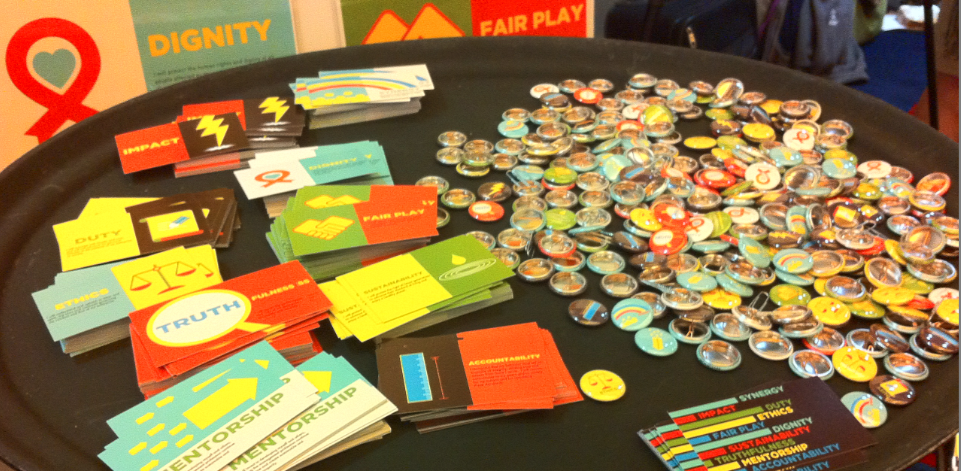
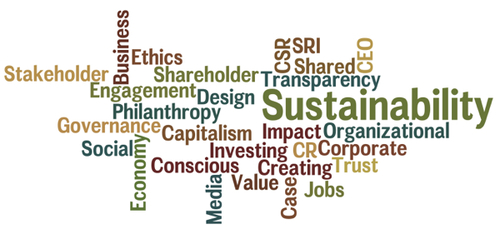
Image

These were just some of the things that kept us busy in 2011. While some represent the changing marketplace, others are age-old struggles between activists, consumers, employees and corporations. Yet, they all represented the emergence of new forces at play in our corporate corridors.

Yes, 2011 represented despair for many – the jobseekers, the underemployed, the single parent, the shopper, the CEO, the trader – but with despair, as CSRwire’s CEO Joe Sibilia noted, comes hope, adaptability and often, solutions.

And it is at that stage that most of us converged in 2011.

Transparency: Is Business Ready?

Take, for example, the recent BSR conference held in San Francisco. My panel addressed a topic that is bound to get most of us shifting in our chairs: Sustainability in a Hyper-Transparent World. Ouch, right? Joined by executives from Oxfam, Intel and SourceMap, the conversation included several uncomfortable moments (I offered up Zappos as an example to the audience, citing that the company livestreams its all hands meeting in order to live its mission of “building open and honest communications.”) and featured several probabilities, suggestions, and potential solutions by a group that included lawyers, sustainability executives, CSR officers, reporters, strategists, entrepreneurs as well as nonprofit leaders.

“When you are increasingly naked, fitness if not optional.” – Macrowikinomics

That the panel attracted a full room of senior executives willing to discuss difficult issues like privacy, corporate governance and stakeholder responsibility is a start.

The C-Suite Headlines Sustainability

Till last year, while much was being written about CSR and sustainability, executives were largely absent from the dialogue. In 2011, this changed ever so subtly. Earlier in the year, Best Buy CEO Brian Dunn took the stage at one of the year’s most prolific conferences, the Boston College Center for Corporate Citizenship’s annual conference. He discussed the importance of employee wellbeing, organizational design, transparency (Kathleen Edmond was the first Chief Ethics Officer to start a blog on ethical issues in the workplace) and the importance of stakeholder engagement.

“The more you peel the onion, the more you realize there is to be done. You just need to be constantly excited about peeling the onion.” – Brian Dunn, CEO, Best Buy

At Net Impact, Nike’s Hannah Jones took the stage as did REI CEO Sally Jewell. BSR kept the momentum going by featuring Ofra Strauss, CEO of the Strauss Group, Autodesk CEO Carl Bass and Anheuser-Busch CEO Carlos Brito.

These chiefs weren’t exactly looking to gain brownie points. They were after all speaking to the choir in some respects and to an audience that for the most part, gets business and social responsibility. But what made each of them stand out was their honesty about the difficult problems facing us today – a first? – agreement on the role of business in adding to today’s social and environmental mess.

“In the last few years, business has lost tremendous trust in the marketplace. That we are GOOD now rests on us.” – Ofra Strauss, Chairperson and former CEO, The Strauss Group

Mea culpa, they all said. Followed by: Here’s how we are trying to change ways, rethink growth, repurpose missions and reengage stakeholders.

That’s a start.

Social Media Engagement: 140 Characters Rule

Despite all the naysayers of social media, there is no denying that for any organization that sells a product or service today, having a dedicated presence on Facebook and Twitter is a prerequisite. With engagement reaching never-seen-before proportions, even Chief Sustainability Officers are learning to communicate in 140 characters or less.

“We must see social problems as business opportunities.” – Carol Cone, EVP, Edelman

But several companies dipped their toes in active engagement by trying out new formulae: Best Buy released their annual CSR report by hosting a live webinar (that I moderated) with their Sustainability team and a parallel conversation on Twitter. As I quizzed them about the report, questions poured in from Twitter: What was Best Buy doing in the area of conflict minerals? What about human rights? Recycling? How about consumer education? And why the low diversity ratio of employees?

Squirm they did, admitting that the issues were complex they did, but answer they also did.

They weren’t the only ones though.

Timberland (that was acquired by VF earlier in the year) launched their new Communications portal, McDonald’s hosted a live chat on Twitter with VP of CSR Bob Langert, UPS held several chats during the holiday season from sustainable gifting to green packaging choices.

Communicating your sustainability story is an important cog in the wheel called trust and the choice to engage is no longer a valid option. How you choose to do so, however, will continue to differentiate you from your competitor.

Making Business Sense out of Sustainability

Several large organizations came forward in 2011 asking jobseekers and students applying for jobs in sustainability and CSR to understand how to relate their core competencies and knowledge to the issues facing us today, i.e., water depletion, carbon emissions, climate change, etc.

How can depleting levels of water relate to a professional services firm, for example, or a bank? Why must a software company invest in engaging and educating its supply chain?

Climate Corps: Creating Jobs & Savings

The Environmental Defense Fund’s Climate Corps program is one of very few initiatives that have managed to tie sustainability with business strategy and growth while creating jobs out of the process.

From placing seven MBA candidates as summer fellows in 2008, the program has quickly grown in popularity, placing 96 students at 78 companies in 2011. The fellows spend an entire summer working with their host companies on identifying energy efficiency solutions, implementing carbon management processes and helping diverse businesses embed environmental sustainability into their strategies.

The results: Millions in savings. While few get direct job offers from the Fellowship, most have had success finding jobs where their unique mix of experience, passion, and the ability to tie business strategy with sustainability, is appreciated and utilized in changing processes, setting standards and adapting organizations to a fast-changing reality of limited resources.

This is a start.

Organizational Design & Sustainability

Where does sustainability fit in your organization?

Everywhere, really, is the only correct answer, irrespective of where the chief sustainability officer sits. This, finally is getting addressed by what I consider a crucial component at any company: The HR and recruitment teams. In collaboration with IE Business School, I moderated seminars with recruiters, HR directors and organization design consultants on the value of CSR in candidate recruitment and retention.

We discussed the relationship between productivity, values, respect and growth. We heard from students who want to work for socially responsible companies and executives who are redirecting their organizations to instill a culture of ethics, responsibility, accountability and pride.

Mea culpa, most of them said. That’s a start.

Originally written for and published on CSRwire’s Commentary section Talkback on December 30, 2011.

Share this:

  • Tweet
  • Email a link to a friend (Opens in new window) Email
  • Share on Reddit (Opens in new window) Reddit
  • Print (Opens in new window) Print
Like Loading...

CSRwire In Conversation with BCLC: The 2012 CSR Outlook

10 Tuesday Jan 2012

Posted by Aman Singh in Uncategorized

≈ Leave a comment

Tags

aman singh, aman singh das, BCLC, Business, Career advice, careers, CSR, CSR communications, CSRwire, editorial director csrwire, Ethics, Events, Leadership, Management, Social Media, Social Responsibility, Stakeholder Engagement, stephen jordan, Sustainability, sustainability, Uncategorized


Join CSRwire’s Editorial Director Aman Singh in conversation with Stephen Jordan, Executive Director of the U.S. Chamber Business Civic Leadership Center and a group of MBA graduates virtually for an intimate conversation about what happened in corporate social responsibility (CSR) in 2011 and what the field has in store for 2012.

When: Friday, January 13, 2012; 9:00am EST

Where: Livestream & Twitter

Register for the FREE live stream and join the tweetchat at #BCLConCSR!

The 2012 CSR Outlook is the first in a FREE six-part forum series being conducted by the Center. The U.S. Chamber BCLC’s Conversations with Stephen series is produced and moderated by founder and executive director Stephen Jordan. Guests engage in thoughtful, solution-oriented discussions and debates about the CSR field. The six-part 2012 series is offered at no charge as part of BCLC’s commitment to share knowledge and best practices with current and upcoming CSR practitioners.

We look forward to hearing from all of you @AmanSinghCSR, @CSRwire and #CSRwire or #BCLConCSR!

Related:
2011: The Year Business Learned to Say Mea Culpa

Share this:

  • Tweet
  • Email a link to a friend (Opens in new window) Email
  • Share on Reddit (Opens in new window) Reddit
  • Print (Opens in new window) Print
Like Loading...

Social Media Tactics: McDonald’s Hosts Twitter Chat. And Issues a Policy.

09 Friday Dec 2011

Posted by Aman Singh in CSR

≈ Leave a comment

Tags

aman singh, aman singh das, Bob Langert, Brand Management, consumer education, corporate social responsibility, CSR, CSR communications, CSR report, Management, McDonald's, McDonald's CSR report, PR, risk management, social media, Stakeholder Engagement, stakeholder engagement, Sustainability, sustainability, transparency, Twitter, Twitter chat


Certainly not the blog post I planned on writing after spending two weeks in New Delhi, India but I am compelled.

Today, McDonald’s hosted a Twitter chat with VP of CSR Bob Langert. The motivations are many for a company that is besieged for its product line and constantly under fire.

In fact, last year at a diversity benchmarking event at Hamburger University, I had the opportunity to hear the McDonald’s executive team discuss a whole host of business practices and strategies, including diversity (led by Global Chief Diversity Officer Pat Harris), employee learning and corporate social responsibility (CSR).

Here’s a snapshot of what I wrote then:

There is an argument that some companies–such as those that deal in weapons and tobacco–just can’t do corporate responsibility in a meaningful way. As a result, they are often excluded from CSR rankings and benchmarking exercises.

But what about a company like McDonald’s constantly under fire for its products? How does the world’s largest fast-food chain practice corporate social responsibility that is both contextual and real?

Led by Senior Manager for Corporate Social Responsibility Kathleen Bannan, who began her presentation by saying “CSR is everybody’s business,” the day-long event proved both thought-provoking (how does a company who doesn’t enjoy corporate America’s most favorable retention rates or the public’s uniform love tackle responsibility and that ever-amorphous doing the right thing?) and insightful (McDonald’s is among very few companies to institute an employee resource group for its white male workforce).

What happened today, however, was an effort at cautious transparency and an attempt at crowd sourcing corporate social responsibility.

The questions were introspective:

And the answers, alternatively useful, creative and critical.

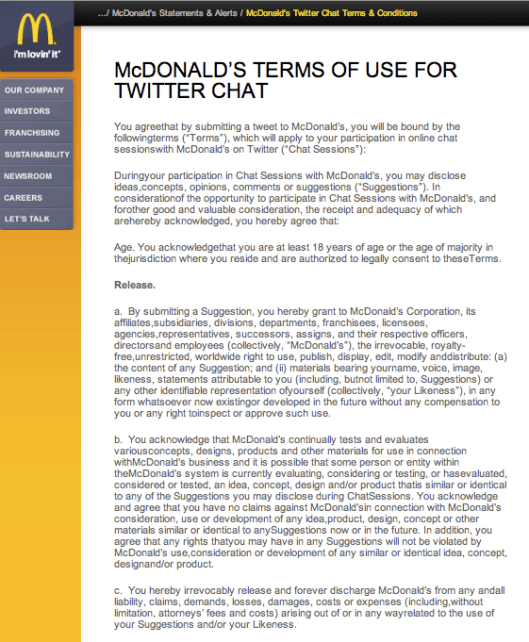
But then I saw this:

Now McDonald’s is not the first company to host a Twitter chat by any means. I have personally attended several as well as hosted a few — including one coming up next week with UPS’ Chief Sustainability Officer Scott Wicker — with varying levels of participation from a usually diverse set of activists, journalists, executives and consumers.

Never before, however, have I been handed a “Twitter Chat Policy.”

An indication of things to come or…?

Continue reading →

Share this:

  • Tweet
  • Email a link to a friend (Opens in new window) Email
  • Share on Reddit (Opens in new window) Reddit
  • Print (Opens in new window) Print
Like Loading...

The Unruliness of Corporate Responsibility & Hyper Transparency: Quotable Quotes from Net Impact & BSR 2011

09 Wednesday Nov 2011

Posted by Aman Singh in CSR, CSR reporting

≈ Leave a comment

Tags

aman singh, aman singh das, Autodesk, Bea Perez, brand management, Brian Dunn, BSR, BSR 2011, Business for Social Responsibility, Carol Cone, cause marketing, Chris Jochnick, corporate citizenship, corporate social responsibility, CSR, CSR reporting, Deloitte, Edelman, Events, Gregory Unruh, hyper trasnparency, integrated reporting, Jessica Fries, Kate Heiny, Leadership, LinkedIn, Lynelle Cameron, Management, Meg Garlinghouse, Net Impact, Occupy Wall Street, Ofra Strauss, Social Responsibility, Stakeholder Engagement, Sustainability, sustainability reporting


I spent the last two weeks attending and speaking at the Net Impact and BSR conferences. As is typical at both conferences there is always too much to choose from and a lot to absorb. Since I cannot offer you a summary of each and every panel I attended/spoke at, here are some of the top line quotes heard at the conferences:

CSR: Always a Difference in Opinions

“CSR used to be about doing the right thing. Now it’s all about how it makes business sense.” – Campbell Soup’s VP for CSR Dave Stangis

“I hate the term CSR. It has slowed the movement and in many ways ensured that it is not built into systems, accounting, etc. I prefer [the term] sustainability although that’s not a big favorite either.” – Lynelle Cameron, Director of Sustainability, Autodesk

“We think CSR is good business.” – Suzanne Keel-Eckmann, National Director for Corporate Responsibility and Sustainability, Deloitte

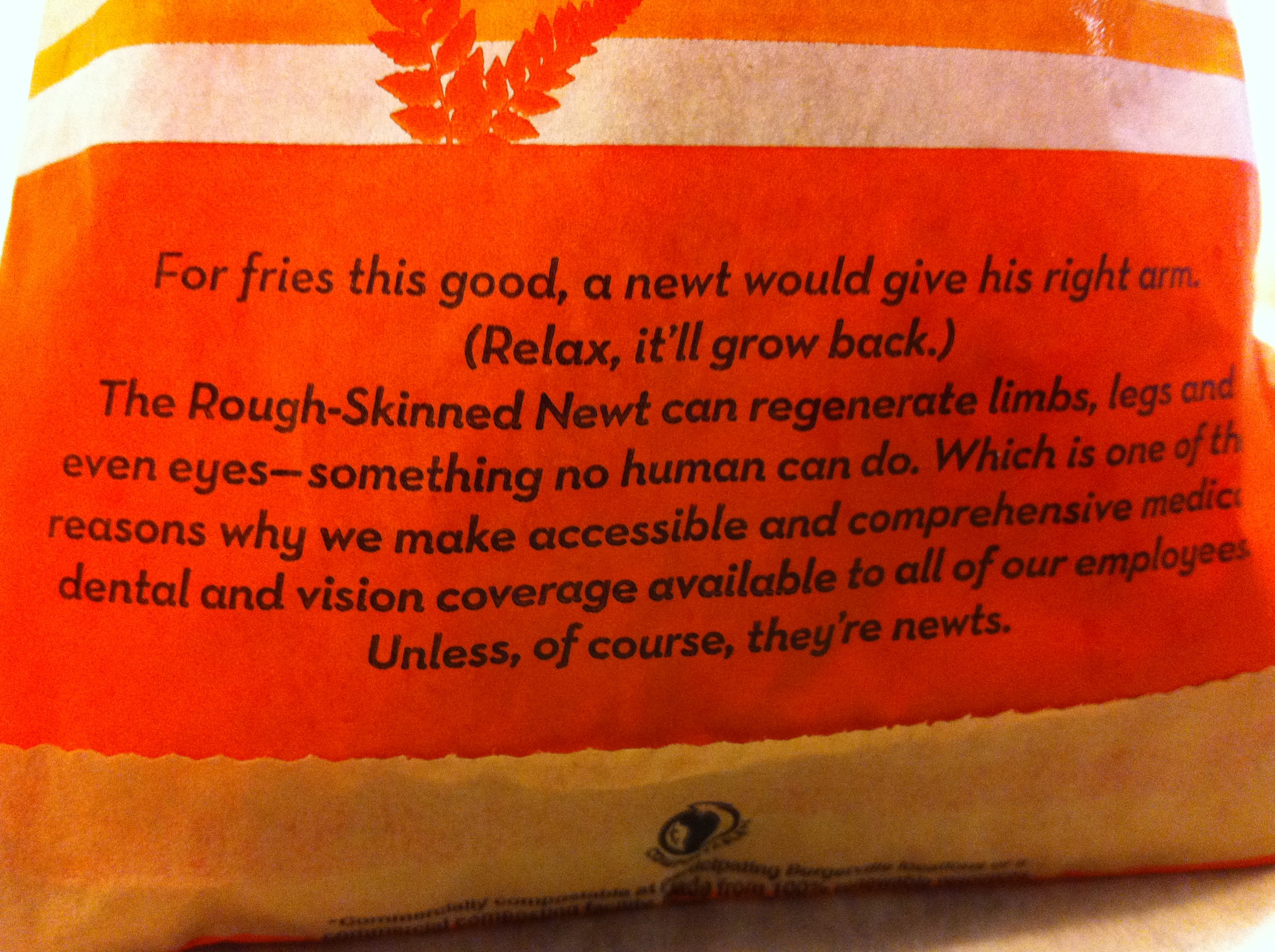
A bag of sweet potato fries at Burgerville in Portland, Oregon: Social messaging done right?

“CSR should be led by charity and employee engagement, not CSR departments.” – Meg Garlinghouse, Head of Employment Branding and Community, LinkedIn

“Our CEO still believes that he is the company’s chief sustainability officer. But he realized that we need to be more organized and structured in our efforts because there is a lot to be done.” – Bea Perez, Chief Sustainability Officer, Coca-Cola in response to Reverse Cause Marketing: Coca Cola’s Pursuits in the Middle East

The Role of Business in Social Enterprise

“We must see social problems as business opportunities.” – Carol Cone, EVP, Edelman

“I worked on Wall Street, driven by greed. Regardless of what anyone says, greed is not good. You get so immersed in the system you forget what all you can do with your life.” – Charles Kane, Former CEO and Board Member, One Laptop Per Child

“A lot of charities are beginning to worry that a lot of the problems they have been trying to solve are not going away. Business still tends to be more sustainable.” – Steve Andrews, CEO, SolarAid

“In the last few years, business has lost tremendous trust in the marketplace. That we are GOOD now rests on us.” – Ofra Strauss, Chairperson and former CEO, The Strauss Group 

Personal Responsibility

“When you know what you’re doing is helping thousands, the payback is so much more fulfilling than any number of stock options and bonuses.” – Charles Kane, Former CEO and Board Member, One Laptop Per Child

“We need to change without giving up who we are. There are no riots against business that are profitable. We need to talk with them, not talk to them.” – Ofra Strauss, Chairperson and former CEO, The Strauss Group

“The more you peel the onion, the more you realize there is to be done. You just need to be constantly excited about peeling the onion.” – Brian Dunn, CEO, Best Buy

The Role of an MBA

“No profession exists to make the practitioners rich. There is always a higher purpose.” – Gregory Unruh, Director, Lincoln Center for Ethics, Thunderbird School of Global Management

“I don’t know if its [The MBA Oath] is going to work. But it is in the right direction and symbolizes a complete shift in mentality.” – Max Anderson, President and Cofounder, The MBA Oath

“I’m waiting to see the day when a new employee tells me they attended a class in college called Change Agent 101.” – Anonymous 

Transparency

“We’re from the Midwest. We don’t advertise our initiatives. But lately there has been a shift in this thinking and our communication style. Transparency is a journey and we are in the early stages of that.” – Kate Heiny, Group Manager of Sustainability, Target

“The priority should always be why not disclose instead of why disclose.” – Chris Jochnick, Director, Oxfam America

“When you are increasingly naked, fitness is not optional.” – Quoted by yours truly during a BSR panel on hyper-transparency. Citation: Macrowikinomics

Integrated Reporting

“For us, integrated reporting starts with the thinking within the company on how they will sustain their value in the future. Integrated reporting starts with integrated thinking.” – Jessica Fries, Director, International Integrated Reporting Committee

Share this:

  • Tweet
  • Email a link to a friend (Opens in new window) Email
  • Share on Reddit (Opens in new window) Reddit
  • Print (Opens in new window) Print
Like Loading...

Occupy Wall Street: The Average Joe Interprets Corporate Social Responsibility

19 Wednesday Oct 2011

Posted by Aman Singh in CSR

≈ 17 Comments

Tags

Accountability, aman singh, aman singh das, Aneel Karnani, Brand Management, Business, Career advice, corporate citizenship, corporate social responsibility, creating shared value, CSR, CSRwire, diversity, ethical markets, Ethics, Events, fair compensation, human rights, Job search, Jobs in CSR, jobs in CSR, joe sibilia, leadership, Management, Occupy Wall Street, OWS, rosalinda sanquiche, shared value, Social Enterprise, Social Impact, social justice, social responsibility, Social Responsibility, Stakeholder Engagement, supply chain, Sustainability, sustainable business practices, transparency, Wall Street, what is CSR?, Work culture


Earlier this week I was at the annual PRSA conference in humid and beautiful Orlando, Florida. Before you think that I have switched tracks from journalism to PR, stop right there! I was on site to speak on an interestingly personal topic: Sustainability: Walking the Walk.

Sustainability: Walking the Walk with CSRWire & Ethical Markets

Joining me on the panel were CEO of CSRwire Joe Sibilia and Executive Director of Ethical Markets Rosalinda Sanquiche. Sibilia started off the panel by talking about Occupy Wall Street. Not because he wanted a room full of dissent but because for Sibilia, as he emphasized on a recent Fox Business show, OWS goes to the heart of corporate social responsibility: A responsible capitalist system that takes into account a business’ social, economic and environmental stakeholders.

From a room of roughly 45 attendees, almost everyone raised their hands. However, when he followed up by asking how many understood what the protestors are demanding, the hands fell to a single digits. So, before I go any further, here’s a two-part question for you:

And:

Here’s the thing: Because so many continued to disagree with the holier-than-thou voice of CSR, claiming it is another cost business doesn’t need, a burden, not a business priority, so on and so forth, Michael Porter gave us an easier concept to embrace: Creating Shared Value.

You Don’t Get CSR? How About “Shared Value”?

Many more understood the economical efficacy offered by shared value than the tardy, accusatory and undefined acronym of CSR. But CSR as well as creating shared value are concepts spearheaded by economists, business leaders, researchers and activists.

Now we are all being forced to recognize and acknowledge a movement created by the average Joe (no pun intended!) demanding business to be more responsible, equal and just.

They want to be able to work, to have a home, a family. They want the right to live comfortably.

In other words, corporate social responsibility.

Yes, it’s one and the same thing, except now it’s not the activists or the bloggers taking up the case but an undefined mass of people who come from different backgrounds, experiences and age but are commonly united on one front: Fairness.

Regardless of whether you physically join the Occupy Wall Street protestors, it is far more important that you understand their message and recognize that this is your one chance to make things right.

Yes, You the Average Employee Can Make a Difference

So, go ahead: Nudge your boss to offer job sharing opportunities to candidates.

As a job candidate, question the recruiter on the company’s mission, values, priorities. As a student, ask your faculty to discuss business cases in context of economic recessions, environmental degradation and social upheaval.

Ask the tough questions, the right questions. As Michigan’s Ross School of Business Professor Aneel Karnani recently said, “You get the kind of government you vote for.” We as professionals and students get the kind of corporation we choose to work for.

This is your chance to influence business as an employee, a manager, and as a prospective candidate. For the longest time we have been told to vote with our dollars. Now it is time to vote with our expertise and professional skills.

Question is, are you up for it?

Share this:

  • Tweet
  • Email a link to a friend (Opens in new window) Email
  • Share on Reddit (Opens in new window) Reddit
  • Print (Opens in new window) Print
Like Loading...

11 Challenges for Corporate Sustainability: A Review

24 Saturday Sep 2011

Posted by Aman Singh in CSR, CSR reporting

≈ 5 Comments

Tags

Accountability, aman singh, aman singh das, benchmarking sustainability, brand management, Brand Management, Business, conference board, corporate citizenship, corporate social responsibility, CSR, CSR events, CSR reporting, CSR strategy, ethics and compliance, Events, global reporting initiative, GRI, innovation, integrated reporting, Leadership, leadership, Management, risk management, social media, Social Responsibility, Stakeholder Engagement, supply chain, Sustainability, sustainability, sustainability reporting


Early this year, at the Global Reporting Initiative’s official launch in North America, Director of the Conference Board’s Center for Sustainability David Vidal asked a room full of senior CSR and sustainability executives:

What are the top three reasons for your company’s reluctance to embrace sustainability—and adopt sustainability reporting?

Now, as I prepare my keynote presentation for the Center’s annual summit next week on Innovation, Sustainability & Social Media, the answers to David’s question six months ago remind me of how quickly some businesses — and the sustainability space — are evolving.

Here’s what I wrote then on Vault’s CSR blog:

——————————–

The responses that came from an audience representing the glitterati of the corporate social responsibility world might surprise.

Keep in mind that a majority of them (I’m almost tempted to say all) don’t need another lecture on the business case for CSR or sustainability, are active advocates, and represent companies that–for a multitude of reasons–recognize the link to their bottom lines.

What these responses point to, however, is the continued sense of reluctance across senior leadership toward combining the social and environmental with corporate. The path to effective CSR isn’t a linear process by any means and these responses should help those who continue to struggle with mental and ideological barriers within their companies.

Because knowing the challenge is half the battle.

As you go through these, make an elementary checklist. Which of these sound familiar? How did you tackle them? Do any seem/remain insurmountable in the current corporate reality of thrift and inflexibility? Share your perspectives by leaving a comment or connecting with me @AmanSinghCSR.

And, without further ado, and in no particular order:

  1. Doubt
  2. Liabilities
  3. Denial
  4. Resources
  5. Causality
  6. Lack of Global Standards
  7. Benchmarking
  8. Lack of comparative credibility
  9. Uncertainty
  10. Fear of the unknown
  11. Fear of the known

——————————–

My estimation is that this list continues to evolve depending on the industry, the chief in charge, and even by which quarter we are in.

In coming days, I will review these challenges  — after hearing from some of business’ most eminent executives at the Annual Summit —  and hopefully shed some light on how some businesses’ have indeed managed to overcome them, and found advantage in doing so.

Stay tuned!

Share this:

  • Tweet
  • Email a link to a friend (Opens in new window) Email
  • Share on Reddit (Opens in new window) Reddit
  • Print (Opens in new window) Print
Like Loading...

VIDEO: 2degrees Launches Sustainability Quarterly in New York

21 Wednesday Sep 2011

Posted by Aman Singh in Uncategorized

≈ 2 Comments

Tags

2degrees, aman singh, aman singh das, brand management, corporate social responsibility, CSR, diageo, Events, Green, Mark Serwinowski, marketing, metavu, PR, roberta barbieri, Social Media, social media, social media and sustainability, Stakeholder Engagement, supply chain, Sustainability, sustainability, Uncategorized


I was recently invited by U.K.-based 2degrees (an online community of over 16,000 sustainability professionals) to participate in their inaugural Sustainability Quarterly in New York City. It was a great panel (co panelists: Mark Serwinowski from Metavu and Roberta Barbieri from Diageo) and my role was to discuss the increasing importance of social media. Not only did I have an interesting task, considering most in the audience did not have a Twitter or Facebook account, they also had some outstanding questions for me.

Take a look:

If you are in the New York area, I highly recommend attending their next quarterly on September 27, 2011. Their working groups methodology and nuts and bolts approach is effective, engaging and immensely productive.

You won’t be disappointed.

Share this:

  • Tweet
  • Email a link to a friend (Opens in new window) Email
  • Share on Reddit (Opens in new window) Reddit
  • Print (Opens in new window) Print
Like Loading...
← Older posts
Newer posts →

Let's Talk!

Virtual
732-322-7797
amansinghdas@gmail.com

Blogs I Follow

  • Nonprofit Chronicles
  • Learned On by Andrea Learned
  • Angry African on the Loose™
  • csr-reporting
  • The CSR Blog
  • In Good Company: Singh on CSR

My Cloud

Capitalism 2.0 CSR CSR reporting CSRwire ESG Guest Author HR Stakeholder Engagement Sustainability Uncategorized

Recently written…

  • Rationality is Ruining Us: Mayors, presidents and governors join major businesses in charting way forward on climate change
  • 2015: the year businesses recognize that climate change is real – and 4 other themes
  • Hardcore lessons of sustainability – ’10 Words or Less’
  • Brewing a Better Future [#BaBF] with Heineken: Examining the Many Flavors of Local Sourcing
  • From Conflict to Collaboration: Kimberly-Clark and Greenpeace Participate in LIVE Twitter Chat

What others are reading

aman singh aman singh das Brand Management Business corporate social responsibility CSR CSR reporting CSRwire ESG Leadership Stakeholder Engagement supply chain Sustainability sustainability Work culture

Categories

Most Read

  • None

Create a free website or blog at WordPress.com.

Nonprofit Chronicles

Journalism about foundations, nonprofits and their impact

Learned On by Andrea Learned

Angry African on the Loose™

I have opinions. I am from Africa. I live here now. I blog.

csr-reporting

Connecting the dots between Business, Society & the Environment

The CSR Blog

Connecting the dots between Business, Society & the Environment

In Good Company: Singh on CSR

Connecting the dots between Business, Society & the Environment

Privacy & Cookies: This site uses cookies. By continuing to use this website, you agree to their use.
To find out more, including how to control cookies, see here: Cookie Policy
  • Subscribe Subscribed
    • In Good Company: Singh on CSR
    • Join 119 other subscribers
    • Already have a WordPress.com account? Log in now.
    • In Good Company: Singh on CSR
    • Subscribe Subscribed
    • Sign up
    • Log in
    • Report this content
    • View site in Reader
    • Manage subscriptions
    • Collapse this bar
 

Loading Comments...
 

    %d