• ABOUT THE AUTHOR
  • Sustainability
  • CSR
  • CSR reporting

In Good Company: Singh on CSR

~ Connecting the dots between Business, Society & the Environment

Tag Archives: employee engagement

The True Value of CSR Reporting: In Conversation with Campbell Soup’s VP for CSR

07 Monday Jul 2014

Posted by Aman Singh in CSR, CSR reporting, CSRwire, ESG

≈ Leave a comment

Tags

Business, Campbell Soup, CEO Network, community development, corporate governance, CSR, CSR reporting, CSRwire, Dave Stangis, denise morrison, employee engagement, Environment, ESG, Social Media, Stakeholder Engagement, Supply chain management, Sustainability, sustainability, Work culture


The soon-to-be-released report will mark Campbell Soup’s fourth CSR Report. This report comes amidst a CEO change – Denise Morrison took on the chief job at Campbell Soup last year joining a small group of women CEOs in the Fortune 500 – and a period of what Director of Diversity & Inclusion Kevin Carter calls a time of “deep introspection” for the company.

Carter’s note is well taken. With the economy sputtering and flailing, reports continue to suggest that consumer confidence and trust remain low. For a food manufacturer then, this means not only staying ahead of the curve of quickly changing taste preferences but also understanding its unique role in encouraging nutrition across an increasingly complex and fragmented consumer base.

And amid a tepid economy, where does the true value of CSR and sustainability reporting lie? Can these reports and the effort required to produce them extend beyond an exercise in sharing key metrics, the year’s highlights – and a few, incredibly sparse media mentions – to true learning experiences for companies to better their processes and make gains that help them and their communities become more sustainable?

The True Value of CSR Reporting

Dave_Stangis_CSFor VP of Public Affairs and Corporate Responsibility, Dave Stangis – his third report since taking the job at Campbell Soup – the true value of Campbell Soup’s reporting goes far beyond setting the right goals and reporting on the progress.

“The true potential of CSR reporting* is that while companies go through this chronological reporting effort once a year, the organization and business units are executing their strategies and working on metrics year-round. The process of reporting creates an opportunity to build a Campbell Soup Britannica or World Book to work off of and use as a record of the company’s progress,” he said in a recent interview.

“All year-long, we are collecting examples, building the narrative, monitoring our progress and continually evolving materiality assessments,” he continued. Often, great examples of progress emerge that would otherwise never rise to the spotlight in a multinational company.

“As you dig in, you find cross-functional teams working together on strategy, benchmarking, indicators, etc. There are, of course, always things to improve on but the stories and ideas that emerge from this heels dug in reporting exercise are incredibly useful in moving our company forward,” he said.

Connecting the Dots: Recognizing the True CSR Heroes

In recent weeks, CSRwire readers read from a number of top executives at Campbell Soup on their stories and contribution to the 2012 CSR report. Trish Zecca discussed the fine balance between nutrition and taste while Amanda Bauman discussed how the company is tackling hunger and obesity in its communities and Dr. Daniel Sonke gave us an in-depth account of the relationship between agriculture practices and corporate sustainability. Finally, D&I Director Kevin Carter offered his insights on how the company is prioritizing intercultural teams, moving diversity beyond compliance, and tentatively dipping its toes in social media.

For Stangis, these are the true heroes.

“These are the people who are behind the images and stories in the report. They are invested in the business Campbell_Soup_Volunteersand their work and there is a discernible amount of pride and work ethic that goes along with that,” he said.

“For our CSR Communications Manager Niki Kelley – creating this report is her life for six months and I’ve told her, she’s the one who knows more about the entire company than anyone else in the company.”

5 Questions for Campbell Soup’s VP for CSR

What is Stangis most proud of in the latest CSR report?  “It’s the nuances that a lay reader won’t realize but that are critical to the progress we are making,” he said. To explain further, we decided to play five questions:

1. Whose Interested:

“We continue to evolve our understanding of our various audiences [for the CSR report]. We want to connect with our employees on the frontline as well as in the C-suite. We need to impact our neighbors and make the content relevant to our customers and consumers. Most readers are looking for quick snapshots and I want to validate, reinforce and build trust and credibility in that short timeframe.”

2. What’s New:

“We’ve really worked hard on strengthening the wellness and nutrition metrics from a product perspective…we’re not driving a health ultimatum, but we are offering more healthy choices for consumers. Readers that pay closer attention will notice a growing sophistication in our strategies and metrics across the board. This report also includes the first full description of our Healthy Communities Initiative that we’ve launched in Camden, NJ.”

3. What’s Often Hidden:

“We work hard to make sure nothing gets lost in the details, but there is a ton of content that most readers will miss on a casual glance. The CEO Letter can give the readers a sense of how Denise Morrison thinks and interacts with the CSR and sustainability strategy.”

“We’re bridging from an employee engagement (only) mindset to a performance culture that leverages engagement to drive better business results. This isn’t something that is immediately obvious to external readers but it’s a priority for us.”

4. What’s Measured Gets Managed:

“Last year we discussed our community programs but this year the report really talks about these in a strategic and measurable manner. We continue to advance our metric set from product conception to societal impact. We’ve mapped our production sites with the WBCSD Global Water Tool and as we’ve brought our Community and Foundation functions into tighter alignment with our CSR and Sustainability strategies, we are shifting from measuring activity to measuring outcomes.”

5. Uncharted Territory: 

“The big news this year from a sustainability perspective is our traction on renewables. We’ve had smaller efforts in the past but in 2011 we went from dipping our toes in the water to flipping the switch on one of the largest solar installations in the country. This represents a cultural shift for the company. Large scale renewable projects just weren’t in our solution set and now we are evaluating new renewable opportunities across our plant network that reduce our greenhouse gas emissions and save money.”

Solar_Panels_at_Campbell_SoupFor Campbell Soup, a global footprint means a holistic vision of sustainability that encompasses its products, employees, communities and supply chain.

And for Stangis, publishing an annual report is not only a testament to his team’s efforts but also a way to measure what’s not working. Having led CSR at Intel before joining Campbell Soup, Stangis is a veteran in the world of CSR reporting, and has seen firsthand the evolution of the sector.

“What comprehensive reporting does today is set up a process that continues to position the company in the long-term. This wasn’t the case when we started reporting. Now we’re anticipating issues and breaking down communication silos that are inherent in the company,” he explained.

Challenges Ahead: More Data, Clarity of Purpose

Any regrets? “We need to keep pushing ourselves for better data every year, especially for our international footprint. It’s only when you dig in that you realize how much better a fully integrated measurement and reporting system would be,” Stangis confessed.

The journey – as for most companies taking on the responsibility and challenge of reporting on their corporate social responsibility and sustainability efforts – is far from over.

And as a seasoned sustainability executive, Stangis understands the daunting task that lies ahead for Campbell Soup in a crowded market, evolving taste preferences and the continuous challenge of consumer education.

“We still have to plug people into what we are doing, the reason why we are doing it [and make it make sense],” he said, noting that it isn’t just the external stakeholders that need the dots to be continually connected for them.

“We have to do a better job at communicating the strategic intent and shareowner value delivered by a comprehensive CSR program.  Our internal teams, our C-suite – it’s our job to help them understand  the story across the board.”

Originally written for and published on CSRwire’s Commentary section Talkback on May 24, 2012

Share this:

  • Tweet
  • Email a link to a friend (Opens in new window) Email
  • Share on Reddit (Opens in new window) Reddit
  • Print (Opens in new window) Print
Like Loading...

2011 in review @ Singh on CSR: 5 Months, 31 Blog Posts, 9,500 Visits

08 Sunday Jan 2012

Posted by Aman Singh in CSR

≈ Leave a comment

Tags

aman singh, aman singh das, Brand Management, BSR 2011, citizen journalism, corporate citizenship, corporate social responsibility, CSR, CSR communication, CSR journalist, CSR reporting, CSR strategy, economic value, employee engagement, In Good Company, mainstream media, net impact 2011, Occupy Wall Street, shared value, social media, sustainability, sustainable business, sustainable business practices


The WordPress.com stats helper monkeys prepared a 2011 annual report for this blog.

Here’s an excerpt:

The concert hall at the Sydney Opera House holds 2,700 people. This blog was viewed about 9,500 times in 2011. If it were a concert at Sydney Opera House, it would take about 4 sold-out performances for that many people to see it.

While I won’t bore you with the stats, here are the top three winners of 2011:

  1. Net Impact and BSR 2011: 7 Days, 2 Conferences, 5 Trends in CSR & Sustainability
  2. Does Expending Resources on CSR and Sustainability Destroy Economic Value?
  3. CSR and Sustainability in Mainstream Media: Citizen Journalism Or Simply Shared Value?

Thank you to all of you for a tremendous year! I value your support, trust, readership, comments, courage and enthusiasm to say, do and compel others toward the right action.

Here’s to expanding our “small world” of CSR and sustainability slowly but surely, one person at a time in 2012!

– Aman

Share this:

  • Tweet
  • Email a link to a friend (Opens in new window) Email
  • Share on Reddit (Opens in new window) Reddit
  • Print (Opens in new window) Print
Like Loading...

Sustainability & Social Media: Trends, Challenges, Solutions

30 Friday Sep 2011

Posted by Aman Singh in Uncategorized

≈ Leave a comment

Tags

aman singh, aman singh das, brand management, Business, Chris Jarvis, corporate social responsibility, CSR, CSR communications, CSR strategy, employee engagement, Events, leadership, management, prezi, Singh Solutions, Social Media, social media, social media and sustainability, social media trends, Sustainability, sustainability, sustainable business practices, Work culture


On Monday I was at the Conference Board’s Center for Sustainability annual summit to present on sustainability and social media. I decided to try Prezi after having seen Realized Worth’s Chris Jarvis use it with aplomb at the Boston College Center for Corporate Citizenship’s annual conference earlier this year.

Here then is my presentation:

Sustainability and Social Media Trends

And while you’re at, why not take this quick survey on the relationship between brand management and social media?

Share this:

  • Tweet
  • Email a link to a friend (Opens in new window) Email
  • Share on Reddit (Opens in new window) Reddit
  • Print (Opens in new window) Print
Like Loading...

Think CSR is None of Your Business?

29 Thursday Sep 2011

Posted by Aman Singh in CSR, HR, Uncategorized

≈ 3 Comments

Tags

aman singh, aman singh das, brand management, Business, campus interview, campus recruitment, candidate sourcing, Career advice, careers, corporate citizenship, corporate social responsibility, CSR, diversity, employee engagement, HR, human resources, IE Business School, inclusion, job interview, jobs, management, Management, Recruitment, recruitment, retention, shared value, social responsibility, Sustainability, talent, talent acquisition, talent management, Uncategorized, Work culture


Think again, especially if you work in recruitment or human resources.

My latest editorial on CSRWire: The Power of Hiring Right: A Value Proposition that Most Recruiters Continue to Ignore

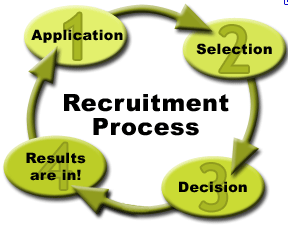
Where Does CSR Fit in with the Recruitment Process?


Share this:

  • Tweet
  • Email a link to a friend (Opens in new window) Email
  • Share on Reddit (Opens in new window) Reddit
  • Print (Opens in new window) Print
Like Loading...

Revisiting the PR Take on CSR: “Corporate Responsibility is Not Public Relations”

30 Tuesday Aug 2011

Posted by Aman Singh in CSR

≈ 1 Comment

Tags

aman singh, aman singh das, Better Business Bureau, brand management, Brand Management, Business, Career advice, careers in CSR, cause marketing, consumer education, corporate citizenship, corporate social responsibility, corporate values, CSR, CSR blogger, CSR communications, CSR strategy, Edelman, employee engagement, Events, Green practices, Jobs in CSR, Leadership, leadership, management, Management, Michael Holland, philanthropy, PR, shared value, social responsibility, Social Responsibility, Stakeholder Engagement, sustainability, what is CSR?


Last year, the Better Business Bureau hosted an event titled Good Business 2010, where the day-long agenda was to analyze the increasing confluence of public relations (PR) and corporate social responsibility (CSR). Here’s what I wrote then on Vault’s CSR blog:

A Belief System For Your Company

Edelman’s EVP for CSR-New York, Michael Holland while highlighting his firm’s approach, emphasized that corporate responsibility was emerging increasingly as an indelible part of brand management for companies, although North American companies, while initially slow to embrace it, were quickly getting on board.

Defining CR as “A belief system for a company” he broke its significance for companies into three segments: 1) the social and legal aspect; 2) its immersion into the operational model; and 3) how to leverage it for competitive share in the marketplace.

What is the ROI for corporate responsibility?

Citing a recent survey conducted by McKinsey, Holland said that the business case for corporate responsibility had never been clearer for companies. “Companies that paid attention to CSR in the last three years reported an increase in their share price of 43% against a 12% increase for those who didn’t.” At the same time, profits for the first segment of companies increased by 16% versus 7%. I’ve often noted that metrics and numbers speak louder than words. These then, need no further explanation. See more results from the McKinsey survey.

Noting that the pressure for accountability was no longer the voice of a few dedicated advocates and had shifted to mainstream demands from all stakeholders for a company, Holland stressed that the tipping point was already here: “CR cannot be ignored any longer. Shareholders, employees and clients are demanding it.”

What is corporate responsibility all about?

Holland, interestingly, chose to answer this by focusing on the key misconceptions about corporate responsibility. Funnily enough his counter-intuitive tactic worked, bringing up several questions from the audience. He put it like this:

CSR ≠ Green
CSR ≠ Strategic Philanthropy
CSR ≠ Public Relations

CSR isn’t PR, it’s About Your Business Strategy

I have discussed in the past the huge difference between conducting brand management and reputation-building and immersing CR as a culture of change into your company’s strategy. I asked Holland how he advises clients to walk that fine line.

“First of all, it needs to start from the top. Secondly, it needs to part of a company’s communication strategy. And finally you need to define what it means to track the progress of your corporate responsibility. The problem is that the marketplace believes that CSR is cause marketing and philanthropy. Our task is to overrule that and teach them that actually it’s about business strategy.”

——————————–

Now, with several communications firms announcing CSR practices, where are we headed with the confluence of PR, brand management and CSR? I turned to the latest entrant in the field, Ruder Finn. Take a read.

Share this:

  • Tweet
  • Email a link to a friend (Opens in new window) Email
  • Share on Reddit (Opens in new window) Reddit
  • Print (Opens in new window) Print
Like Loading...

Behind Every Responsible Company Is a PR Agency? A Closer Look @ Ruder Finn’s New CSR Practice

30 Tuesday Aug 2011

Posted by Aman Singh in CSR

≈ 10 Comments

Tags

aman singh, aman singh das, brand management, Brand Management, Business, Career advice, careers in CSR, cause marketing, Cone, corporate social responsibility, CRO Magazine, CSR, CSR communications, CSR marketing, CSR programs, CSR strategy, Edelman, employee engagement, Ethics, Golin Harris, Jobs in CSR, jobs in CSR, ketchum, marketing, marketing careers, PR, PR careers, public relations, risk management, Ruder Finn, Sarah Coles, shared value, social responsibility, Social Responsibility, strategic marketing


They say, behind every successful brand, is a PR agency.

How about: Behind every responsible brand, is a PR agency?

Now, what is the first thought that comes to your mind when you hear that a public relations agency has decided to roll its “CSR experience” into a new division offering clients the opportunity to use their PR capabilities and budget more responsibly, more strategically?

  1. You condemn them as a reactionary, out-to-make-money business;
  2. You think: CSR is not PR, how many times do we have to say it?
  3. Wonder how long this will last.
  4. That’s interesting. Yet another way we can help businesses create shared value

That last statement was the main driver behind Ruder Finn’s new CSR practice, which officially launched two months ago, according to Senior Vice President Sarah Coles. “We had already been doing CSR work with clients like Novartis and Gerber. It felt like a natural next step [for the firm],” she says.

The communications industry is abuzz with the notion of creating shared value and the professional services sector especially, is in the center of all the activity.

Of course, Ruder Finn is not the first PR company to offer CSR strategy and solutions. Edelman has a robust CSR and sustainability solutions practice, as do Burson-Marsteller, Ketchum, Golin Harris, Cone, and many others.

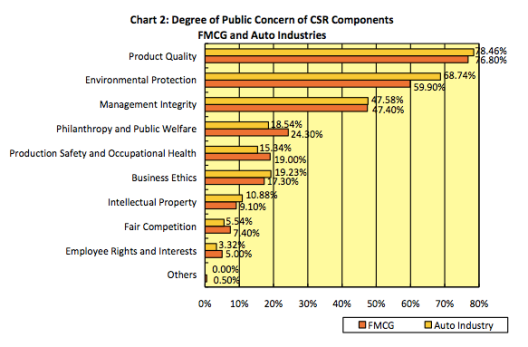
http://www.ruderfinnasia.com/files/csr-index-fmcg-and-auto-in-china-appendix.pdf

In fact, a quick search revealed that CRO Magazine even released a Top 10 list of “Corporate Responsibility PR firms” back in 2008, that placed Ruder Finn at No. 5. But how do you decipher such a ranking? If Ruder Finn was already being lauded for “CSR PR (?)” in 2008, what propelled them to create a new division now three years later?

And the big question: What is the differentiator in this burgeoning industry? 

I turned to Coles who will be leading the new practice and has spent 13 years in PR with the last seven at Ruder Finn, for some answers.

Sarah Coles, SVP, Ruder Finn

“When I started working with clients on CSR strategy, it wasn’t called CSR. Many were doing this without realizing it was called CSR. For example, at Novartis, we didn’t see our work in malaria treatment as CSR per se. It was part of their core mission, part of everyday business.”

“My first contact with CSR was when I started working with Gerber on childhood nutrition and later with Novartis. In the five years that followed, I got the chance to really see the effects of giving back to your community. I got to meet some of the patients and really saw firsthand the challenges that we in the western world would otherwise never understand. The whole experience really changed my impression of what needs to get done.”

The Case For CSR: What were the main motivations behind setting up a new practice focusing on CSR?

“There is a demand today to put together more strategic CSR programs; programs that are distinguished, unique to the company, and meaningful.”

“Consumers are pretty smart these days: They can see when something is reactionary and when it has been a longterm commitment. They trust brands that have longterm missions and whose programs are in sync with brand value.”

“A great example is the latest Tide for Hope campaign. It’s a perfect example of how core competencies can help provide value. This builds way more trust than something thrown together in a short-term cycle.”

“Ruder Finn also strongly believes that this is not only an opportunity to grow our practice but also to help define what the industry means by CSR and educate companies the issue to ensure that it continues to build as a best practice.”

The Nature of PR: Aren’t most programs reactionary in nature at first contact?

“It’s certainly a mix. Some companies who have been doing this for a long time are doing well and CSR contributes to that reputation. They build trust. Others are more reactionary but won’t be sustained or provide strategic value in the long run.”

“There is a real business case for CSR and companies are beginning to see that. Companies that have longterm Initiatives don’t have to resort to crisis management and there is value in that.”

Strategizing CSR: What then is the underlining ethos of the new practice?

“We learned a lot from working with PepsiCo on their Dream Machine recycling program. Today, we see a real opportunity in helping clients with cause marketing initiatives that reinforce their business practices and core competencies.”

“We counsel clients to do corporate social responsibility strategically. To build something that looks inside the company…dig around and see what they are already doing, what they stand for, what their core values are, and then create a campaign that captures all of that.”

Implementing CSR: How is implementing a CSR strategy going to differ from PR campaigns?

“We’re moving into pure strategy now. It’s not about short-term projects anymore. CSR is more about what makes sense for the business. How can I create something that my company stands for and does good for our community at the same time?”

“These programs go to the root of what CSR is all about: Good business sense that also provides value.”

Comments? Thoughts? Leave a comment or connect with me @AmanSinghCSR.

Share this:

  • Tweet
  • Email a link to a friend (Opens in new window) Email
  • Share on Reddit (Opens in new window) Reddit
  • Print (Opens in new window) Print
Like Loading...

Social Media and Leadership: Are Twitter and Facebook 21st Century Necessities?

12 Friday Aug 2011

Posted by Aman Singh in CSR

≈ Leave a comment

Tags

Accountability, aman singh, aman singh das, brand loyalty, brand management, Business, corporate citizenship, corporate governance, corporate social responsibility, CSR, CSR communications, CSR strategy, employee engagement, Facebook, Google+, human resources, innovation, job hunting on social media, Job search, Leadership, leadership, management, Management, marketing, PR, Quora, Recruitment, recruitment, reddit, Social Media, social media, Stakeholder Engagement, stumbleupon, Sustainability, sustainability, transparency, Twitter, Work culture


There is a lot of love for social media among many in the corporate social responsibility (CSR) and sustainability community. [Take this short survey and have your say: Useful, necessary engagement tool or hate it and a complete hassle?]

Lucy Marcus, founder of Marcus Venture Consulting, for example, posted a blog today on Harvard Business Review, that talks about a particular Groupon deal that annoyed her enough to tweet about it and how that rose several eyebrows and an eventual resolution.

David Connor recently wrote about his love for Twitter, calling it a fascination and being constantly impressed by the simplicity of engagement and the tangible sense of community the platform provides. In his post, he alluded to a recent confession of mine, simply titled: In Defense of Twitter: 5 Reasons Why I am a Mad Tweeter, which was a response to an alternatively headlined Wall Street Journal article.

_________________________________

For those interested, here is a recount of my top five:

1) Community: Twitter has provided me with a very diverse community of individuals who are eager to engage, argue and collaborate.

2) Soundboard: Without the 20 odd tweets I send out every day, I wouldn’t get any work done. Sounds counter-intuitive, I know—but it’s true. You’ve got to go where your audience is. They have a voice and they like to use it—and as a blogger, hearing what’s working and what’s not is inarguably essential.

3) Collaborations: And of course, without Twitter, I wouldn’t have made HR Examiner‘s Top 25 HR Digital Influencers for 2011 or named among the Top 100 Thought Leaders by Trust Across America. Nor would I have been able to successfully put together the recent panel on responsible business with Carol Sanford, Jeffrey Hollender, Sarah Murray and Bank of America, or been able to interview thought leaders like Campbell Soup’s Dave Stangis, PwC’s Shannon Schuyler, EMC’s Kathrin Winkler and many others while at Vault—and collaborated with enterprising students like Ashley Jablow, Catherine Chong, entrepreneurs like Myles Lutheran and the EDF Climate Corp fellows, or published the much-referred to series on job hunting in CSR.

4) News: Believe it or not, Twitter has become a significant source of my daily news. With the help of coordinated lists, I can scan the morning news in one stream all at one source.

5) Innovation: How many times have you read an 800-word article in one the mainstream newspapers and thought “Wow, that’s interesting, I wonder how I could learn more” or “I’d love to get involved” but haven’t known what to do next? Well, because it’s so easy to connect with others on Twitter without having to jot down strenuous emails or phone calls, now you can!

_________________________________

But Connor also brought up transparency and corporate accountability.

And here is where most companies struggle with the plethora of choices available today under the domain of social media: Facebook, Twitter, LinkedIn, Quora, Digg, StumbleUpon, Reddit, and the new kids on the block BranchOut and Google+, to name just a few.

So, how helpful are these channels? BRANDfog, a social media and CSR consulting firm launched a survey last week that begins to dig deeper into some of these questions.

Social Media and Leadership:

Should CEOs be engaging on Twitter for example? Does that help gain trust with customers, loyalty with employees, or raise the bar on transparency?

Recruitment Decisions:

Has social media become a benchmarking tool for prospective candidates in their recruitment decisions?

CSR and Sustainability:

And does a presence on social media help companies illustrate their brand values, mission and corporate citizenship?

What do you think? Take this short survey and have your say. Is social media emerging as the differentiator in today’s crowded market of jobs, business, and consumer loyalty?

Share this:

  • Tweet
  • Email a link to a friend (Opens in new window) Email
  • Share on Reddit (Opens in new window) Reddit
  • Print (Opens in new window) Print
Like Loading...

VIDEO: A Test in Corporate Transparency: Winning One for the Blue Shirts

29 Friday Jul 2011

Posted by Aman Singh in CSR reporting, HR

≈ 11 Comments

Tags

Accountability, aman singh das, Best Buy, conflict minerals, consumer education, Consumerism, corporate accountability, corporate social responsibility, CSR, CSR reporting, CSR strategy, diversity, diversity and inclusion, employee engagement, ESG, ethics and compliance, Events, fair trade, Green, GRI, HR, human resources, human rights, inclusion, Leadership, leadership, management, marketing, PR, risk management, shared value, Social Media, social media, supply chain, Sustainability, sustainability, Sustainability Report, technology, transparency, VIDEO


Last week I was at Best Buy headquarters in Minneapolis to moderate a live webinar with its CSR and sustainability executives. Joining me: Mary Capozzi, senior director of CSR, Leo Raudys, senior director of environmental sustainability and services compliance, and Hamlin Metzger, senior manager of corporate responsibility.

The agenda: To discuss Best Buy’s annual Sustainability Report and offer a live audience on Livestream and Twitter the opportunity to ask questions in real-time.

My job: To question, dig and examine, while moderating questions between the panel and the audience. About 20 minutes into the webinar, which is archived below — well worth a listen whether you are a sustainability nut, a tree hugger, a nonprofit exec, a job seeker or simply an electronics user — questions started streaming in.

From conflict minerals to employee education, every question was fair game.  While @Gchesman asked whether being a well-known company affects the level and degree of time and money spent on CSR and sustainability, @Davidcoethica wanted to know how Best Buy can better balance its role as a promoter of consumption of products against a sustainability ethos, and Robin Cangie wondered how Best Buy can help us all become more responsible consumers?

The conversation, thanks in part to an active and engaged audience, and wonderfully diverse questions, was invigorating, informative and challenging.

Barring the repeated mentions of their recycling efforts — sorry Leo, its a pet peeve — which to be fair is a huge and important undertaking for the global electronics retailer, the panelists were clear, comprehensive in their responses and unapologetically honest about their challenges: That there is a ton of work ahead and that they hadn’t figured it all out yet.

But as David Connor wrote earlier this week, when you’re a global player like Best Buy, expectations are higher as well. Did Best Buy live up to the expectations of CSR activists? Perhaps not.

Flip the coin though for a second.

Did they go on the defensive when I asked them why their retention rates were remarkable (74%) but the diversity of their recruits (12% African-American, 14% Hispanic; 180,000 employees) was quite underwhelming? No.

Did they dodge repeated questions about educating their supply chain, influencing consumer decisions, or the recently drafted UN Guiding Principals on Human Rights? No.

Bottom-line: Capozzi and team did not have all the answers but they didn’t pretend to either.

And that’s where, as an independent journalist, they get points from me for an attempt, however small, at open transparency, willingness to be accountable, and daring to do something new.

Remember the 11 Challenges for Corporate Sustainability? Well, a significant number of those relate to fear. For the Best Buy team, this webinar was a successful exercise in effectively addressing their own fears.

And that is where they just won one for their team of blue shirts.

Share this:

  • Tweet
  • Email a link to a friend (Opens in new window) Email
  • Share on Reddit (Opens in new window) Reddit
  • Print (Opens in new window) Print
Like Loading...
Newer posts →

Let's Talk!

Virtual
732-322-7797
amansinghdas@gmail.com

Blogs I Follow

  • Nonprofit Chronicles
  • Learned On by Andrea Learned
  • Angry African on the Loose™
  • csr-reporting
  • The CSR Blog
  • In Good Company: Singh on CSR

My Cloud

Capitalism 2.0 CSR CSR reporting CSRwire ESG Guest Author HR Stakeholder Engagement Sustainability Uncategorized

Recently written…

  • Rationality is Ruining Us: Mayors, presidents and governors join major businesses in charting way forward on climate change
  • 2015: the year businesses recognize that climate change is real – and 4 other themes
  • Hardcore lessons of sustainability – ’10 Words or Less’
  • Brewing a Better Future [#BaBF] with Heineken: Examining the Many Flavors of Local Sourcing
  • From Conflict to Collaboration: Kimberly-Clark and Greenpeace Participate in LIVE Twitter Chat

What others are reading

aman singh aman singh das Brand Management Business corporate social responsibility CSR CSR reporting CSRwire ESG Leadership Stakeholder Engagement supply chain Sustainability sustainability Work culture

Categories

Most Read

  • None

Create a free website or blog at WordPress.com.

Nonprofit Chronicles

Journalism about foundations, nonprofits and their impact

Learned On by Andrea Learned

Angry African on the Loose™

I have opinions. I am from Africa. I live here now. I blog.

csr-reporting

Connecting the dots between Business, Society & the Environment

The CSR Blog

Connecting the dots between Business, Society & the Environment

In Good Company: Singh on CSR

Connecting the dots between Business, Society & the Environment

Privacy & Cookies: This site uses cookies. By continuing to use this website, you agree to their use.
To find out more, including how to control cookies, see here: Cookie Policy
  • Subscribe Subscribed
    • In Good Company: Singh on CSR
    • Join 119 other subscribers
    • Already have a WordPress.com account? Log in now.
    • In Good Company: Singh on CSR
    • Subscribe Subscribed
    • Sign up
    • Log in
    • Report this content
    • View site in Reader
    • Manage subscriptions
    • Collapse this bar
 

Loading Comments...
 

    %d