• ABOUT THE AUTHOR
  • Sustainability
  • CSR
  • CSR reporting

In Good Company: Singh on CSR

~ Connecting the dots between Business, Society & the Environment

Tag Archives: corporate social responsibility

Link

Translating Business Responsibility: An interview with Warner Bros. CEO & Chairman Barry Meyer: Now LIVE on CSRwire!

24 Tuesday Jan 2012

Posted by Aman Singh in CSR, Uncategorized

≈ Leave a comment

Tags

aman singh, Barry Meyer, Brand Management, Business, cause marketing, CEO Network, corporate social responsibility, CSR, CSRwire, Ethics, Events, Justice League, Leadership, Management, Nonprofits, Social Enterprise, Social Impact, Social Media, Social Responsibility, Uncategorized, We Can Be Heroes


Translating Business Responsibility: An interview with Warner Bros. CEO & Chairman Barry Meyer: Now LIVE on CSRwire!

When the Justice League comes together to fight evil, evil stands little chance. In a world of economic uncertainty and social unrest, superheroes provide children with mentors, entrepreneurs with lessons in responsibility, and the rest of us with inspiration. Now, DC Entertainment has joined hands with Time Warner and Warner Bros. to launch We Can Be Heroes.

Their target: The hunger crisis in the Horn of Africa.

Their spokescharacters: The Justice League

Share this:

  • Tweet
  • Email a link to a friend (Opens in new window) Email
  • Share on Reddit (Opens in new window) Reddit
  • Print (Opens in new window) Print
Like Loading...

2011 in review @ Singh on CSR: 5 Months, 31 Blog Posts, 9,500 Visits

08 Sunday Jan 2012

Posted by Aman Singh in CSR

≈ Leave a comment

Tags

aman singh, aman singh das, Brand Management, BSR 2011, citizen journalism, corporate citizenship, corporate social responsibility, CSR, CSR communication, CSR journalist, CSR reporting, CSR strategy, economic value, employee engagement, In Good Company, mainstream media, net impact 2011, Occupy Wall Street, shared value, social media, sustainability, sustainable business, sustainable business practices


The WordPress.com stats helper monkeys prepared a 2011 annual report for this blog.

Here’s an excerpt:

The concert hall at the Sydney Opera House holds 2,700 people. This blog was viewed about 9,500 times in 2011. If it were a concert at Sydney Opera House, it would take about 4 sold-out performances for that many people to see it.

While I won’t bore you with the stats, here are the top three winners of 2011:

  1. Net Impact and BSR 2011: 7 Days, 2 Conferences, 5 Trends in CSR & Sustainability
  2. Does Expending Resources on CSR and Sustainability Destroy Economic Value?
  3. CSR and Sustainability in Mainstream Media: Citizen Journalism Or Simply Shared Value?

Thank you to all of you for a tremendous year! I value your support, trust, readership, comments, courage and enthusiasm to say, do and compel others toward the right action.

Here’s to expanding our “small world” of CSR and sustainability slowly but surely, one person at a time in 2012!

– Aman

Share this:

  • Tweet
  • Email a link to a friend (Opens in new window) Email
  • Share on Reddit (Opens in new window) Reddit
  • Print (Opens in new window) Print
Like Loading...

Link

2011: The Year Business Learned to Say Mea Culpa

30 Friday Dec 2011

Posted by Aman Singh in Uncategorized

≈ Leave a comment

Tags

corporate governance, corporate social responsibility, CSR, management, sustainability, transparency, Uncategorized


2011: The Year Business Learned to Say Mea Culpa

Share this:

  • Tweet
  • Email a link to a friend (Opens in new window) Email
  • Share on Reddit (Opens in new window) Reddit
  • Print (Opens in new window) Print
Like Loading...

Social Media Tactics: McDonald’s Hosts Twitter Chat. And Issues a Policy.

09 Friday Dec 2011

Posted by Aman Singh in CSR

≈ Leave a comment

Tags

aman singh, aman singh das, Bob Langert, Brand Management, consumer education, corporate social responsibility, CSR, CSR communications, CSR report, Management, McDonald's, McDonald's CSR report, PR, risk management, social media, Stakeholder Engagement, stakeholder engagement, Sustainability, sustainability, transparency, Twitter, Twitter chat


Certainly not the blog post I planned on writing after spending two weeks in New Delhi, India but I am compelled.

Today, McDonald’s hosted a Twitter chat with VP of CSR Bob Langert. The motivations are many for a company that is besieged for its product line and constantly under fire.

In fact, last year at a diversity benchmarking event at Hamburger University, I had the opportunity to hear the McDonald’s executive team discuss a whole host of business practices and strategies, including diversity (led by Global Chief Diversity Officer Pat Harris), employee learning and corporate social responsibility (CSR).

Here’s a snapshot of what I wrote then:

There is an argument that some companies–such as those that deal in weapons and tobacco–just can’t do corporate responsibility in a meaningful way. As a result, they are often excluded from CSR rankings and benchmarking exercises.

But what about a company like McDonald’s constantly under fire for its products? How does the world’s largest fast-food chain practice corporate social responsibility that is both contextual and real?

Led by Senior Manager for Corporate Social Responsibility Kathleen Bannan, who began her presentation by saying “CSR is everybody’s business,” the day-long event proved both thought-provoking (how does a company who doesn’t enjoy corporate America’s most favorable retention rates or the public’s uniform love tackle responsibility and that ever-amorphous doing the right thing?) and insightful (McDonald’s is among very few companies to institute an employee resource group for its white male workforce).

What happened today, however, was an effort at cautious transparency and an attempt at crowd sourcing corporate social responsibility.

The questions were introspective:

And the answers, alternatively useful, creative and critical.

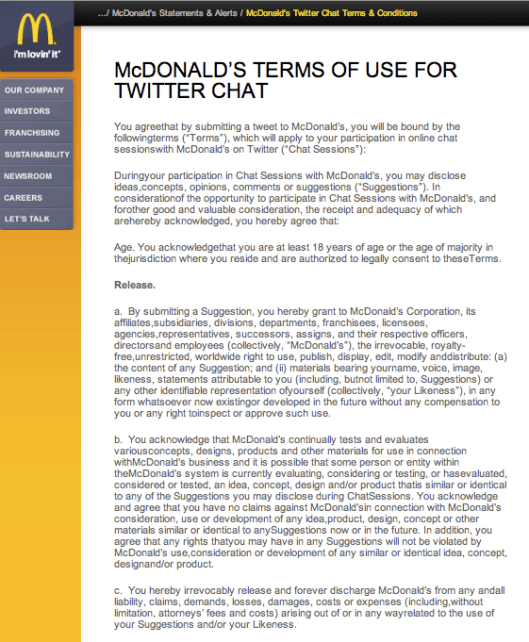
But then I saw this:

Now McDonald’s is not the first company to host a Twitter chat by any means. I have personally attended several as well as hosted a few — including one coming up next week with UPS’ Chief Sustainability Officer Scott Wicker — with varying levels of participation from a usually diverse set of activists, journalists, executives and consumers.

Never before, however, have I been handed a “Twitter Chat Policy.”

An indication of things to come or…?

Continue reading →

Share this:

  • Tweet
  • Email a link to a friend (Opens in new window) Email
  • Share on Reddit (Opens in new window) Reddit
  • Print (Opens in new window) Print
Like Loading...

The Unruliness of Corporate Responsibility & Hyper Transparency: Quotable Quotes from Net Impact & BSR 2011

09 Wednesday Nov 2011

Posted by Aman Singh in CSR, CSR reporting

≈ Leave a comment

Tags

aman singh, aman singh das, Autodesk, Bea Perez, brand management, Brian Dunn, BSR, BSR 2011, Business for Social Responsibility, Carol Cone, cause marketing, Chris Jochnick, corporate citizenship, corporate social responsibility, CSR, CSR reporting, Deloitte, Edelman, Events, Gregory Unruh, hyper trasnparency, integrated reporting, Jessica Fries, Kate Heiny, Leadership, LinkedIn, Lynelle Cameron, Management, Meg Garlinghouse, Net Impact, Occupy Wall Street, Ofra Strauss, Social Responsibility, Stakeholder Engagement, Sustainability, sustainability reporting


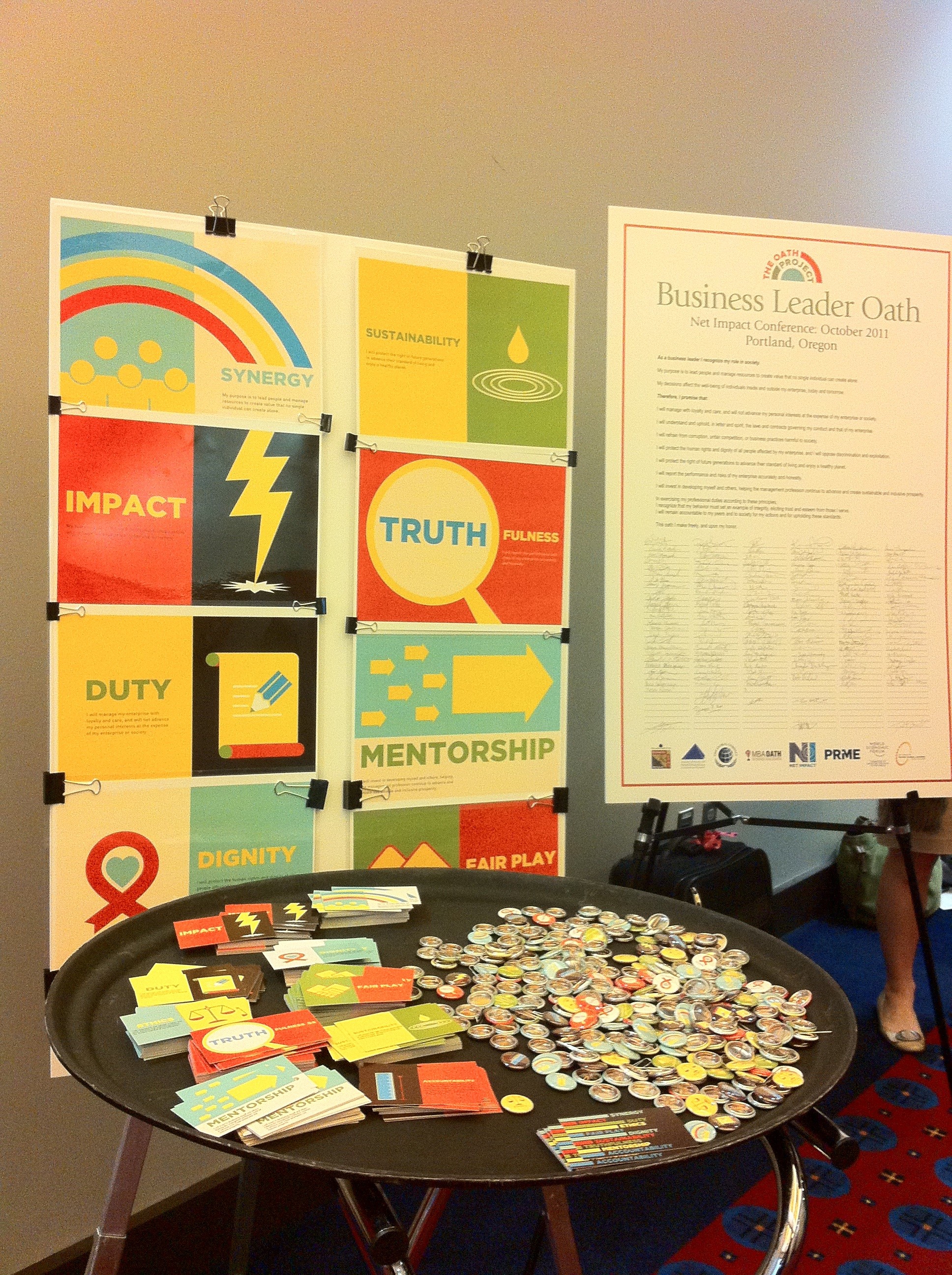
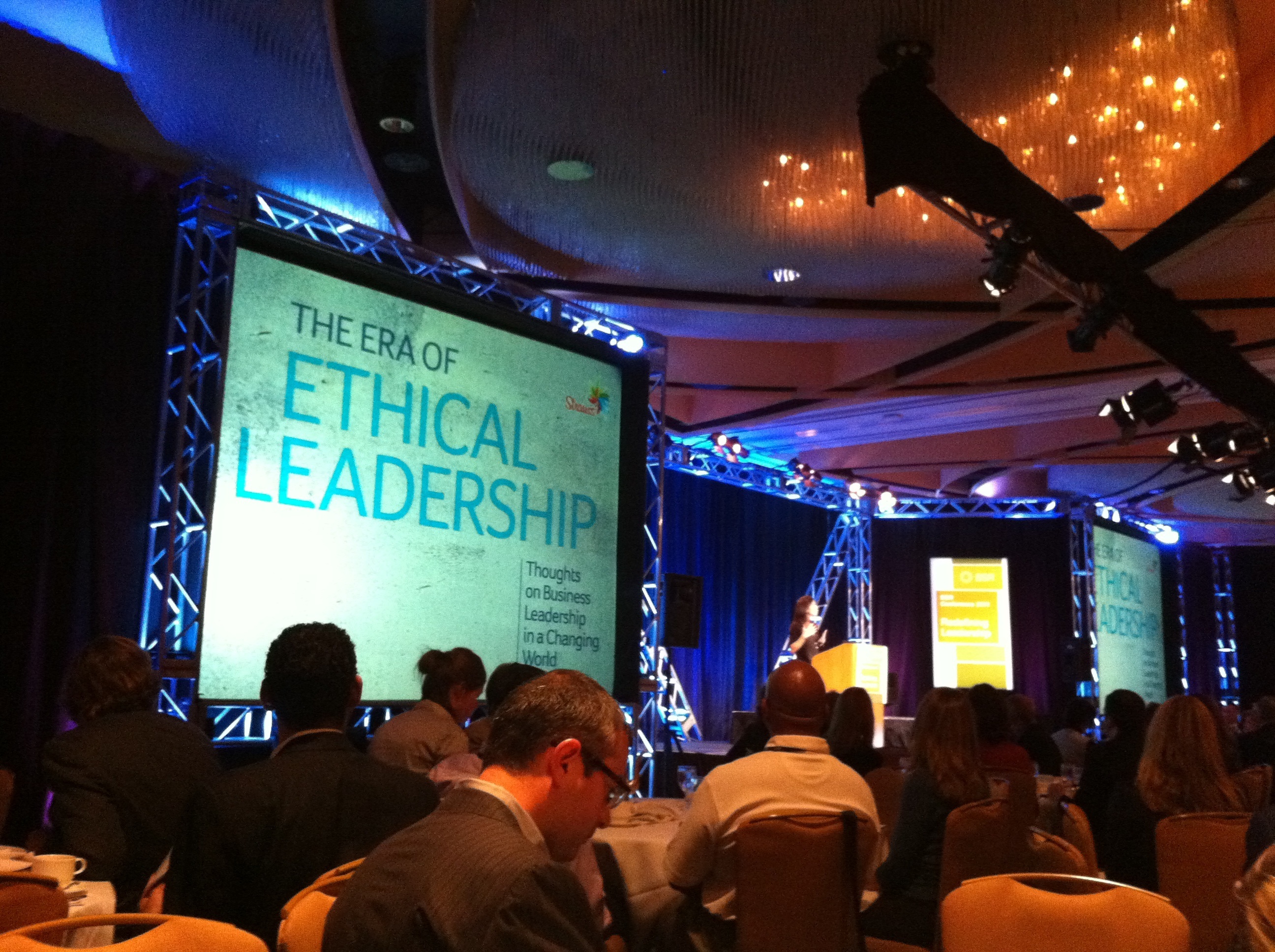
I spent the last two weeks attending and speaking at the Net Impact and BSR conferences. As is typical at both conferences there is always too much to choose from and a lot to absorb. Since I cannot offer you a summary of each and every panel I attended/spoke at, here are some of the top line quotes heard at the conferences:

CSR: Always a Difference in Opinions

“CSR used to be about doing the right thing. Now it’s all about how it makes business sense.” – Campbell Soup’s VP for CSR Dave Stangis

“I hate the term CSR. It has slowed the movement and in many ways ensured that it is not built into systems, accounting, etc. I prefer [the term] sustainability although that’s not a big favorite either.” – Lynelle Cameron, Director of Sustainability, Autodesk

“We think CSR is good business.” – Suzanne Keel-Eckmann, National Director for Corporate Responsibility and Sustainability, Deloitte

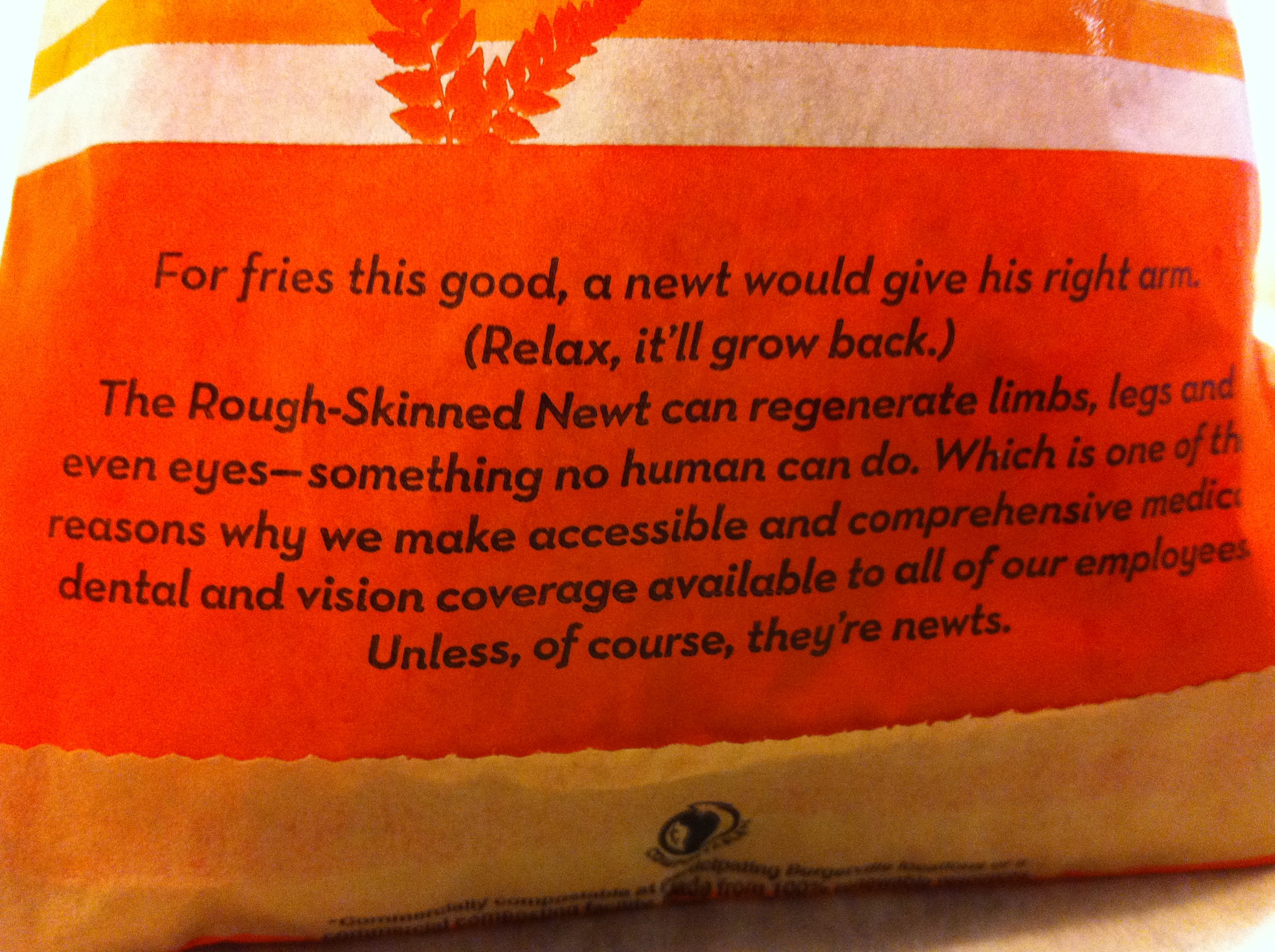
A bag of sweet potato fries at Burgerville in Portland, Oregon: Social messaging done right?

“CSR should be led by charity and employee engagement, not CSR departments.” – Meg Garlinghouse, Head of Employment Branding and Community, LinkedIn

“Our CEO still believes that he is the company’s chief sustainability officer. But he realized that we need to be more organized and structured in our efforts because there is a lot to be done.” – Bea Perez, Chief Sustainability Officer, Coca-Cola in response to Reverse Cause Marketing: Coca Cola’s Pursuits in the Middle East

The Role of Business in Social Enterprise

“We must see social problems as business opportunities.” – Carol Cone, EVP, Edelman

“I worked on Wall Street, driven by greed. Regardless of what anyone says, greed is not good. You get so immersed in the system you forget what all you can do with your life.” – Charles Kane, Former CEO and Board Member, One Laptop Per Child

“A lot of charities are beginning to worry that a lot of the problems they have been trying to solve are not going away. Business still tends to be more sustainable.” – Steve Andrews, CEO, SolarAid

“In the last few years, business has lost tremendous trust in the marketplace. That we are GOOD now rests on us.” – Ofra Strauss, Chairperson and former CEO, The Strauss Group 

Personal Responsibility

“When you know what you’re doing is helping thousands, the payback is so much more fulfilling than any number of stock options and bonuses.” – Charles Kane, Former CEO and Board Member, One Laptop Per Child

“We need to change without giving up who we are. There are no riots against business that are profitable. We need to talk with them, not talk to them.” – Ofra Strauss, Chairperson and former CEO, The Strauss Group

“The more you peel the onion, the more you realize there is to be done. You just need to be constantly excited about peeling the onion.” – Brian Dunn, CEO, Best Buy

The Role of an MBA

“No profession exists to make the practitioners rich. There is always a higher purpose.” – Gregory Unruh, Director, Lincoln Center for Ethics, Thunderbird School of Global Management

“I don’t know if its [The MBA Oath] is going to work. But it is in the right direction and symbolizes a complete shift in mentality.” – Max Anderson, President and Cofounder, The MBA Oath

“I’m waiting to see the day when a new employee tells me they attended a class in college called Change Agent 101.” – Anonymous 

Transparency

“We’re from the Midwest. We don’t advertise our initiatives. But lately there has been a shift in this thinking and our communication style. Transparency is a journey and we are in the early stages of that.” – Kate Heiny, Group Manager of Sustainability, Target

“The priority should always be why not disclose instead of why disclose.” – Chris Jochnick, Director, Oxfam America

“When you are increasingly naked, fitness is not optional.” – Quoted by yours truly during a BSR panel on hyper-transparency. Citation: Macrowikinomics

Integrated Reporting

“For us, integrated reporting starts with the thinking within the company on how they will sustain their value in the future. Integrated reporting starts with integrated thinking.” – Jessica Fries, Director, International Integrated Reporting Committee

Share this:

  • Tweet
  • Email a link to a friend (Opens in new window) Email
  • Share on Reddit (Opens in new window) Reddit
  • Print (Opens in new window) Print
Like Loading...

PepsiCo’s Sustainability Communications Manager: “Want to Work in CSR? Focus on Service”

08 Tuesday Nov 2011

Posted by Aman Singh in CSR, Guest Author

≈ Leave a comment

Tags

Americorps, brand management, Career advice, corporate social responsibility, CSR, CSR communications, CSR jobs, CSR strategy, daniel pellegrom, Job search, job search in CSR, Jobs in CSR, jobs in CSR, jobs in sustainability, marketing, Netflix, Peace Corps, PepsiCo, PR, Reed Hastings, Social Responsibility, Teach for America


Earlier this year I had the pleasure of joining a variety of leaders in CSR for a roundtable luncheon. Aman Singh chaired the conversation and people from Edelman, Best Buy, Humana, Boeing and Northern Trust discussed some of the CSR issues our companies face today.

But this blog is not about the roundtable. It’s about the question Singh asked at the end of our lunch: What advice would I give to aspiring students and professionals who want to work in CSR?

Here’s what I said:

I believe students should not focus so much on getting the right job in CSR right away; rather they should focus on getting diverse experiences that will serve them well should they go into business later.

It’s these diverse experiences that bring fresh perspective and will help exponentially in defining and driving CSR, sustainability and corporate citizenship in the future.

My answer stems from personal experience.

After college, I joined the Peace Corps and worked on providing water, sanitation and heath care in Ghana.

Then, it didn’t seem like living without electricity, bathing in river water, and building schools and rain catchment systems would lead to much of a career in business.

But today as a senior manager for sustainability communications at PepsiCo, I work with partners like water.org and recently attended World Water Week in Stockholm, where PepsiCo launched a report on positive water impact with The Nature Conservancy. I believe coming to a job via a less traveled route, and having learned about important global issues makes one more effective within their company.

There are lots of people in politics, media and business who have benefited from the perspectives only a service program can provide.

In fact, one of my favorite quotes is from Reed Hastings, the founder of Netflix who was a Peace Corps volunteer in the early 80’s in Swaziland. He said:

Once you’ve hitchhiked across Africa with 10 bucks in your pocket, starting a business doesn’t seem too intimidating.

While I am most familiar with Peace Corps, there are many other service programs like Teach for America and Americorps that provide the same depth of realistic perspective. I am a believer in service, but there are other options too – work for an NGO, travel, teach — just get out there so you can bring something new to the discussion.

— By Daniel Pellegrom

Share this:

  • Tweet
  • Email a link to a friend (Opens in new window) Email
  • Share on Reddit (Opens in new window) Reddit
  • Print (Opens in new window) Print
Like Loading...

Net Impact and BSR 2011: 7 Days, 2 Conferences, 5 Trends in CSR & Sustainability

07 Monday Nov 2011

Posted by Aman Singh in CSR

≈ 7 Comments

Tags

Al Gore, aman singh, aman singh das, Anheuser Busch, Bea Perez, brand management, Brand Management, Brian Dunn, BSR 2011, Business, Carlos Brito, cause marketing, Coca Cola, corporate citizenship, corporate social responsibility, CSR, CSR communications, CSR reporting, CSR strategy, ethical leadership, Events, Hanna Jones, hyper transparency, Liz Maw, Management, net impact 2011, Nike, Occupy Wall Street, Ofra Strauss, PR, radical transparency, risk management, Scott Wicker, shared value, Social Enterprise, Social Responsibility, Sustainability, sustainability, sustainable business practices, transparency, UPS, Vail Horton


There couldn’t have been a better way to end 2011 than the ambitious and cheerful Net Impact conference followed by Business for Social Responsibility‘s (BSR) annual conference.
Last year marked the inaugural year for my participation in both conferences. I came back encouraged, informed and enthused about the work ahead of us. [See: Can MBA Students be Taught Humility? and The Sustainability Jobs Debate] This year – perhaps because I have been deeply immersed in the CSR space – I feel a bit bereft, despite invigorating conversations and inspiring keynotes.

Don’t get me wrong.

While the Net Impact panels once again illustrated an incredibly knowledgeable student body set to graduate in coming years, BSR attendees and speakers showcased high aspirations and a deep understanding of the complexity of issues that face us today.

Throughout the seven days, I was continually questioned: Did you learn something new? What trends have you identified from all that you have heard? And each time I thought, what’s missing? Why am I not coming up with any articulate answers? Is my brain fried or is it something else?
On Friday, finally, sitting through a six-hour flight back to the east coast, it hit me. The CSR sector had grown up.

As a receiver of information, I was among familiarity, maturity. While last year the conferences motivated and inspired, this year the conversations focused on strategies, case studies, examples, successes and failures.

As Dave Stangis, VP of CSR for Campbell Soup articulated at a panel on Blue Sky Thinking during NI11, “CSR is no longer about identifying the business case. Today, we have evolved from questioning why to answering how.”

The Net Impact panels focused on nuts and bolts, dos and don’ts, a far cry from years past. The BSR roundtables featured honest evaluations, admittance of failure, collaborative statements of success and practical tips for newcomers.

Here then, are the top five trends I observed at two of the year’s most well-attended conferences on corporate social responsibility, innovation and sustainability:

1. We LOVE Shared Value:

Michael Porter’s “creating shared value” has appealed to the corporate sector like no other concept in recent years. Not corporate social responsibility or corporate sustainability, citizenship or conscious capitalism. There seems something so potent about shared value that CSR and sustainability executives cannot stop talking about it! A year ago, they would tell me “CSR is embedded in our DNA.” Now that statement has evolved to “Our culture has always been about creating shared value.”

Point is, CSV offers us nothing more radically new than the concept of CSR. It dictates the same concept of stakeholder engagement, mutual benefits, holistic bottom lines. But it has resonated by removing the morality that responsibility instantly dictates. For CSR and sustainability executives who have to make the business case to their C-suite, creating shared value provides them with their business case.

2. Familiarity breeds contempt

I found several attendees tell me how repetitive some of the sessions were, that they didn’t learn too much that was new or revolutionary. Perhaps it was because the same folks were attending the conferences every year? Earlier this year I wrote on Forbes’ CSR blog that instead of attending the conferences every year, we should send a colleague the following year so that we can actually widen the net of information and inspiration.

This continues to hold true: Chances are, every year there will be some common denominator at these conferences. With issues like energy conservation, water scarcity, poverty, community relations and employee engagement remaining the overarching topics, why not let one of the non-converted/uneducated learn next year?

Lesser chance of you suffering from conference fatigue.

3. Where are the CSOs?

In September, Ellen Weinreb, a prominent CSR and sustainability recruiter, released a report titled CSO Back Story*. Essentially, the report tracks every executive with the title of chief sustainability officer among the U.S.’s publicly traded companies. Her research points to 29 such individuals. While it omits the many hundreds of officers holding a wide breadth of titles ranging from CSR director to VP for sustainability and social responsibility, the report pinpointed several best practices and the continuing lack of standardization on how companies define, prioritize and implement corporate responsibility.

But I digress. [See what Corporate Secretary had to say about the report or download the complete report here.]*

Point is: Only two of the 29 CSOs Weinreb identified were in attendance at BSR: Coca-Cola’s Beatrice Perez and UPS’ Scott Wicker. Both were named CSO sometime this year. Where were the others? Wasn’t the conference meant for CSR and sustainability executives to come together for three days of knowledge sharing and benchmarking? What happened this year?

4. The Emotional Quotient

Both conferences featured wonderfully articulate keynote speakers, including KaBoom’s Darryl Hammond, Keen Mobility’ Vail Horton, Nike’s Hannah Jones, Al Gore, Strauss Group’s Ofra Strauss, Anheuser Busch’ Carlos Brito and Best Buy’s Brian Dunn.

While they discussed CSR and sustainability from their unique pedestal, the common denominator was the emotional connection they demonstrated with their cause, their brand, and their philosophy.

Hammond discussed how his childhood taught him the importance of play in a kid’s life. Strauss emphasized how her consumers and conflict-ridden Israel continues to teach her the right way of conducting business, of stakeholder engagement, of business being the real power in solving social problems.

Dunn on the other hand, focused on humility, responsible leadership and the importance of connecting with employees and consumers.

While last year’s speakers evinced more pragmatism, a businessman’s stoicism, this year the air held tension, an unspoken worry that things were going wrong too quickly, that we all needed to wake up. Quickly. The speakers were talking of soft – un-businesslike some would say – attributes: Social responsibility, connecting, respect, and the human condition, even destitution.

What had happened?

Let’s see: A recession that instead of leveling off, seems to be spreading across generations and countries for starters; a growing understanding that each of our actions – and inactions – impact many others in the world; a disastrous lack of trust for business; and a generational divide that seems to be holding the current decision makers accountable for their decades of excess.

Is business leadership finally waking up to their societal stakeholders?

5. Occupy Wall Street: Ignore or Engage?

Almost every keynote brought up this mass of undefined protestors that have continued to expand beyond American borders. Net Impact’s Executive Director Liz Maw opened the 2011 conference by asking attendees to “Occupy Wall Street but from within.”

Al Gore said, “Business must respond,” and that “it wasn’t a question any more.”

Ofra Strauss showed a three-minute video of the protestors equating them to civil unrest and a grassroots movement of discontent that business has to recognize and address.

At my BSR panel on hyper-transparency I brought up this commonality in one of my responses and posed a question for the audience: Will business ever think of these protestors as stakeholders? To my surprise, Jeff Mendelsohn from New Leaf Paper said that he and fellow attendees had, in fact, invited the Occupiers during a recent conference and that “The dialogue proved very productive for business and the protestors.”

Will anyone else follow?

*Full disclaimer: I worked with Weinreb on the report.

Share this:

  • Tweet
  • Email a link to a friend (Opens in new window) Email
  • Share on Reddit (Opens in new window) Reddit
  • Print (Opens in new window) Print
Like Loading...

REI CEO: Sustainability is a Team Sport…and a Business Enabler

02 Wednesday Nov 2011

Posted by Aman Singh in Uncategorized

≈ 1 Comment

Tags

aman singh, aman singh das, Brand Management, Business, business case for sustainability, CEO, CEO Network, cooperative, corporate social responsibility, CSR, Events, green, green products, Leadership, leadership, Management, Net Impact, net impact 2011, REI, Sally Jewell, shared value, social responsibility, supply chain, Sustainability, sustainability, sustainable business, sustainable business practices, women CEO


My latest post on CSRwire’s Talkback: Sustainability is a Team Sport.

Share this:

  • Tweet
  • Email a link to a friend (Opens in new window) Email
  • Share on Reddit (Opens in new window) Reddit
  • Print (Opens in new window) Print
Like Loading...

KPMG’s Citizenship Director: Occupy Wall Street Protests Must Drive [Business] Transformation

31 Monday Oct 2011

Posted by Aman Singh in CSR

≈ 2 Comments

Tags

Accountability, aman singh, aman singh das, BBC, brand management, Brand Management, Business, Business Ethics, business strategy, corporate citizenship, corporate social responsibility, CSR, Director of Citizenship, diversity, diversity and inclusion, Ethics, Events, inclusion, KPMG, Leadership, Lord Michael Hastings, Management, Net Impact, Occupy Wall Street, Social Impact, social responsibility, Social Responsibility, transparency, war on terror, Work culture


“The greatest way to change the world is _________.”

That’s how KPMG’s Director of Citizenship and Diversity Lord Michael Hastings started the opening keynote at this year’s Net Impact Conference in Portland, Oregon.

In the next half an hour that followed, the former — and the first ever — CSR director of BBC offered observations that felt alternatively poignant, realistic and perhaps unattainable.

On America’s prison system:

We must recognize that social dysfunction is a critical part of our reality and is perilously expensive.

On 9/11:

I say this with the utmost respect in my heart for the victims of 9/11: It has cost us one trillion dollars and over 6,700 deaths to avenge one event. Within hours, what was supposed to be the war on illiteracy – remember the picture from that day of President Bush reading to a classroom of kids? – became the war on terror.

Today, we are facing the repercussions of that decision. Now, we must switch on our acutest sense: Our intuition and listening power.

On Occupy Wall Street:

[We have to figure out] how do we respond? Because we have to. These protests must drive transformation, which can only come through sacrifice, only by accepting responsibility.

On the answer to changing corporate culture and mindsets:

The answer is cynicism. This is an understanding that I am responsible for the conflicts around me, that I absorb the duty, steel my back and face society to do the unexpected.

On reputation:

We cannot build a reputation on what we are ‘going to do.’ Our moral fiber, clarity of values, past record and leadership contribute to our ultimate reputation.

On the role of people in business growth:

A change in reporting is occurring that will correctly calculate the real assets of a business. Integrated reporting offers this framework for the future. We’re in a time when the idea of responsible capitalism is becoming a part of business strategy. We must continue with it.

And his answer to the earlier question?

“Overcoming cynicism”

Share this:

  • Tweet
  • Email a link to a friend (Opens in new window) Email
  • Share on Reddit (Opens in new window) Reddit
  • Print (Opens in new window) Print
Like Loading...

Occupy Wall Street & Corporate America According to Michael Moore

25 Tuesday Oct 2011

Posted by Aman Singh in Uncategorized

≈ Leave a comment

Tags

Accountability, aman singh, aman singh das, Apple, Business, capitalism, careers, consumer education, corporate citizenship, corporate social responsibility, CSR, jobs, Leadership, michael moore, Occupy Wall Street, occupywallstreet, OWS, responsible capitalism, shared value, social responsibility, Social Responsibility, transparency


Interesting segment of Piers Morgan Tonight on CNN with Michael Moore in the hot seat and a live town hall to discuss Occupy Wall Street. Some of the highlights that made me think:

Who is to blame for today’s mess?

MM: One hundred percent corporate America. I don’t blame the government because corporate America funds and rules the government. The politicians act as their funders ask them to so blaming D.C. isn’t going to help anyone. The root cause is corporate America.

Are the “Occupiers” against capitalism or capitalist greed?

MM: Depends on who you ask. For students, this is about the debt they have when they graduate. For the parents, it’s the mortgage they owe on a house that is worth less than half of what they owe in debt. For many others, it is unemployment, lack of affordable health care, the manipulative bank industry and so much more.

Apple has more employees in China today than domestically and in many ways the company has become emblematic with capitalism. Isn’t China at least part of the problem?

MM: Part of the problem yes but do you know how much debt a student has when he/she graduates from Peking University? Zero dollars. American students? An average of $35,000.

It all started when General Motors decided that making $4 billion in profits wasn’t enough. That they had to stretch it to $5 billion and to do so, they would have to migrate tens of thousands of jobs to China.

And guess what, if Steve Jobs and Steve Wozniak were two entrepreneurs trying to start Apple today, they would have received no help from their local or national banks. That’s the America we are living in today.

——————

Also on my radar, the excellent coverage on CSRwire’s Talkback lately re: Occupy Wall Street:

Occupy Wall Street Considers A New Economy
Is the Occupy Movement a Call for Sustainability?
For Responsibility, Occupy Government as well as Wall Street

Share this:

  • Tweet
  • Email a link to a friend (Opens in new window) Email
  • Share on Reddit (Opens in new window) Reddit
  • Print (Opens in new window) Print
Like Loading...
← Older posts
Newer posts →

Let's Talk!

Virtual
732-322-7797
amansinghdas@gmail.com

Blogs I Follow

  • Nonprofit Chronicles
  • Learned On by Andrea Learned
  • Angry African on the Loose™
  • csr-reporting
  • The CSR Blog
  • In Good Company: Singh on CSR

My Cloud

Capitalism 2.0 CSR CSR reporting CSRwire ESG Guest Author HR Stakeholder Engagement Sustainability Uncategorized

Recently written…

  • Rationality is Ruining Us: Mayors, presidents and governors join major businesses in charting way forward on climate change
  • 2015: the year businesses recognize that climate change is real – and 4 other themes
  • Hardcore lessons of sustainability – ’10 Words or Less’
  • Brewing a Better Future [#BaBF] with Heineken: Examining the Many Flavors of Local Sourcing
  • From Conflict to Collaboration: Kimberly-Clark and Greenpeace Participate in LIVE Twitter Chat

What others are reading

aman singh aman singh das Brand Management Business corporate social responsibility CSR CSR reporting CSRwire ESG Leadership Stakeholder Engagement supply chain Sustainability sustainability Work culture

Categories

Most Read

  • None

Create a free website or blog at WordPress.com.

Nonprofit Chronicles

Journalism about foundations, nonprofits and their impact

Learned On by Andrea Learned

Angry African on the Loose™

I have opinions. I am from Africa. I live here now. I blog.

csr-reporting

Connecting the dots between Business, Society & the Environment

The CSR Blog

Connecting the dots between Business, Society & the Environment

In Good Company: Singh on CSR

Connecting the dots between Business, Society & the Environment

Privacy & Cookies: This site uses cookies. By continuing to use this website, you agree to their use.
To find out more, including how to control cookies, see here: Cookie Policy
  • Subscribe Subscribed
    • In Good Company: Singh on CSR
    • Join 119 other subscribers
    • Already have a WordPress.com account? Log in now.
    • In Good Company: Singh on CSR
    • Subscribe Subscribed
    • Sign up
    • Log in
    • Report this content
    • View site in Reader
    • Manage subscriptions
    • Collapse this bar
 

Loading Comments...
 

    %d