2011: The Year Business Learned to Say Mea Culpa

Tags

, , , , , , , , , , , , , , , , , , , , , ,


Image

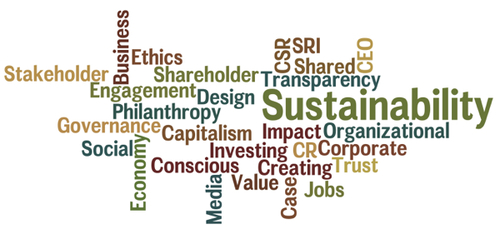
These were just some of the things that kept us busy in 2011. While some represent the changing marketplace, others are age-old struggles between activists, consumers, employees and corporations. Yet, they all represented the emergence of new forces at play in our corporate corridors.

Yes, 2011 represented despair for many – the jobseekers, the underemployed, the single parent, the shopper, the CEO, the trader – but with despair, as CSRwire’s CEO Joe Sibilia noted, comes hope, adaptability and often, solutions.

And it is at that stage that most of us converged in 2011.

Transparency: Is Business Ready?

Take, for example, the recent BSR conference held in San Francisco. My panel addressed a topic that is bound to get most of us shifting in our chairs: Sustainability in a Hyper-Transparent World. Ouch, right? Joined by executives from Oxfam, Intel and SourceMap, the conversation included several uncomfortable moments (I offered up Zappos as an example to the audience, citing that the company livestreams its all hands meeting in order to live its mission of “building open and honest communications.”) and featured several probabilities, suggestions, and potential solutions by a group that included lawyers, sustainability executives, CSR officers, reporters, strategists, entrepreneurs as well as nonprofit leaders.

“When you are increasingly naked, fitness if not optional.” – Macrowikinomics

That the panel attracted a full room of senior executives willing to discuss difficult issues like privacy, corporate governance and stakeholder responsibility is a start.

The C-Suite Headlines Sustainability

Till last year, while much was being written about CSR and sustainability, executives were largely absent from the dialogue. In 2011, this changed ever so subtly. Earlier in the year, Best Buy CEO Brian Dunn took the stage at one of the year’s most prolific conferences, the Boston College Center for Corporate Citizenship’s annual conference. He discussed the importance of employee wellbeing, organizational design, transparency (Kathleen Edmond was the first Chief Ethics Officer to start a blog on ethical issues in the workplace) and the importance of stakeholder engagement.

“The more you peel the onion, the more you realize there is to be done. You just need to be constantly excited about peeling the onion.” – Brian Dunn, CEO, Best Buy

At Net Impact, Nike’s Hannah Jones took the stage as did REI CEO Sally Jewell. BSR kept the momentum going by featuring Ofra Strauss, CEO of the Strauss Group, Autodesk CEO Carl Bass and Anheuser-Busch CEO Carlos Brito.

These chiefs weren’t exactly looking to gain brownie points. They were after all speaking to the choir in some respects and to an audience that for the most part, gets business and social responsibility. But what made each of them stand out was their honesty about the difficult problems facing us today – a first? – agreement on the role of business in adding to today’s social and environmental mess.

“In the last few years, business has lost tremendous trust in the marketplace. That we are GOOD now rests on us.” – Ofra Strauss, Chairperson and former CEO, The Strauss Group

Mea culpa, they all said. Followed by: Here’s how we are trying to change ways, rethink growth, repurpose missions and reengage stakeholders.

That’s a start.

Social Media Engagement: 140 Characters Rule

Despite all the naysayers of social media, there is no denying that for any organization that sells a product or service today, having a dedicated presence on Facebook and Twitter is a prerequisite. With engagement reaching never-seen-before proportions, even Chief Sustainability Officers are learning to communicate in 140 characters or less.

“We must see social problems as business opportunities.” – Carol Cone, EVP, Edelman

But several companies dipped their toes in active engagement by trying out new formulae: Best Buy released their annual CSR report by hosting a live webinar (that I moderated) with their Sustainability team and a parallel conversation on Twitter. As I quizzed them about the report, questions poured in from Twitter: What was Best Buy doing in the area of conflict minerals? What about human rights? Recycling? How about consumer education? And why the low diversity ratio of employees?

Squirm they did, admitting that the issues were complex they did, but answer they also did.

They weren’t the only ones though.

Timberland (that was acquired by VF earlier in the year) launched their new Communications portal, McDonald’s hosted a live chat on Twitter with VP of CSR Bob Langert, UPS held several chats during the holiday season from sustainable gifting to green packaging choices.

Communicating your sustainability story is an important cog in the wheel called trust and the choice to engage is no longer a valid option. How you choose to do so, however, will continue to differentiate you from your competitor.

Making Business Sense out of Sustainability

Several large organizations came forward in 2011 asking jobseekers and students applying for jobs in sustainability and CSR to understand how to relate their core competencies and knowledge to the issues facing us today, i.e., water depletion, carbon emissions, climate change, etc.

How can depleting levels of water relate to a professional services firm, for example, or a bank? Why must a software company invest in engaging and educating its supply chain?

Climate Corps: Creating Jobs & Savings

The Environmental Defense Fund’s Climate Corps program is one of very few initiatives that have managed to tie sustainability with business strategy and growth while creating jobs out of the process.

From placing seven MBA candidates as summer fellows in 2008, the program has quickly grown in popularity, placing 96 students at 78 companies in 2011. The fellows spend an entire summer working with their host companies on identifying energy efficiency solutions, implementing carbon management processes and helping diverse businesses embed environmental sustainability into their strategies.

The results: Millions in savings. While few get direct job offers from the Fellowship, most have had success finding jobs where their unique mix of experience, passion, and the ability to tie business strategy with sustainability, is appreciated and utilized in changing processes, setting standards and adapting organizations to a fast-changing reality of limited resources.

This is a start.

Organizational Design & Sustainability

Where does sustainability fit in your organization?

Everywhere, really, is the only correct answer, irrespective of where the chief sustainability officer sits. This, finally is getting addressed by what I consider a crucial component at any company: The HR and recruitment teams. In collaboration with IE Business School, I moderated seminars with recruiters, HR directors and organization design consultants on the value of CSR in candidate recruitment and retention.

We discussed the relationship between productivity, values, respect and growth. We heard from students who want to work for socially responsible companies and executives who are redirecting their organizations to instill a culture of ethics, responsibility, accountability and pride.

Mea culpa, most of them said. That’s a start.

Originally written for and published on CSRwire’s Commentary section Talkback on December 30, 2011.

Marks & Spencer’s Plan A: Five Years Later

Tags

, , , , , , , , , , , , ,


“We launched Plan A because there is no Plan B,” started Richard Gillies, Marks & Spencer’s Director of Plan A, CSR Sustainable Business during a panel on how to nudge consumers to buy more sustainable products at the recently concluded BSR Conference.

Marks & Spencer’s sustainability strategy, more popularly called Plan A, has been the topic of several discussions and numerous awards since it was launched in 2007, mostly for its innovative and expansive approach (over 180 commitments) but also for its honest declaration of a business’ shortcomings.

And Gillies attested to that: “We made some very public and very defined goals back in 2007.” As the retailer approaches the five-year anniversary of Plan A, what are some of the results we can expect?

For starters, Gillies offered the following:

  • Carbon footprint reduction of 26 percent
  • Reduction in energy use by 25 percent
  • All packaging now sourced from sustainable sources
  • Waste to landfill cut from 80 percent to zero

Where does the consumer fall into place with these achievements – and the ultimate goal of a zero environmental footprint? And what will it take for consumers to make decisions based on sustainability performance – or as someone in the audience put it: “How do we make sustainability sexy?”

“Consumers are not prepared to pay more or compromise in the name of sustainability. We have to learn to market goods that work well and are sustainable, instead of naively believing that they will sell simply because they are sustainable,” Gillies emphasized. The market isn’t there yet, he indicated.

Gillies also admitted Marks & Spencer, the UK’s largest clothing retailer and a significant marketer of food in Europe, was “only just beginning on our sustainability journey.” “We are only now exploring our business in the mainstream. We’re trying to get our own house in order before venturing outside,” he said alluding to the initial intent of Plan A to set a sustainability strategy internally that would impact every single product line of the business.

The outspoken yet charming CSR director, who has been with the food and clothing retailer since 1984, did not mince words when moderator Virginia Terry from BSR asked him how M&S was approaching the huge task of consumer education.

Indicating that businesses must understand the potential for consumer education and their role in it, he said, “For us, consumers have to be educated behind the scenes by only being offered sustainable choices. If the array of choices on a supermarket’s shelves are all sustainable, then we don’t have an option any more.” It is because we are competing with varying levels of products – and brands – in the market that have historically put a premium price on sustainability, that consumers invariably pick the cheaper product, he added.

The next step for Marks & Spencer?

“Consumer engagement,” offered Gillies. “For example, we have been incentivizing customers to give back to Oxfam. Every time they donate used clothing, etc. to Oxfam, they receive a voucher to be used at our stores. In three years, we have helped Oxfam generate an additional $7 million in revenue because of this program.”

This, in turn, promotes customer loyalty and brings M&S’s recycling commitment to the forefront of consumer action.

As for employee participation in sustainability, there is no question in Gillies’ mind that for Plan A to be successfully integrated, a company’s internal audience must be deeply commitment and passionate about the work. “Plan A has taken a life of its own and employee engagement has been an integral aspect of this. Our employees see the benefit of what Plan A offers for themselves and their families’ lifestyles and sustenance,” he said.

Because employee participation has been incredibly high, sustainability at Marks & Spencer continues to be a journey with several discoveries along the way. For example, the carbon-free bra launched earlier this year or their re-spun coats. Gillies explained: “We take waste wool and re-spin it into coat fabric. Turns out, this can be produced in Europe for a lower cost and much lesser environmental footprint than in one of our factories in Asia.”

As for the bra, it was part of a well-strategized plan to showcase an energy-efficient factory in Sri Lanka, which is powered partially by solar and hydro energy, and one of the first sites to test its eco-factory concept. As Marc Gunther wrote earlier this year, “To offset the CO2 generated by the bra’s manufacturing and shipping, M&S is planting 6,000 trees in Sri Lanka, some of which are lime and mango trees intended to generate income for farmers.”

Gillies offered some context: “The workers in Sri Lanka weren’t doing a drive to benefit the company. They were doing it because they saw the benefits of the program for their community, their families.”

A well thought out sustainability strategy ensures the business is doing more good instead of less bad. For Gillies, this means “inspiring consumers to get to a new place without telling them that they have to sacrifice along the way.”

“Business has to reset the values of what is quality, premium and sustainable. We have to look at our products and systems and rethink how consumers evaluate value,” he added.

It’s a tough task and enough to keep the best of intentions under cover for fear of failure or the immensity of scale required. But even for those, Gillies had a word of advice: “Business cannot be paralyzed by the scale of what needs to be done. This is very much a journey. We just need to stay focused on the greater good for our planet.”

Originally written for and published on CSRwire’s Commentary section Talkback on November 8, 2011.

Aside

Sustainability is a Team Sport…And a Business Enabler

Tags

, , , , , , , ,


  • 118 stores.
  • $1.7 billion in sales in 2010.
  • Over 10,000 employees.
  • One of Fortune’s “100 Best Places to Work For” since 1998.

That’s the clout enjoyed by Recreation Equipment Inc. (REI) today, a national cooperative and one of the country’s largest outdoor apparel and gear manufacturers founded by a group of conscious mountaineers in 1938.

At last week’s Net Impact conference, REI CEO and President Sally Jewell took the stage to discuss how her company was faring amid Amazon’s recent expansion, whether a cooperative should be a viable option every entrepreneur should consider, and how sustainability is a team sport – and not a niche market anymore.

The Amazon Disadvantage…

Calling Amazon a “tough competitor” for brick and mortar stores, Jewell, who is a former commercial banker, took umbrage with Amazon’s policy of no taxation alleging that this discouraged new jobs. “Our business is doing well. Fair competition is always good, but unfair competition isn’t. By not charging taxes, Amazon is taking away much-needed state revenue” and sales from REI stores.

“Not being able to employ people is frustrating,” she added, emphasizing that while REI was doing well with stores having grown every year since 2008, hiring was definitely slower than the CEO would prefer.

…And The Sustainability Advantage

With sustainability making inroads into American consciousness at a very slow rate, does the environmental tag hurt REI?

“Sustainability is no longer as niche as some might think. The new generations really care about the environment and their communities,” Jewell emphasized. “The average age of our store employee is 32 years. They really care about the products and take pride in our commitment to the planet. This is what got us to No. 9 on Fortune’s Best Places to Work for last year,” she added.

In fact, while REI stores have steadily grown in number since 2008, she added, their footprint has remained lower than 2008 levels. The company has also doubled the number of stores that are using on site energy generation, Jewell informed a packed room.

Cooperative: The Right “C” for Entrepreneurs?

REI is one of few cooperatives in the country that has successfully provided its members with an economic model that is lucrative and works over the long-term. “There is no mission without margin. You have to run a healthy business to be sustainable. While we don’t have investors to worry about, we have a member community,” Jewell informed, warning that, “The founders [of REI] sacrificed a lot to protect the cooperative structure. Their family home was a distribution facility for 22 years. Their daughter was packaging stuff since the age of 5 years.”

The result?

“85 percent of our sales are from our members who get a yearly dividend. So the structure is successful but hard,” she said.

Responsible Capitalism: More Investment Options

Jewell also offered a new face of investment options, saying the market desperately needed to step away from thinking in the short term. “We need to suggest more robust federal regulations that put in a longer-term requirement from companies instead of a quarter or even a year. This change alone can transform the way we think, hire and help ensure many more businesses are successful,” she appealed.

While REI is certainly known for its innovative product line, environmentally- and socially-conscious supply chain, it has in no way perfected the dilemma of margins vs. fewer resources. How do we get away from random acts of kindness to systemic change? “It’s hard to get incentives [internally and externally] exactly right. Our employees are pulling the company forward,” she admitted, adding that, “Sustainability is a team sport that has the potential to create demand for recycling and working itself up the supply chain.”

The Power of Education

Since the conference attracts a majority of MBA students and recent graduates from the exemplary Net Impact chapters, interviewer Marc Gunther asked in closing: How can these students best help companies like REI?

“We need people who can make business sense out of sustainability. Help other companies see the benefit. Whatever we do for sustainability has to be good for business,” she pointed out. “This is what students with your experience, passion and understanding can help other businesses comprehend and implement,” the 54-year-old chief added.

The Makings of a CSR Program: In Conversation with Avon, LinkedIn & Jones Lang LaSalle

Tags

, , , , , , , , , , , , , , , , , ,


That was the focus of one of the panels at Net Impact 2011 featuring Avon’s VP of Sustainability and Corporate Responsibility, Tod Arbogast; LinkedIn’s Head of Employment, Branding and Community, Meg Garlinghouse; and Jones Lang LaSalle’s SVP of Sustainability Strategy, Michael Jordan.

Representing companies that are often called out for their out of the box thinking on social responsibility and sustainability, the speakers discussed a range of topics including the always debatable definition of corporate social responsiblity, measuring employee engagement as well as the skill sets that go into the makings of a CSR director.

Main highlights:

CSR: Burden or Boon?

“CSR should die as a term. CSR departments tend to take away from possible impact. Just like ‘global’ is part of everything we do at LinkedIn, so is CSR,” Garlinghouse emphasized, noting, “Employee engagement is key for CSR, not separate departments.”

Jordan picked up where Garlinghouse left off adding that businesses must leverage engaged employees and identify champions early on for successful CSR programs.

“CSR has a direct tie-in with our business. After you’ve built the business case and identified regional champions, work together on identifying and building in efficiencies,” he advised.

“Build friendships, be seen as pragmatic and capture early wins. Then leverage those to go further and faster,” Arbogast said.

Measuring Employee Engagement

But how do you measure the efficacy of employee engagement?

A survey I conducted a few months ago with Smartbrief on Sustainability asked whether companies were measuring employee engagement on CSR. With over 70 percent of respondents saying they did not measure employee engagement, how were these panelists identifying wins and scale?

Once again, there was a healthy difference of opinion across the panel. While Garlinghouse emphasized company mission, the other two focused on operational procedures and policies.

“We recruit on the notion of social impact. These conversations happen during the interview process,” Garlinghouse alluded, noting LinkedIn’s entire modus operandi is based on “creating economic opportunities.” LinkedIn also offers employees the opportunity to do whatever they feel passionate about one Friday a month. “They have to come to work but they can pursue whatever they are interested in,” she said.

“For us, measuring the progress of your platform from awareness to implementation to operational strategy has always been key,” added Jordan.

Defining CSR With Strong Stakeholders

Responding to an audience question about resourcing for CSR initiatives, Jordan emphasized that most of Jones Lang LaSalle’s sustainability activities have been client-driven. “There is a clear business case because our clients are demanding sustainability strategies,” he said.

For Garlinghouse, employees have been the most forthcoming about corporate social responsibility initiatives. “Our CEO is very involved. Also, our employees are really committed to our company mission,” she said.

Skill Sets for a CSR Officer

Arbogast, who joined Avon in late 2009 after successfully leading Dell’s Giving program for a number of years, is a well-sought after speaker at the Net Impact conference each year. This year too, he was asked what aspiring professionals could do to become effective CSR officers. He laid out three crucial skills sets:

  1. People’s Person: Know how to communicate with people from all kinds of backgrounds and perspectives.
  2. Conflict Resolution: You must be a skilled mediator. Know that business cases will vary from group to group and you must be willing and diplomatic enough to finesse the tension lines and bring about resolution.
  3. Business Pragmatism: You must be a realist and know the business inside out. For CSR and sustainability programs to be effective, you need to understand what drives decisions and action.

Originally written for and published on CSRwire’s Commentary section Talkback on November 9, 2011.

Link

Translating Business Responsibility: An interview with Warner Bros. CEO & Chairman Barry Meyer: Now LIVE on CSRwire!

Tags

, , , , , , , , , , , , , , , , , , , ,


Translating Business Responsibility: An interview with Warner Bros. CEO & Chairman Barry Meyer: Now LIVE on CSRwire!

When the Justice League comes together to fight evil, evil stands little chance. In a world of economic uncertainty and social unrest, superheroes provide children with mentors, entrepreneurs with lessons in responsibility, and the rest of us with inspiration. Now, DC Entertainment has joined hands with Time Warner and Warner Bros. to launch We Can Be Heroes.

Their target: The hunger crisis in the Horn of Africa.

Their spokescharacters: The Justice League

CSRwire In Conversation with BCLC: The 2012 CSR Outlook

Tags

, , , , , , , , , , , , , , , , , , , ,


Join CSRwire’s Editorial Director Aman Singh in conversation with Stephen Jordan, Executive Director of the U.S. Chamber Business Civic Leadership Center and a group of MBA graduates virtually for an intimate conversation about what happened in corporate social responsibility (CSR) in 2011 and what the field has in store for 2012.

When: Friday, January 13, 2012; 9:00am EST

Where: Livestream & Twitter

Register for the FREE live stream and join the tweetchat at #BCLConCSR!

The 2012 CSR Outlook is the first in a FREE six-part forum series being conducted by the Center. The U.S. Chamber BCLC’s Conversations with Stephen series is produced and moderated by founder and executive director Stephen Jordan. Guests engage in thoughtful, solution-oriented discussions and debates about the CSR field. The six-part 2012 series is offered at no charge as part of BCLC’s commitment to share knowledge and best practices with current and upcoming CSR practitioners.

We look forward to hearing from all of you @AmanSinghCSR, @CSRwire and #CSRwire or #BCLConCSR!

Related:
2011: The Year Business Learned to Say Mea Culpa

2011 in review @ Singh on CSR: 5 Months, 31 Blog Posts, 9,500 Visits

Tags

, , , , , , , , , , , , , , , , , , , , , ,


The WordPress.com stats helper monkeys prepared a 2011 annual report for this blog.

Here’s an excerpt:

The concert hall at the Sydney Opera House holds 2,700 people. This blog was viewed about 9,500 times in 2011. If it were a concert at Sydney Opera House, it would take about 4 sold-out performances for that many people to see it.

While I won’t bore you with the stats, here are the top three winners of 2011:

  1. Net Impact and BSR 2011: 7 Days, 2 Conferences, 5 Trends in CSR & Sustainability
  2. Does Expending Resources on CSR and Sustainability Destroy Economic Value?
  3. CSR and Sustainability in Mainstream Media: Citizen Journalism Or Simply Shared Value?

Thank you to all of you for a tremendous year! I value your support, trust, readership, comments, courage and enthusiasm to say, do and compel others toward the right action.

Here’s to expanding our “small world” of CSR and sustainability slowly but surely, one person at a time in 2012!

– Aman

Social Media Tactics: McDonald’s Hosts Twitter Chat. And Issues a Policy.

Tags

, , , , , , , , , , , , , , , , , , , , ,


Certainly not the blog post I planned on writing after spending two weeks in New Delhi, India but I am compelled.

Today, McDonald’s hosted a Twitter chat with VP of CSR Bob Langert. The motivations are many for a company that is besieged for its product line and constantly under fire.

In fact, last year at a diversity benchmarking event at Hamburger University, I had the opportunity to hear the McDonald’s executive team discuss a whole host of business practices and strategies, including diversity (led by Global Chief Diversity Officer Pat Harris), employee learning and corporate social responsibility (CSR).

Here’s a snapshot of what I wrote then:

There is an argument that some companies–such as those that deal in weapons and tobacco–just can’t do corporate responsibility in a meaningful way. As a result, they are often excluded from CSR rankings and benchmarking exercises.

But what about a company like McDonald’s constantly under fire for its products? How does the world’s largest fast-food chain practice corporate social responsibility that is both contextual and real?

Led by Senior Manager for Corporate Social Responsibility Kathleen Bannan, who began her presentation by saying “CSR is everybody’s business,” the day-long event proved both thought-provoking (how does a company who doesn’t enjoy corporate America’s most favorable retention rates or the public’s uniform love tackle responsibility and that ever-amorphous doing the right thing?) and insightful (McDonald’s is among very few companies to institute an employee resource group for its white male workforce).

What happened today, however, was an effort at cautious transparency and an attempt at crowd sourcing corporate social responsibility.

The questions were introspective:

And the answers, alternatively useful, creative and critical.

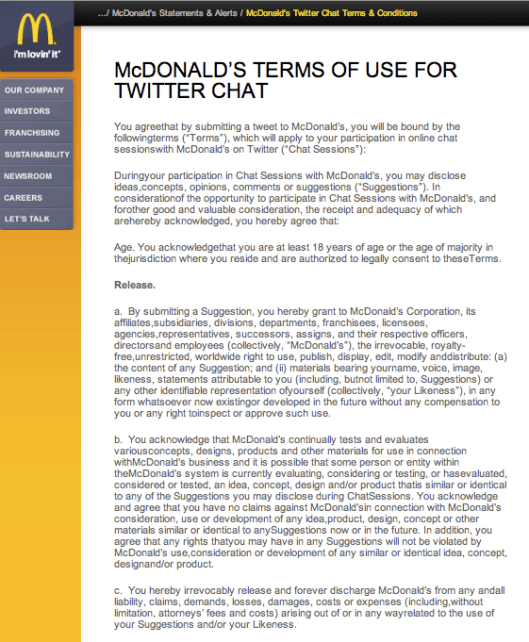
But then I saw this:

Now McDonald’s is not the first company to host a Twitter chat by any means. I have personally attended several as well as hosted a few — including one coming up next week with UPS’ Chief Sustainability Officer Scott Wicker — with varying levels of participation from a usually diverse set of activists, journalists, executives and consumers.

Never before, however, have I been handed a “Twitter Chat Policy.”

An indication of things to come or…?

Continue reading

The Unruliness of Corporate Responsibility & Hyper Transparency: Quotable Quotes from Net Impact & BSR 2011

Tags

, , , , , , , , , , , , , , , , , , , , , , , , , , , , , , , , , , ,


I spent the last two weeks attending and speaking at the Net Impact and BSR conferences. As is typical at both conferences there is always too much to choose from and a lot to absorb. Since I cannot offer you a summary of each and every panel I attended/spoke at, here are some of the top line quotes heard at the conferences:

CSR: Always a Difference in Opinions

“CSR used to be about doing the right thing. Now it’s all about how it makes business sense.” – Campbell Soup’s VP for CSR Dave Stangis

“I hate the term CSR. It has slowed the movement and in many ways ensured that it is not built into systems, accounting, etc. I prefer [the term] sustainability although that’s not a big favorite either.” – Lynelle Cameron, Director of Sustainability, Autodesk

“We think CSR is good business.” – Suzanne Keel-Eckmann, National Director for Corporate Responsibility and Sustainability, Deloitte

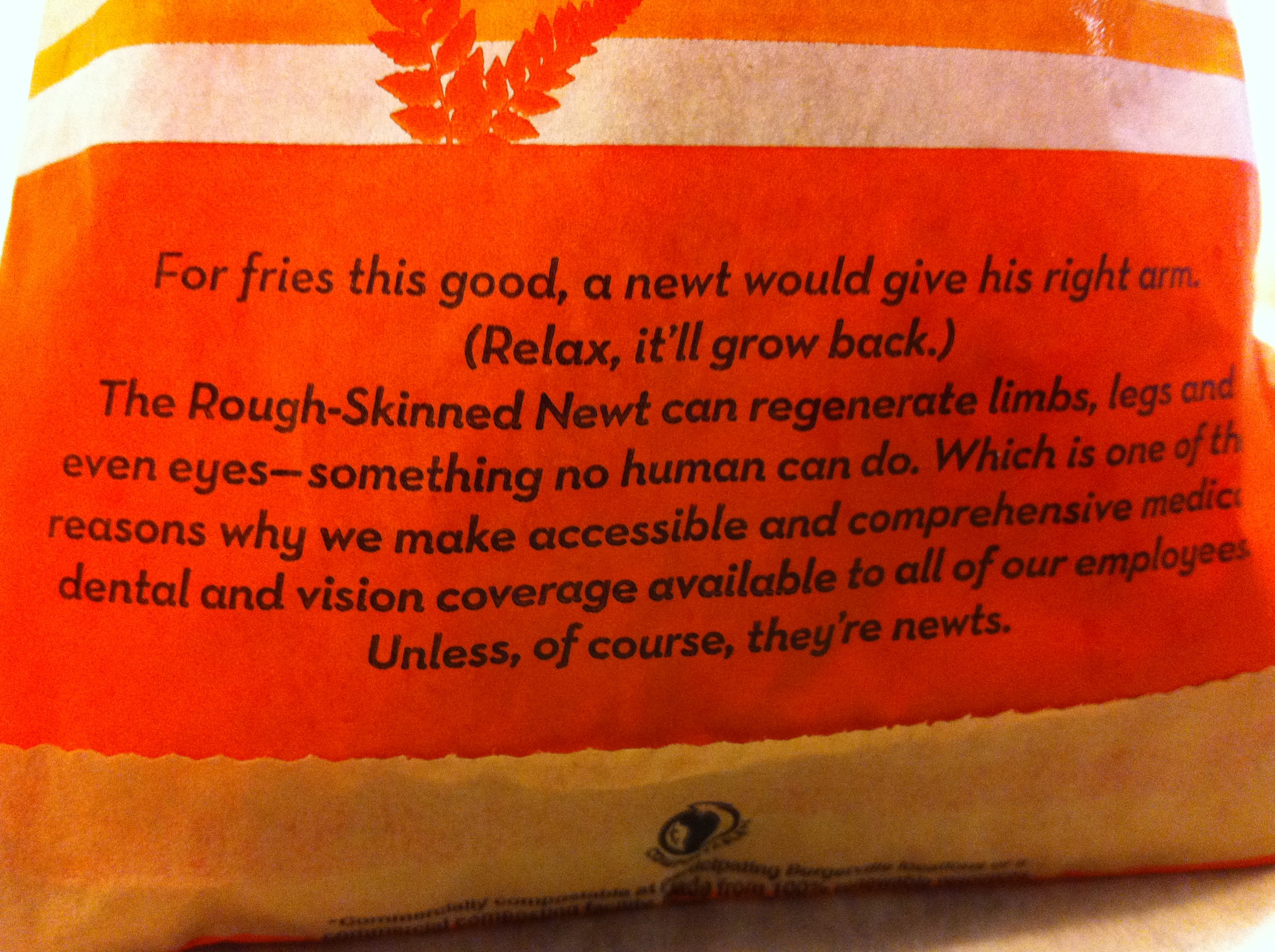
A bag of sweet potato fries at Burgerville in Portland, Oregon: Social messaging done right?

“CSR should be led by charity and employee engagement, not CSR departments.” – Meg Garlinghouse, Head of Employment Branding and Community, LinkedIn

“Our CEO still believes that he is the company’s chief sustainability officer. But he realized that we need to be more organized and structured in our efforts because there is a lot to be done.” – Bea Perez, Chief Sustainability Officer, Coca-Cola in response to Reverse Cause Marketing: Coca Cola’s Pursuits in the Middle East

The Role of Business in Social Enterprise

“We must see social problems as business opportunities.” – Carol Cone, EVP, Edelman

“I worked on Wall Street, driven by greed. Regardless of what anyone says, greed is not good. You get so immersed in the system you forget what all you can do with your life.” – Charles Kane, Former CEO and Board Member, One Laptop Per Child

“A lot of charities are beginning to worry that a lot of the problems they have been trying to solve are not going away. Business still tends to be more sustainable.” – Steve Andrews, CEO, SolarAid

“In the last few years, business has lost tremendous trust in the marketplace. That we are GOOD now rests on us.” – Ofra Strauss, Chairperson and former CEO, The Strauss Group 

Personal Responsibility

“When you know what you’re doing is helping thousands, the payback is so much more fulfilling than any number of stock options and bonuses.” – Charles Kane, Former CEO and Board Member, One Laptop Per Child

“We need to change without giving up who we are. There are no riots against business that are profitable. We need to talk with them, not talk to them.” – Ofra Strauss, Chairperson and former CEO, The Strauss Group

“The more you peel the onion, the more you realize there is to be done. You just need to be constantly excited about peeling the onion.” – Brian Dunn, CEO, Best Buy

The Role of an MBA

“No profession exists to make the practitioners rich. There is always a higher purpose.” – Gregory Unruh, Director, Lincoln Center for Ethics, Thunderbird School of Global Management

“I don’t know if its [The MBA Oath] is going to work. But it is in the right direction and symbolizes a complete shift in mentality.” – Max Anderson, President and Cofounder, The MBA Oath

“I’m waiting to see the day when a new employee tells me they attended a class in college called Change Agent 101.” – Anonymous 

Transparency

“We’re from the Midwest. We don’t advertise our initiatives. But lately there has been a shift in this thinking and our communication style. Transparency is a journey and we are in the early stages of that.” – Kate Heiny, Group Manager of Sustainability, Target

“The priority should always be why not disclose instead of why disclose.” – Chris Jochnick, Director, Oxfam America

“When you are increasingly naked, fitness is not optional.” – Quoted by yours truly during a BSR panel on hyper-transparency. Citation: Macrowikinomics

Integrated Reporting

“For us, integrated reporting starts with the thinking within the company on how they will sustain their value in the future. Integrated reporting starts with integrated thinking.” – Jessica Fries, Director, International Integrated Reporting Committee