• ABOUT THE AUTHOR
  • Sustainability
  • CSR
  • CSR reporting

In Good Company: Singh on CSR

~ Connecting the dots between Business, Society & the Environment

Tag Archives: Sustainability

REI CEO: Sustainability is a Team Sport…and a Business Enabler

02 Wednesday Nov 2011

Posted by Aman Singh in Uncategorized

≈ 1 Comment

Tags

aman singh, aman singh das, Brand Management, Business, business case for sustainability, CEO, CEO Network, cooperative, corporate social responsibility, CSR, Events, green, green products, Leadership, leadership, Management, Net Impact, net impact 2011, REI, Sally Jewell, shared value, social responsibility, supply chain, Sustainability, sustainability, sustainable business, sustainable business practices, women CEO


My latest post on CSRwire’s Talkback: Sustainability is a Team Sport.

Share this:

  • Tweet
  • Email a link to a friend (Opens in new window) Email
  • Share on Reddit (Opens in new window) Reddit
  • Print (Opens in new window) Print
Like Loading...

Net Impact 2011: A Sustainable Drink, Finally!

30 Sunday Oct 2011

Posted by Aman Singh in Uncategorized

≈ Leave a comment

Tags

Events, Green, green drinks, green living, Net Impact, net impact 2011, pazzo, Portland, Social Enterprise, Sustainability, sustainability, sustainable business


20111030-164635.jpg

Share this:

  • Tweet
  • Email a link to a friend (Opens in new window) Email
  • Share on Reddit (Opens in new window) Reddit
  • Print (Opens in new window) Print
Like Loading...

Net Impact 2011: You know you’re in Portland when…

28 Friday Oct 2011

Posted by Aman Singh in Uncategorized

≈ Leave a comment

Tags

CSR, energy, energy conservation, Green, Net Impact, Portland, Sustainability, sustainability, water


20111027-210003.jpg

Share this:

  • Tweet
  • Email a link to a friend (Opens in new window) Email
  • Share on Reddit (Opens in new window) Reddit
  • Print (Opens in new window) Print
Like Loading...

Occupy Wall Street: The Average Joe Interprets Corporate Social Responsibility

19 Wednesday Oct 2011

Posted by Aman Singh in CSR

≈ 17 Comments

Tags

Accountability, aman singh, aman singh das, Aneel Karnani, Brand Management, Business, Career advice, corporate citizenship, corporate social responsibility, creating shared value, CSR, CSRwire, diversity, ethical markets, Ethics, Events, fair compensation, human rights, Job search, Jobs in CSR, jobs in CSR, joe sibilia, leadership, Management, Occupy Wall Street, OWS, rosalinda sanquiche, shared value, Social Enterprise, Social Impact, social justice, social responsibility, Social Responsibility, Stakeholder Engagement, supply chain, Sustainability, sustainable business practices, transparency, Wall Street, what is CSR?, Work culture


Earlier this week I was at the annual PRSA conference in humid and beautiful Orlando, Florida. Before you think that I have switched tracks from journalism to PR, stop right there! I was on site to speak on an interestingly personal topic: Sustainability: Walking the Walk.

Sustainability: Walking the Walk with CSRWire & Ethical Markets

Joining me on the panel were CEO of CSRwire Joe Sibilia and Executive Director of Ethical Markets Rosalinda Sanquiche. Sibilia started off the panel by talking about Occupy Wall Street. Not because he wanted a room full of dissent but because for Sibilia, as he emphasized on a recent Fox Business show, OWS goes to the heart of corporate social responsibility: A responsible capitalist system that takes into account a business’ social, economic and environmental stakeholders.

From a room of roughly 45 attendees, almost everyone raised their hands. However, when he followed up by asking how many understood what the protestors are demanding, the hands fell to a single digits. So, before I go any further, here’s a two-part question for you:

And:

Here’s the thing: Because so many continued to disagree with the holier-than-thou voice of CSR, claiming it is another cost business doesn’t need, a burden, not a business priority, so on and so forth, Michael Porter gave us an easier concept to embrace: Creating Shared Value.

You Don’t Get CSR? How About “Shared Value”?

Many more understood the economical efficacy offered by shared value than the tardy, accusatory and undefined acronym of CSR. But CSR as well as creating shared value are concepts spearheaded by economists, business leaders, researchers and activists.

Now we are all being forced to recognize and acknowledge a movement created by the average Joe (no pun intended!) demanding business to be more responsible, equal and just.

They want to be able to work, to have a home, a family. They want the right to live comfortably.

In other words, corporate social responsibility.

Yes, it’s one and the same thing, except now it’s not the activists or the bloggers taking up the case but an undefined mass of people who come from different backgrounds, experiences and age but are commonly united on one front: Fairness.

Regardless of whether you physically join the Occupy Wall Street protestors, it is far more important that you understand their message and recognize that this is your one chance to make things right.

Yes, You the Average Employee Can Make a Difference

So, go ahead: Nudge your boss to offer job sharing opportunities to candidates.

As a job candidate, question the recruiter on the company’s mission, values, priorities. As a student, ask your faculty to discuss business cases in context of economic recessions, environmental degradation and social upheaval.

Ask the tough questions, the right questions. As Michigan’s Ross School of Business Professor Aneel Karnani recently said, “You get the kind of government you vote for.” We as professionals and students get the kind of corporation we choose to work for.

This is your chance to influence business as an employee, a manager, and as a prospective candidate. For the longest time we have been told to vote with our dollars. Now it is time to vote with our expertise and professional skills.

Question is, are you up for it?

Share this:

  • Tweet
  • Email a link to a friend (Opens in new window) Email
  • Share on Reddit (Opens in new window) Reddit
  • Print (Opens in new window) Print
Like Loading...

The Story of a Successful Social Entrepreneur: What Is It That You Are Meant To Do?

04 Tuesday Oct 2011

Posted by Aman Singh in CSR

≈ 1 Comment

Tags

alternative energy, aman singh, aman singh das, Ashoka Changemakers, brand management, Business, Consumerism, corporate social responsibility, CSR, eBay Foundation, Free Play Energy, INSEAD, Leadership, leadership, microentrepreneur, microfinance, Netflix, Nuru Light, Sameer Hajee, shared value, social enterprise, Social Enterprise, social entrepreneurship, Social Entrepreneurship, social impact, social responsibility, Social Responsibility, Sustainability, sustainability, sustainable business, sustainable business practices, UNDP, Zip Car


How is a social enterprise born? Is it born out of a recognition that some thing needs to change or is it much more complex than that?

For Sameer Hajee, the decision to give up a lucrative career as a micro-process engineer in Silicon Valley was a simple one. “After working for four years, I needed a change in geography,” he tells me over a recent Skype call. A few months later, he was working for a telecom operator in Afghanistan.

From Silicon Valley to Afghanistan

Six months in the war-torn country offered Hajee a unique perspective on the impact of energy in one of the most impoverished regions of the world. “Afghanistan opened my eyes to how impactful appropriate energy use can be. I decided right then that this is what I would focus on after business school,” he recalls.

Nuru Light: A Winning Solution

Sameer Hajee, Founder and CEO, Nuru LightHajee is the founder and CEO of Nuru Light, one of five winners of this year’s Powering Economic Opportunity: Create a World That Works competition co-hosted by the eBay Foundation and Ashoka Changemakers. Nuru Light is a social enterprise based in East Africa, built on the simple premise of hyper-local economic communities.

But Hajee’s story isn’t as intuitive or linear as it might seem in hindsight. After completing his MBA at INSEAD, Hajee went to work in Kenya as a member of the United Nations Develop Programme (UNDP). Then, in 2005, the social enterprise trend was growing and market-based solutions were becoming the latest tactic for the socially conscious.

In Kenya, my role was of a convener.  A small group based out of the United Nations was trying to work with multinational companies to create pro-poor for-profit businesses and it was my job to see where the opportunities were and to connect the folks.

This not only meant a lot of nuts and bolts groundwork in one of the world’s poorest nations but also skillfully lobbying for regulations, increasing capacity, ensuring quality of local products and much more. “These private public partnerships exposed me to a lot of different business models and industries. I was able to see firsthand what was working and what wasn’t.”

Africa: A Broken Value Chain

Next stop: Free Play Energy. “I was starting to get frustrated with the bureaucracy within the UN. When Free Play approached me to help them market crank radios and other products to the camping market in rural Africa, I decided to jump ship,” he says. Hajee worked for Free Play Energy for two memorable years.

The experience was incredible.

We found out, for example, that these off grid products would be very valuable to the poor but the delivery model was completely ineffective. It was taking $20 to produce something and by the time you got to the consumer, the price had jumped to $50. The value chain is so convoluted in Africa that the end customer is always given a very expensive product.

His team’s solution: A donor model with help from the UNDP. “Free Play became a viable business but we didn’t have control of our products now,” he says.

And he was itching for something new. Again. So in 2008, along with two colleagues, Hajee left Free Play to start Nuru Light.

The Big Idea: Using Energy to Solve Social Problems

“Human power as a hand crank wasn’t going to work for very long. We knew that then, it gets old very quickly.  But the immense power of human energy has been untapped and compared to solar or other alternatives is much more appropriate,” he says.

With initial funding from the World Bank, Hajee spent two months living in Rwanda to understand specifically what “they need energy for what they were currently using.”  “Remember that these are the poorest of the poor populations. Their needs are basic. My research identified four specific needs: Cooking, lighting, mobile phone charging and radio,” he says.

Essentially, what Hajee realized then was that most of us use energy for specific tasks, especially those that don’t have a continual power source. We learn to adapt and make the most of our resources.

“The fact is that the power required to power these things wasn’t a lot. It all came down to tasks: the entire room did not need to be lit up. They just needed enough task light, as long as it was multi-use and multifunctional,” he emphasizes.

What also emerged was a need to pool resources and share. “Some of them said they would like to have room lighting for visitors. So why not have multi-use lights that can be connected for such occasions?”

The Economy of A Sachet

The hyper-local model Hajee discovered has been successful for a long time in India. With a significant percentage of the Indian population still living well below the poverty line, these sachets have gone a long way in helping those with limited disposable income afford basic necessities.

For the African poor, Nuru Light, a basic, rechargeable light, has similar potential and meaning.

But how do you take it to market?

First, you need seed investment. For Nuru Light, this meant a complete initial dependence on grant money to get through the first two-and-a-half years of research and testing. “We were completely funded by grants. It took every penny of the $500,000 we raised to make this work in Africa.”

Africa’s “Green Jobs”

“One of the ways to eradicate poverty is to offer economic opportunity. So we thought, why not put this into the hands of micro entrepreneurs who could set up recharging stations for these single, handheld lights?”

So, a lot like the successful domestic business models like Netflix and Zip Car, the Nuru Light micro entrepreneurship model was born. What made the idea instantly sellable were two factors: Setting up the business required minimal funds and the profits would be significantly steep than what the community was making.

The following months began to show concrete results with most of the micro entrepreneurs paying off their initial setup loans within six months. “They were making $1.50 for 20 minutes of charging. That’s what they made earlier by working the whole day,” he explains.

As for customers, the value proposition presented by Nuru Light was equally attractive. According to Hajee, a recharge costs 30 cents, which typically provides for with about 10 days of lighting.

A whole month’s supply? No more than one dollar for most.

Dissecting a Social Enterprise’s Business Model

While the product was an instant success with customers who really felt that their needs had been understood and the solution affordable, things were not as smooth running internally.

Our revenue model really evolved through those initial months. From low margin and a high volume approach we went to carbon credits. In fact, we are the third registered carbon credit company in Africa.

They also needed to figure out how to ensure that Nuru Light was sustainable for and with their team of micro entrepreneurs. “The fee from the recharging stations was a significant third stream of revenue that we had anticipated early on. But turned out, we were spending much more on fielders doing the rounds to collect the money than was worth it,” he says.

Nuru Light is a social enterprise that sought to invent an affordable and clean off-grid lighting system for the world’s poor.

Nuru Light

Next challenge: Automating the process.  The answer, Hajee realized lay in mobile money. A lot like the rechargeable pay-as-you-go mobile phone system, the micro entrepreneurs were set up with prepaid energy credits that could be refilled, by purchasing 20-digit pin numbers. Now, the flow was corrected, in place, much more easily manageable and yet simple.

Scaling a Social Enterprise

The social inequities and empowerment that Nuru Light has been able to demonstrably address aren’t lost on Hajee.

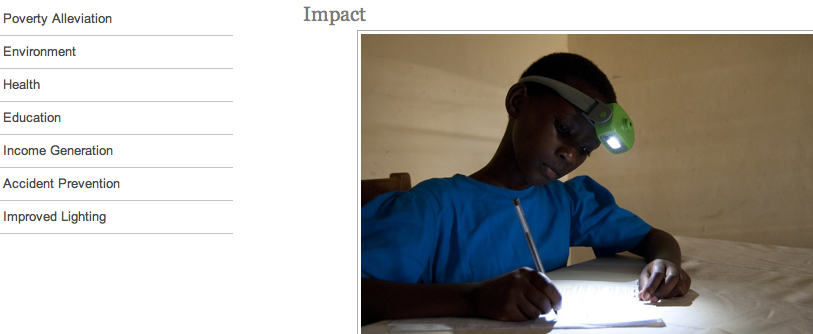
In fact, what caught my eye on the Nuru Light website is the “Impact” section. I asked Hajee to discuss how he believes Nuru Light is helping the African community besides fixing a basic need for light.

Our product helps reduce the use of kerosene, a significant cause for respiratory diseases. We’re helping the local environment by removing the fumes and toxicity of kerosene from the air. We are creating job opportunities for the community. Plus, for the first time the kids in the community now have the ability to complete schoolwork at their leisure, freeing up for time for play and extracurricular!

As a technology, Nuru Light, of course, presents a win for Hajee who recognized a severe need coupled with crippling factors of few resources and economic underdevelopment.

Next Stop: India

Now with new support – financially and otherwise – from the eBay Foundation, Hajee is ready to work on his next venture: The rural population in India.

In fact, Nuru Light has had ground troops in Mumbai and Delhi doing initial research since 200, he told me.

“It took all of the $500,000 we raised for Nuru Light to work in Africa. We now have the same amount to invest in our model in India. And eBay has shown a real commitment to help us scale our business by offering us their resources way beyond the financial support. Their approach has been starkly different from other donors and we’re lucky to have that,” he says.

If Africa took a few months, why was the Indian market proving such a hard nut to crack? “The reason it is taking us so much longer is that no one is working on provided microfinance opportunities in India. So off grid products like ours end up remaining largely, off grid,” he admits.

But the roadblocks in India are more convoluted and will require a whole new round of rethinking and perhaps, even a regurgitating of Nuru Light.

We have learned a lot in the last two years and now know what can work.

The research is complete and the funding is in. That success story is yet to be written for Hajee and Nuru Light, but his recent accomplishments leave me with little doubt.

Passion, a clear sense of business responsibility and market-based solutions drive Sameer Hajee. What will it take to motivate you?

Connect with me @AmanSinghCSR or leave a comment.

Share this:

  • Tweet
  • Email a link to a friend (Opens in new window) Email
  • Share on Reddit (Opens in new window) Reddit
  • Print (Opens in new window) Print
Like Loading...

Sustainability & Social Media: Trends, Challenges, Solutions

30 Friday Sep 2011

Posted by Aman Singh in Uncategorized

≈ Leave a comment

Tags

aman singh, aman singh das, brand management, Business, Chris Jarvis, corporate social responsibility, CSR, CSR communications, CSR strategy, employee engagement, Events, leadership, management, prezi, Singh Solutions, Social Media, social media, social media and sustainability, social media trends, Sustainability, sustainability, sustainable business practices, Work culture


On Monday I was at the Conference Board’s Center for Sustainability annual summit to present on sustainability and social media. I decided to try Prezi after having seen Realized Worth’s Chris Jarvis use it with aplomb at the Boston College Center for Corporate Citizenship’s annual conference earlier this year.

Here then is my presentation:

Sustainability and Social Media Trends

And while you’re at, why not take this quick survey on the relationship between brand management and social media?

Share this:

  • Tweet
  • Email a link to a friend (Opens in new window) Email
  • Share on Reddit (Opens in new window) Reddit
  • Print (Opens in new window) Print
Like Loading...

Think CSR is None of Your Business?

29 Thursday Sep 2011

Posted by Aman Singh in CSR, HR, Uncategorized

≈ 3 Comments

Tags

aman singh, aman singh das, brand management, Business, campus interview, campus recruitment, candidate sourcing, Career advice, careers, corporate citizenship, corporate social responsibility, CSR, diversity, employee engagement, HR, human resources, IE Business School, inclusion, job interview, jobs, management, Management, Recruitment, recruitment, retention, shared value, social responsibility, Sustainability, talent, talent acquisition, talent management, Uncategorized, Work culture


Think again, especially if you work in recruitment or human resources.

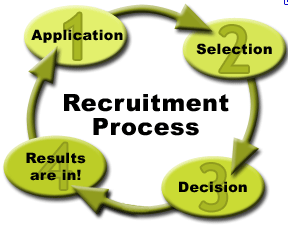
My latest editorial on CSRWire: The Power of Hiring Right: A Value Proposition that Most Recruiters Continue to Ignore

Where Does CSR Fit in with the Recruitment Process?


Share this:

  • Tweet
  • Email a link to a friend (Opens in new window) Email
  • Share on Reddit (Opens in new window) Reddit
  • Print (Opens in new window) Print
Like Loading...

11 Challenges for Corporate Sustainability: A Review

24 Saturday Sep 2011

Posted by Aman Singh in CSR, CSR reporting

≈ 5 Comments

Tags

Accountability, aman singh, aman singh das, benchmarking sustainability, brand management, Brand Management, Business, conference board, corporate citizenship, corporate social responsibility, CSR, CSR events, CSR reporting, CSR strategy, ethics and compliance, Events, global reporting initiative, GRI, innovation, integrated reporting, Leadership, leadership, Management, risk management, social media, Social Responsibility, Stakeholder Engagement, supply chain, Sustainability, sustainability, sustainability reporting


Early this year, at the Global Reporting Initiative’s official launch in North America, Director of the Conference Board’s Center for Sustainability David Vidal asked a room full of senior CSR and sustainability executives:

What are the top three reasons for your company’s reluctance to embrace sustainability—and adopt sustainability reporting?

Now, as I prepare my keynote presentation for the Center’s annual summit next week on Innovation, Sustainability & Social Media, the answers to David’s question six months ago remind me of how quickly some businesses — and the sustainability space — are evolving.

Here’s what I wrote then on Vault’s CSR blog:

——————————–

The responses that came from an audience representing the glitterati of the corporate social responsibility world might surprise.

Keep in mind that a majority of them (I’m almost tempted to say all) don’t need another lecture on the business case for CSR or sustainability, are active advocates, and represent companies that–for a multitude of reasons–recognize the link to their bottom lines.

What these responses point to, however, is the continued sense of reluctance across senior leadership toward combining the social and environmental with corporate. The path to effective CSR isn’t a linear process by any means and these responses should help those who continue to struggle with mental and ideological barriers within their companies.

Because knowing the challenge is half the battle.

As you go through these, make an elementary checklist. Which of these sound familiar? How did you tackle them? Do any seem/remain insurmountable in the current corporate reality of thrift and inflexibility? Share your perspectives by leaving a comment or connecting with me @AmanSinghCSR.

And, without further ado, and in no particular order:

  1. Doubt
  2. Liabilities
  3. Denial
  4. Resources
  5. Causality
  6. Lack of Global Standards
  7. Benchmarking
  8. Lack of comparative credibility
  9. Uncertainty
  10. Fear of the unknown
  11. Fear of the known

——————————–

My estimation is that this list continues to evolve depending on the industry, the chief in charge, and even by which quarter we are in.

In coming days, I will review these challenges  — after hearing from some of business’ most eminent executives at the Annual Summit —  and hopefully shed some light on how some businesses’ have indeed managed to overcome them, and found advantage in doing so.

Stay tuned!

Share this:

  • Tweet
  • Email a link to a friend (Opens in new window) Email
  • Share on Reddit (Opens in new window) Reddit
  • Print (Opens in new window) Print
Like Loading...

VIDEO: 2degrees Launches Sustainability Quarterly in New York

21 Wednesday Sep 2011

Posted by Aman Singh in Uncategorized

≈ 2 Comments

Tags

2degrees, aman singh, aman singh das, brand management, corporate social responsibility, CSR, diageo, Events, Green, Mark Serwinowski, marketing, metavu, PR, roberta barbieri, Social Media, social media, social media and sustainability, Stakeholder Engagement, supply chain, Sustainability, sustainability, Uncategorized


I was recently invited by U.K.-based 2degrees (an online community of over 16,000 sustainability professionals) to participate in their inaugural Sustainability Quarterly in New York City. It was a great panel (co panelists: Mark Serwinowski from Metavu and Roberta Barbieri from Diageo) and my role was to discuss the increasing importance of social media. Not only did I have an interesting task, considering most in the audience did not have a Twitter or Facebook account, they also had some outstanding questions for me.

Take a look:

If you are in the New York area, I highly recommend attending their next quarterly on September 27, 2011. Their working groups methodology and nuts and bolts approach is effective, engaging and immensely productive.

You won’t be disappointed.

Share this:

  • Tweet
  • Email a link to a friend (Opens in new window) Email
  • Share on Reddit (Opens in new window) Reddit
  • Print (Opens in new window) Print
Like Loading...

Does Expending Resources on CSR and Sustainability Destroy Economic Value?

13 Tuesday Sep 2011

Posted by Aman Singh in CSR

≈ 11 Comments

Tags

aman singh, aman singh das, Aneel Karnani, BP, brand management, Brand Management, Business, business strategy, Campbell Soup, CEO Network, Commitforum, corporate citizenship, corporate social responsibility, CSR, CSR reporting, CSR strategy, Dave Stangis, Ethics, ethics and compliance, Events, Fenton, Gerry Sullivan, Green, green jobs, Leadership, Management, Paul Herman, risk management, shared value, social enterprise, Social Impact, social responsibility, Social Responsibility, Starbucks, Sustainability, sustainability, sustainable business


Corporate Social Responsibility isn’t about giving money away and adopting the latest cause of activists. CSR and sustainability are approaches to business operation and execution that build employee engagement, improve environmental performance, create positive social impact, enable operational efficiency, reduce cost, foster innovation, strengthen relationships with customers and consumers and ultimately…create business advantage.

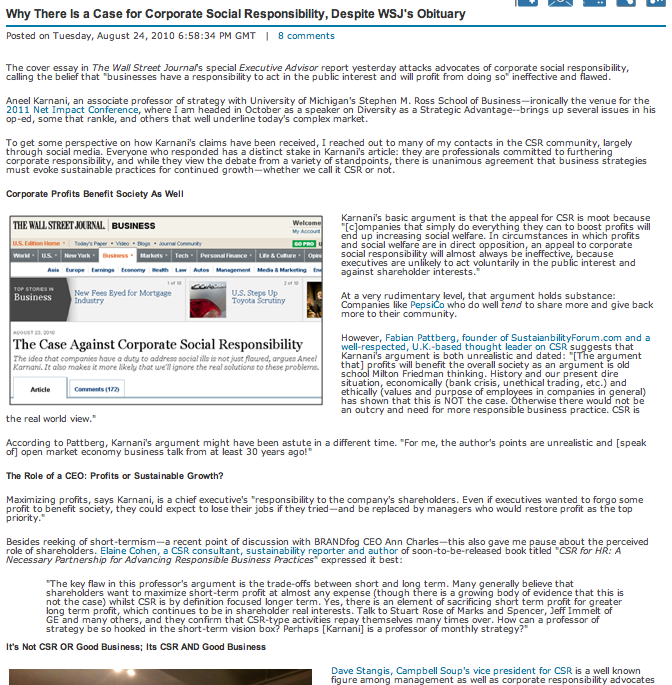
That was Dave Stangis, VP for Corporate Responsibility with Campbell Soup Company responding to University of Michigan Professor Aneel Karnani’s infamous editorial in The Wall Street Journal, “The Case Against Corporate Social Responsibility.”

Then, the argument was “capitalism versus corporate social responsibility, CSR versus profits, and where an idea like CSR fits into a business’ main objective, which is to make profits for its shareholders.”

Despite numerous debates [Fenton’s BIG CSR debate] and as many editorials and reports [Why There Is a Case for Corporate Social Responsibility], the inequity of the idea — or the perception that being responsible will cost a company money and therefore is an expense business doesn’t need — prevails.

But the actual essence of this debate no one can seem to pinpoint. Are we fighting over semantics or strategy?

Is it the misperception that CSR is a cost, a tagged on responsibility, and therefore, unnecessary for companies? Or that CSR is completely estranged from the notions of capitalism as Professor Karnani believes — and is, in fact, the wrong argument?

Since his controversial editorial, Karnani of course has continued to incite criticism for what many call an “extremely shortsighted and narrow view.”

Now, the associate professor of management and strategy for Michigan’s Ross School of Business is headed to New York City to debate his argument in real-time on the occasion of the CR COMMIT! Forum 2011, organized by Corporate Responsibility Magazine and NYSE Euronext [Details below].

Fashioned as an Oxford-style debate [DEBATE: RESOLVED that when companies expend resources on corporate responsibility and sustainability they destroy economic value], Karnani will be joined by Gerry Sullivan, president of the VICE fund, on the pro-markets side.

On the pro-sustainability side will be Paul Herman, CEO of HIP Investor and Dr. Vinay Nair, founding partner of Ada Investments and adjunct associate professor of finance and economics at Columbia Business School.

In a sneak peek, I talked to three of the debaters [Dr. Nair couldn’t make it] on the essence of their arguments as well as: How does each of them define CSR?

Take a read:

Thriving on the Value of Vice

Gerry Sullivan from VICE funds believes in the power of capitalism. His funds select well performing stocks of tobacco, alcohol, gaming and weapons companies because they believe that, “Vice industries tend to thrive regardless of the economy as a whole.” Anyone reminded of the root of the financial collapse?

“I believe in capitalism because it ensures that products and services coming out are tested on the profit mandate and ultimately are good processes because they come through the interaction and the ability to gain profit,” he said.

Fair enough. Historically, companies who do well tend to share more.

Making Too Much of CSR?

“My biggest fear of CSR is that people want to make more of it than it really is. A company’s ability to employ better people and deploy profits is the real goal. Everything else is settled by the market,” he continued.

But clearly there is a differentiator between companies that invest in their community and immediate environment over the long-term and those that focus on short-term yields?

Affirmative, says Paul Herman.

Citing the ever quotable example of BP, he said, “When you look at their track record, BP was not a good corporate citizen and lost 40% of shareholder value in just a few months post the oil spill. Companies are not prepared for the volatility of climate change and its effect on cash flows and natural resources.”

Further, “Research from Wharton School and other academics has shown measurably that companies that help solve social and environmental problems can enjoy a higher shareholder and portfolio value,” he said.

“This decreases risk for business and increases value,” he added.

CSR Cannot Dictate Social Enterprise, But Profits Can

Because it had begun to sound like a battle between two followers of capitalism with opposite operational ideologies, I asked Karnani to step in.

“Companies can maximize profits and social enterprise at the same time, which is why capitalism works well. This is where Paul makes a good argument. Of course companies should do all this,” he said.

“But we don’t need CSR to make this argument. It’s as simple as ‘make the money, help employees.’” he added.

Here is where the caveat comes in however, he said. “This isn’t always true. When markets fail, we cannot appeal to companies to sacrifice profits for CSR and it is naive of anyone to think that all the stakeholders are always aligned in their interests. If this were true, we wouldn’t need the study of economics,” he argued.

His solution? Going back to what he had argued in the WSJ editorial last year: Government regulation.

And this is where my problem with the debate starts: How can government regulate behavioral change, cultural perceptions, and a deteriorating environment? Or are we now talking of CSR as a program, an initiative, a fundraising for charity opportunity?

If so, was Karnani suggesting the route the Indian government took recently by “mandating 2.5% of net operating profits must be spent on CSR” by all publicly traded companies?

Perhaps, although we won’t know till the live debate at the COMMIT! Forum.

Back to Square One: What the heck is CSR?

Clearly, the next question: How are these men defining corporate social responsibility? Intentionally or not, I had hit the nail on its head.

VICE Funds: “CSR is Green, And It Isn’t Generating Green”

According to Sullivan, “CSR is embedded into green and green hasn’t generated green for most companies.” Also blaming the government for supporting “and pumping a ton of money into green jobs,” which many say has been a failed effort at reviving the economy, Sullivan continued:

The internet bubble taught us that having pool tables and kegs doesn’t make the companies money. If the jury is still out on whether good companies will do good things, I say they’re smart enough to treat their employees well. You don’t need CSR for that.”

“I would like the companies I invest in to not be socially responsible but responsible to their shareholders and producing products that the government can use to generate revenue. I certainly hope that these companies think highly of their employees but I’m less inclined to think that they would give up profits over socially responsible activities.

HIP Investor: “CSR is Generating Top Line Growth”

For Paul, the question isn’t about green or management. “You start by asking yourself what social or environmental problem you are solving. Companies who are doing well have a core mission of improving the world in some way and making money while doing so.”

Citing the example of banks, he explained, “Banks were started to help people grow their income and wealth and became more integrated in their communities.”

“Starbucks in the U.S. spends more on the health care of its employees than the coffee beans because they support a better quality of life for employees and a higher labor standard.”

The argument, at least for Herman, isn’t about the validity of CSR anymore. “It’s about generating top-line growth and bottom-line profits. That’s why employees and investor relations teams are key in solving this paradigm,” he concluded.

Karnani: “If CSR is Beyond Making Money, Then It’s Not Making Money”

“CSR is a very confused notion. If you just mean businesses doing good for society, then capitalism is actually good [for society]. If CSR goes beyond ‘making money,’ then it’s not about ‘making money.’ When a company does something socially useful and loses money over it, that’s CSR. And definitionally, CSR loses money,” he concluded.

Confused? Irate? Redeemed?

Want to attend the COMMIT!Forum? Register here or connect with me on Twitter @AmanSinghCSR for a special discount code. The Forum begins on September 26, 2011, at the Javits Center in New York City and offers a full two-day agenda complete with a CSR careers symposium, keynotes and workshops.

And if you cannot make it, stay tuned here for more coverage.

Share this:

  • Tweet
  • Email a link to a friend (Opens in new window) Email
  • Share on Reddit (Opens in new window) Reddit
  • Print (Opens in new window) Print
Like Loading...
← Older posts
Newer posts →

Let's Talk!

Virtual
732-322-7797
amansinghdas@gmail.com

Blogs I Follow

  • Nonprofit Chronicles
  • Learned On by Andrea Learned
  • Angry African on the Loose™
  • csr-reporting
  • The CSR Blog
  • In Good Company: Singh on CSR

My Cloud

Capitalism 2.0 CSR CSR reporting CSRwire ESG Guest Author HR Stakeholder Engagement Sustainability Uncategorized

Recently written…

  • Rationality is Ruining Us: Mayors, presidents and governors join major businesses in charting way forward on climate change
  • 2015: the year businesses recognize that climate change is real – and 4 other themes
  • Hardcore lessons of sustainability – ’10 Words or Less’
  • Brewing a Better Future [#BaBF] with Heineken: Examining the Many Flavors of Local Sourcing
  • From Conflict to Collaboration: Kimberly-Clark and Greenpeace Participate in LIVE Twitter Chat

What others are reading

aman singh aman singh das Brand Management Business corporate social responsibility CSR CSR reporting CSRwire ESG Leadership Stakeholder Engagement supply chain Sustainability sustainability Work culture

Categories

Most Read

  • None

Blog at WordPress.com.

Nonprofit Chronicles

Journalism about foundations, nonprofits and their impact

Learned On by Andrea Learned

Angry African on the Loose™

I have opinions. I am from Africa. I live here now. I blog.

csr-reporting

Connecting the dots between Business, Society & the Environment

The CSR Blog

Connecting the dots between Business, Society & the Environment

In Good Company: Singh on CSR

Connecting the dots between Business, Society & the Environment

Privacy & Cookies: This site uses cookies. By continuing to use this website, you agree to their use.
To find out more, including how to control cookies, see here: Cookie Policy
  • Subscribe Subscribed
    • In Good Company: Singh on CSR
    • Join 119 other subscribers
    • Already have a WordPress.com account? Log in now.
    • In Good Company: Singh on CSR
    • Subscribe Subscribed
    • Sign up
    • Log in
    • Report this content
    • View site in Reader
    • Manage subscriptions
    • Collapse this bar
 

Loading Comments...
 

    %d