• ABOUT THE AUTHOR
  • Sustainability
  • CSR
  • CSR reporting

In Good Company: Singh on CSR

~ Connecting the dots between Business, Society & the Environment

Tag Archives: Environment

The True Value of CSR Reporting: In Conversation with Campbell Soup’s VP for CSR

07 Monday Jul 2014

Posted by Aman Singh in CSR, CSR reporting, CSRwire, ESG

≈ Leave a comment

Tags

Business, Campbell Soup, CEO Network, community development, corporate governance, CSR, CSR reporting, CSRwire, Dave Stangis, denise morrison, employee engagement, Environment, ESG, Social Media, Stakeholder Engagement, Supply chain management, Sustainability, sustainability, Work culture


The soon-to-be-released report will mark Campbell Soup’s fourth CSR Report. This report comes amidst a CEO change – Denise Morrison took on the chief job at Campbell Soup last year joining a small group of women CEOs in the Fortune 500 – and a period of what Director of Diversity & Inclusion Kevin Carter calls a time of “deep introspection” for the company.

Carter’s note is well taken. With the economy sputtering and flailing, reports continue to suggest that consumer confidence and trust remain low. For a food manufacturer then, this means not only staying ahead of the curve of quickly changing taste preferences but also understanding its unique role in encouraging nutrition across an increasingly complex and fragmented consumer base.

And amid a tepid economy, where does the true value of CSR and sustainability reporting lie? Can these reports and the effort required to produce them extend beyond an exercise in sharing key metrics, the year’s highlights – and a few, incredibly sparse media mentions – to true learning experiences for companies to better their processes and make gains that help them and their communities become more sustainable?

The True Value of CSR Reporting

Dave_Stangis_CSFor VP of Public Affairs and Corporate Responsibility, Dave Stangis – his third report since taking the job at Campbell Soup – the true value of Campbell Soup’s reporting goes far beyond setting the right goals and reporting on the progress.

“The true potential of CSR reporting* is that while companies go through this chronological reporting effort once a year, the organization and business units are executing their strategies and working on metrics year-round. The process of reporting creates an opportunity to build a Campbell Soup Britannica or World Book to work off of and use as a record of the company’s progress,” he said in a recent interview.

“All year-long, we are collecting examples, building the narrative, monitoring our progress and continually evolving materiality assessments,” he continued. Often, great examples of progress emerge that would otherwise never rise to the spotlight in a multinational company.

“As you dig in, you find cross-functional teams working together on strategy, benchmarking, indicators, etc. There are, of course, always things to improve on but the stories and ideas that emerge from this heels dug in reporting exercise are incredibly useful in moving our company forward,” he said.

Connecting the Dots: Recognizing the True CSR Heroes

In recent weeks, CSRwire readers read from a number of top executives at Campbell Soup on their stories and contribution to the 2012 CSR report. Trish Zecca discussed the fine balance between nutrition and taste while Amanda Bauman discussed how the company is tackling hunger and obesity in its communities and Dr. Daniel Sonke gave us an in-depth account of the relationship between agriculture practices and corporate sustainability. Finally, D&I Director Kevin Carter offered his insights on how the company is prioritizing intercultural teams, moving diversity beyond compliance, and tentatively dipping its toes in social media.

For Stangis, these are the true heroes.

“These are the people who are behind the images and stories in the report. They are invested in the business Campbell_Soup_Volunteersand their work and there is a discernible amount of pride and work ethic that goes along with that,” he said.

“For our CSR Communications Manager Niki Kelley – creating this report is her life for six months and I’ve told her, she’s the one who knows more about the entire company than anyone else in the company.”

5 Questions for Campbell Soup’s VP for CSR

What is Stangis most proud of in the latest CSR report?  “It’s the nuances that a lay reader won’t realize but that are critical to the progress we are making,” he said. To explain further, we decided to play five questions:

1. Whose Interested:

“We continue to evolve our understanding of our various audiences [for the CSR report]. We want to connect with our employees on the frontline as well as in the C-suite. We need to impact our neighbors and make the content relevant to our customers and consumers. Most readers are looking for quick snapshots and I want to validate, reinforce and build trust and credibility in that short timeframe.”

2. What’s New:

“We’ve really worked hard on strengthening the wellness and nutrition metrics from a product perspective…we’re not driving a health ultimatum, but we are offering more healthy choices for consumers. Readers that pay closer attention will notice a growing sophistication in our strategies and metrics across the board. This report also includes the first full description of our Healthy Communities Initiative that we’ve launched in Camden, NJ.”

3. What’s Often Hidden:

“We work hard to make sure nothing gets lost in the details, but there is a ton of content that most readers will miss on a casual glance. The CEO Letter can give the readers a sense of how Denise Morrison thinks and interacts with the CSR and sustainability strategy.”

“We’re bridging from an employee engagement (only) mindset to a performance culture that leverages engagement to drive better business results. This isn’t something that is immediately obvious to external readers but it’s a priority for us.”

4. What’s Measured Gets Managed:

“Last year we discussed our community programs but this year the report really talks about these in a strategic and measurable manner. We continue to advance our metric set from product conception to societal impact. We’ve mapped our production sites with the WBCSD Global Water Tool and as we’ve brought our Community and Foundation functions into tighter alignment with our CSR and Sustainability strategies, we are shifting from measuring activity to measuring outcomes.”

5. Uncharted Territory: 

“The big news this year from a sustainability perspective is our traction on renewables. We’ve had smaller efforts in the past but in 2011 we went from dipping our toes in the water to flipping the switch on one of the largest solar installations in the country. This represents a cultural shift for the company. Large scale renewable projects just weren’t in our solution set and now we are evaluating new renewable opportunities across our plant network that reduce our greenhouse gas emissions and save money.”
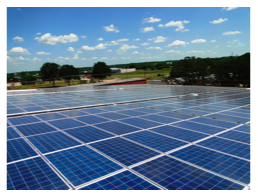
Solar_Panels_at_Campbell_SoupFor Campbell Soup, a global footprint means a holistic vision of sustainability that encompasses its products, employees, communities and supply chain.

And for Stangis, publishing an annual report is not only a testament to his team’s efforts but also a way to measure what’s not working. Having led CSR at Intel before joining Campbell Soup, Stangis is a veteran in the world of CSR reporting, and has seen firsthand the evolution of the sector.

“What comprehensive reporting does today is set up a process that continues to position the company in the long-term. This wasn’t the case when we started reporting. Now we’re anticipating issues and breaking down communication silos that are inherent in the company,” he explained.

Challenges Ahead: More Data, Clarity of Purpose

Any regrets? “We need to keep pushing ourselves for better data every year, especially for our international footprint. It’s only when you dig in that you realize how much better a fully integrated measurement and reporting system would be,” Stangis confessed.

The journey – as for most companies taking on the responsibility and challenge of reporting on their corporate social responsibility and sustainability efforts – is far from over.

And as a seasoned sustainability executive, Stangis understands the daunting task that lies ahead for Campbell Soup in a crowded market, evolving taste preferences and the continuous challenge of consumer education.

“We still have to plug people into what we are doing, the reason why we are doing it [and make it make sense],” he said, noting that it isn’t just the external stakeholders that need the dots to be continually connected for them.

“We have to do a better job at communicating the strategic intent and shareowner value delivered by a comprehensive CSR program.  Our internal teams, our C-suite – it’s our job to help them understand  the story across the board.”

Originally written for and published on CSRwire’s Commentary section Talkback on May 24, 2012
Share this:

  • Tweet
  • Email a link to a friend (Opens in new window) Email
  • Share on Reddit (Opens in new window) Reddit
  • Print (Opens in new window) Print
Like Loading...

Conflict Minerals & Supply Chain Responsibility: Spotlight on the EICC

03 Thursday Jul 2014

Posted by Aman Singh in CSRwire

≈ Leave a comment

Tags

aman singh, conflict minerals, corporate social responsibility, CSR, CSRwire, dodd frank, eicc, Environment, Events, Global e-Sustainability Initiative, ibm, supply chain audit, supply chain management, Supply chain management, Sustainability, sustainability


The Electronics Industry Citizenship Coalition (EICC) was formed in 2004 and incorporated in 2007 as a nonprofit industry trade group focused on the electronics sector. The aim: To help drive the industry collaboratively toward higher levels of socially responsible business practices.

It does so with a code of conduct and intensive means for implementation of the Code.  With over 65 members, the Coalition’s mission is simply stated: to “improve efficiency and social, ethical, and environmental responsibility in the global supply chain.”

Conflict Minerals & Supply Chain Responsibility

Recent U.S. laws and continued pressure from activists has pushed companies to focus on not only how they source their materials but also what they are doing to educate, empower and sustain their suppliers. For the electronics industry, this has become a major piece of work with conflict minerals and extractives playing a significant role.

In a webinar I conducted with Best Buy last year on the release of their latest sustainability report, for example, several questions from the live audience targeted the electronics retailers’ complex supply chain. With ethics dilemmas aplenty and multifold regulations across regions, how is the industry coping with the pressure to improve its sourcing practices while continually pushing themselves to do better?

John Gabriel, chairman of the EICC’s board of directors, will be joining Metalor Technologies, Research In Motion, Responsible Jewelry Association, the International Trade Centre, Chrysler and the CSR Group, in a workshop on Collaboration as an approach to Supply Chain Responsibility at the upcoming Ethical Sourcing Forum in New York City. We sat down for a chat.

Supply Chain Complexities: Compliance vs. Collaboration

As corporate manager of IBM‘s supply chain social responsibility program – a position he has held since 2004 – Gabriel is no stranger to the complexities of auditing, discipline, sustainability and compliance.

“The approach we have taken as an industry group [at the EICC] is to tackle this very challenging topic by engaging with a broad spectrum of our stakeholders directly,” he said.

“Work began a number of years ago with the Global e-Sustainability Initiative (GeSI). We also engaged leading NGOs and researchers on the topic in order to begin the task of developing solutions to this very complex challenge,” he added.

“We have developed a number of tools to help the process along including a smelter certification scheme and a due diligence survey application that enables companies to survey their suppliers for materiality knowledge” he continued.

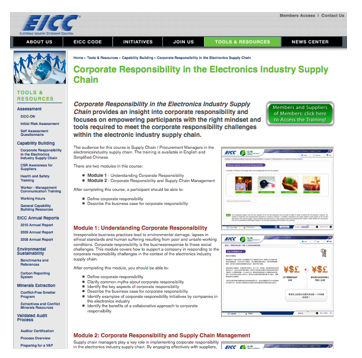
EICCJointly developed by the EICC and GeSI members and other industry participants, the survey allows for industry-wide aggregation of responses in order to highlight upstream smelters being used and ultimately country of origin for the minerals in question.”

It’s, of course, easy to over simplify the complications – and the kind of progress needed across sectors – Gabriel is referring to.

In fact, verification of entire supply chains to ensure they are completely free of conflict minerals will require not only exemplary leadership among the industry but, according to Gabriel, a significant amount of out of the box thinking.

“For companies to be able to deploy this is a huge task. We are talking about years’ worth of work before all levels of the supply chain are vetted,” he emphasized, adding, “The infrastructure we are developing will enable this work, but it requires an even larger group of end users to adopt and deploy in order to drive the effort.”

Regulatory Pressure: Rising to the Challenge

With the Dodd-Frank bill ensuring that supply chain reporting on Conflict Minerals becomes mandatory for companies required to file SEC disclosures, Gabriel believes coordination and collaboration is the best way forward on the path to demonstrate regulatory compliance.

And this is what he hopes attendees at the upcoming Ethical Sourcing Forum can take back to their organizations.

Originally written for and published on CSRwire’s Commentary sectionTalkback on March 28, 2012.

Share this:

  • Tweet
  • Email a link to a friend (Opens in new window) Email
  • Share on Reddit (Opens in new window) Reddit
  • Print (Opens in new window) Print
Like Loading...

Bob Willard’s Business Case for Sustainability: A Better Way to Make a Bigger Profit

03 Thursday Jul 2014

Posted by Aman Singh in CSR, CSRwire, ESG

≈ Leave a comment

Tags

amazon defense coalition, apple's factory standards, bob willard, Brand Management, Business, Business Ethics, cecp, CEO Network, chevron in ecuador, corporate governance, CSR, CSRwire, Environment, ESG, Events, interface, ray anderson, supply chain, Supply chain management, Sustainability, sustainability, toronto sustainability speaker series


The constant struggle between business’ social and environmental responsibility and investor demands is already an old tale. “The field has stretched and magnified so quickly that even though I have only been doing this work for three years, it feels like 10,” confessed a fellow attendee at a recent conference.

It’s true. Increasingly, more of us – those of us who eat, drink, sleep and dream CSR and sustainability – succumb to the comfort of believing that the sector is steadily progressing toward safer, clearer, more transparent practices.

But are we?

With Wall Street continuing to demand quarterly results, stringent returns on investments and short payback periods, are we really supporting sustainability in its truest sense? The examples, after all, are endless: Apple’s factory standards, Goldman Sachs’ unethical business practices, Chevron’s continued governance malpractices as reported by the Amazon Defense Coalition, and a new report that calls Wal-Mart’s sustainability championship as mere greenwashing.

As the CECP’s Margaret Coady remarked recently on CSRwire Talkback, how can sustainability executives tie consumer expectations and investor pressure into cohesive strings of action? Are the two sides completely incompatible?

Bob_Willard_The_Sustainability_AdvantageBob Willard, author of The Sustainability Advantage – and the updated The New Sustainability Advantage – recently held a well-attended webinar organized by the Toronto Speaker Sustainability Series [TSSS] on objections handling for sustainability executives. Some of his lessons – which you will soon be able to download as a useful reference guide, courtesy TSSS – focus on identifying mind shifts, behavioral change, graciousness and emphasizing education.

Now, Willard is traveling to New York to present at the Ethical Sourcing Forum on March 29 – 30, 2012 on connecting these lamentations with the business case for sustainability. A former IBMer, Willard’s work is renowned for its articulate arguments and concrete examples. His book is a firestorm of information and data. Here’s what the founder of Interface, the late Ray Anderson, said:

Bob Willard has performed a service of inestimable value: quantifying the business case for sustainability. By focusing at the level of the firm, Willard has bypassed the overriding but somewhat esoteric question, “How long can the rape of Earth by the modern industrial system go on before ecological collapse?”

The answer to this big question lies in the cumulative effect of millions of firms, large and small, waking up to the untapped profit potential that’s all around them. Bob Willard has shown how to capture that potential in real profits. Consequently, the answer to the big question is: Let the rape stop now; there’s a better way to make a bigger profit. Read this book to learn how.

Willard believes that until recently, there has been little evidence expressed in business language to show executives actual benefits from sustainability strategies. But that sustainability strategies can drive new bottom-line opportunities, avoid impending risks, and be a catalyst for business innovation, even in an economic recession.

While there are speakers aplenty who can talk about sustainability today in logically constructed sentences, there are few who have decades of experience to back up their arguments and can not only envision sustainable capitalism but show us how to get there. Willard falls in the latter category. So, if you are in the New York City area, join the CSRwire team at the Ethical Sourcing Forum to learn and engage with the leader himself.

Originally written for and published on CSRwire’s Commentary sectionTalkback on March 16, 2012.

Share this:

  • Tweet
  • Email a link to a friend (Opens in new window) Email
  • Share on Reddit (Opens in new window) Reddit
  • Print (Opens in new window) Print
Like Loading...

Sustainability & Your Supply Chain: Risks, Metrics & Opportunities

03 Thursday Jul 2014

Posted by Aman Singh in CSR reporting, CSRwire, ESG

≈ Leave a comment

Tags

accountability, Coca Cola, CSR reporting, CSRwire, Environment, ESG, ethical sourcing forum, ethics, intel, supply chain, Supply chain management, Sustainability, sustainability, transparency


What combination of education, training and technical solutions does it take to compel change through your organization as well as your supply chain?

It is a question that continues to dog manufacturers and retailers big and small as supply chains grow complex and social and environmental challenges multiply. What role should companies play in educating – and engaging – their suppliers? What’s ethical? With Sustainability Reporting becoming a mark of competitive advantage, how can organizations best track their performance?

The upcoming Ethical Sourcing Forum will kickoff its two-day conference next month by putting Coca-Cola, Intel, Bic, the International Trade Centre (ITC) and Intertek on the hot seat to try to answer some of these complex questions.

Ethical_Sourcing_Forum

The panel, led by me, will not only offer best practices but also discuss specific tools that the companies have either developed or collaborated with their nonprofit partners on, to track and examine sustainability progress with their suppliers.

For a preview of what promises to be a compelling session of benchmarking and teasing apart a sensitive topic, I turned to Mathieu Lamolle, a market analyst with the ITC for some insights.

An Ethical Supply Chain

The ITC, a United Nations agency for trade related technical assistance, has one goal: To help businesses become more competitive in global markets, speeding economic development and contributing to sustainable development.

Part of this goal, Mathieu told me, is a “Standards Map web tool for organizations to analyze, map and compare themselves according to an array of 75+ sustainability standards in supply chains.”

“We also want to enable any organization that has its own code of conduct and assessment protocol to benchmark what they are doing against others. They can benchmark their own corporate practices and see how they measure up against other companies and sustainability standards.”

Ranging from small companies, traders and suppliers to retailers, importers and others, this new tool will encourage data sharing for the purpose of internal benchmarking with the ultimate goal being an ethical and efficient supply chain.

While it remains strictly a business-to-business tool for now, Mathieu emphasized that there are plans to eventually roll it out for general consumption and public benchmarking as well.

Benchmarking Sustainability Progress

StandardsWhat’s especially promising about ITC’s new tool is its abject emphasis on sharing for the purpose of benchmarking. The organization’s role as a UN neutral intermediary between public-private partnerships further helps break through the risk-averse behavior that often delays well-meaning initiatives within organizations.

Although, so far the tool has found resonance with participants for the primary purpose of internal tracking and public sharing of information on the Standards Map web tool, Mathieu admitted that the true value of the tool “is going to unfold when we can spread the news globally” and allow people to compare the true progress being made by participating organizations on educating and training their supply chains. “The more people use it the better it is,” he said.

The impact of such a global tool can prove to be significant in an industry that is evolving and constantly juggling multifold standards and regulations. Want to learn more about the Standards Map? Wondering how you can use the tool to track your organization’s sustainability progress?

Join us at the Ethical Sourcing Forum for a lively discussion that will focus not only on available tools, but also how to best manage metrics, challenges of a global supply chain and whether any of the present panelists’ tools can be customized to work in your industry.

Originally written for and published on CSRwire’s Commentary sectionTalkback on February 22, 2012.

Share this:

  • Tweet
  • Email a link to a friend (Opens in new window) Email
  • Share on Reddit (Opens in new window) Reddit
  • Print (Opens in new window) Print
Like Loading...

Dow Chemical: Extracting Business Value out of Sustainability

03 Thursday Jul 2014

Posted by Aman Singh in CSRwire, ESG

≈ Leave a comment

Tags

Brand Management, CSRwire, dow chemical, environment, Environment, ESG, innovation, Innovation, neil hawkins, science, Sustainability, sustainability, technology


After more than a decade of negotiations, there’s news today that Dow Chemical has agreed to clean up 1,400 residential properties in Midland, Mich.

The root cause: A Dow Chemical plant located in Midland, also home to its headquarters, responsible for polluting the area with dioxin for a better part of the late 1990s.

Dow Chemical has had a long history of pioneering research and innovation in sustainability, from collaborating with nonprofits on driving solutions — it was named one of the most sustainable companies in Brazil in 2011 — to industry-wide partnerships on reducing their products’ environmental footprint.

But no number of accolades or ratings can hide the immense environmental and social footprint of the company’s operations, domestically or internationally. Or as many would opine, help erase a history of soil, air and water contamination.

So, how does the chemicals giant prioritize sustainability to drive its long term business plan? And how are these complex social and environmental challenges defining this strategy? Neil Hawkins, Dow Chemical’s VP for Sustainability & EH&S offers some insights:

Top Sustainability Challenges of 2011:

1. Accounting for the value of nature

We’re entering a new phase of integrating the value of nature into the corporate balance sheet through a breakthrough 5-year collaboration with The Nature Conservancy. This partnership will determine the value of ecosystems to Dow’s operations.

Scientists from both organizations are developing tools and testing models together that we will eventually share with other companies and the science community. In early 2012, we will issue a public progress report on the collaboration, as well as a broader update on Dow conservation projects around the globe.

2. Market adaptation to sustainable solutions and innovation

There is a significant divide between environmental and social issues, and the appetite of markets to adapt, and sometimes pay, for new solutions that address these issues. Bringing innovation to market is a costly proposition filled with economic and political volatility, lack of clear and consistent regulation, and lack of guarantees for ROI.

Despite these headwinds, we are addressing megatrends and challenges by staying focused on our mission and values, and through unwavering investment in our innovation pipeline.

Aspirations for 2012: Where does CSR / Sustainability fit?

In 2010, Dow passed the midpoint of its second set of 10-year sustainability goals – the 2015 Sustainability Goals.

In 2012, we will work on our next set of goals, building on the momentum of the past 20 years, and find ways to drive Dow’s science and people into unprecedented areas of leadership, collaboration, innovation and change.

These goals serve as a strategic guide for leveraging business to address global challenges from accelerating urbanization, rapid population growth and increasing demands on natural resources. Prioritizing the safety and wellbeing of Dow people will also always be at the core of how we measure success.

With sustainability at the root of our mission, vision, and values, sustainability and CSR don’t just “fit” in – they drive decision-making, investment choices, hiring practices, and employee engagement at Dow.

Sustainability, in particular the pursuit of more sustainable chemistry, also gives our innovation engine a clear target.

Predictions: Extracting Business Value from Sustainability

Companies will become more proficient at extracting business value from sustainability commitments and practices

The chemical industry, among others, will continue to move beyond sustainability as an obligation driven by outside forces, toward uncovering tangible economic value that drives both top and bottom line growth.

The economic value of sustainable development can and should influence all decision-making – including capital investments, recruiting, marketing, product design, R&D and service functions. Companies will need to become savvy life cycle practitioners, innovators and collaborators.

By looking externally at unique partnerships, and internally at deeply integrated sustainability through employee engagement and accountability, companies will unlock new areas for growth by harnessing the value of sustainability.

The critical role chemistry plays in solving world challenges will continue to move to center stage.

Our world is facing pressing challenges including water supplies, energy sources and affordable housing. Mitigating the impacts of these challenges and managing our natural resources worldwide requires the manufacturing industry, and in particular, the chemical industry, to play an enabling role by discovering and implementing new technologies.

Chemistry is fundamental to our lives. It enables more than 96 percent of all manufactured products.

As a company, we’re committed to driving innovative solutions through chemistry, such as the POWERHOUSE Solar Shingle, which transforms a typical house into a dynamic power generator.

Then there are efforts such as the United Nations’ 2011 International Year of Chemistry that put the power of chemistry on a global stage.

But more attention is needed to accelerate science-based solutions, increase collaboration, and attract new generations into rewarding STEM careers – where the problems of today and tomorrow will ultimately be solved.

Originally written for and published on CSRwire’s Commentary sectionTalkback on February 17, 2012.

Share this:

  • Tweet
  • Email a link to a friend (Opens in new window) Email
  • Share on Reddit (Opens in new window) Reddit
  • Print (Opens in new window) Print
Like Loading...
Newer posts →

Let's Talk!

Virtual
732-322-7797
amansinghdas@gmail.com

Blogs I Follow

  • Nonprofit Chronicles
  • Learned On by Andrea Learned
  • Angry African on the Loose™
  • csr-reporting
  • The CSR Blog
  • In Good Company: Singh on CSR

My Cloud

Capitalism 2.0 CSR CSR reporting CSRwire ESG Guest Author HR Stakeholder Engagement Sustainability Uncategorized

Recently written…

  • Rationality is Ruining Us: Mayors, presidents and governors join major businesses in charting way forward on climate change
  • 2015: the year businesses recognize that climate change is real – and 4 other themes
  • Hardcore lessons of sustainability – ’10 Words or Less’
  • Brewing a Better Future [#BaBF] with Heineken: Examining the Many Flavors of Local Sourcing
  • From Conflict to Collaboration: Kimberly-Clark and Greenpeace Participate in LIVE Twitter Chat

What others are reading

aman singh aman singh das Brand Management Business corporate social responsibility CSR CSR reporting CSRwire ESG Leadership Stakeholder Engagement supply chain Sustainability sustainability Work culture

Categories

Most Read

  • None

Create a free website or blog at WordPress.com.

Nonprofit Chronicles

Journalism about foundations, nonprofits and their impact

Learned On by Andrea Learned

Angry African on the Loose™

I have opinions. I am from Africa. I live here now. I blog.

csr-reporting

Connecting the dots between Business, Society & the Environment

The CSR Blog

Connecting the dots between Business, Society & the Environment

In Good Company: Singh on CSR

Connecting the dots between Business, Society & the Environment

Privacy & Cookies: This site uses cookies. By continuing to use this website, you agree to their use.
To find out more, including how to control cookies, see here: Cookie Policy
  • Subscribe Subscribed
    • In Good Company: Singh on CSR
    • Join 119 other subscribers
    • Already have a WordPress.com account? Log in now.
    • In Good Company: Singh on CSR
    • Subscribe Subscribed
    • Sign up
    • Log in
    • Report this content
    • View site in Reader
    • Manage subscriptions
    • Collapse this bar
 

Loading Comments...
 

    %d