• ABOUT THE AUTHOR
  • Sustainability
  • CSR
  • CSR reporting

In Good Company: Singh on CSR

~ Connecting the dots between Business, Society & the Environment

Tag Archives: cause marketing

Behind Every Responsible Company Is a PR Agency? A Closer Look @ Ruder Finn’s New CSR Practice

30 Tuesday Aug 2011

Posted by Aman Singh in CSR

≈ 10 Comments

Tags

aman singh, aman singh das, brand management, Brand Management, Business, Career advice, careers in CSR, cause marketing, Cone, corporate social responsibility, CRO Magazine, CSR, CSR communications, CSR marketing, CSR programs, CSR strategy, Edelman, employee engagement, Ethics, Golin Harris, Jobs in CSR, jobs in CSR, ketchum, marketing, marketing careers, PR, PR careers, public relations, risk management, Ruder Finn, Sarah Coles, shared value, social responsibility, Social Responsibility, strategic marketing


They say, behind every successful brand, is a PR agency.

How about: Behind every responsible brand, is a PR agency?

Now, what is the first thought that comes to your mind when you hear that a public relations agency has decided to roll its “CSR experience” into a new division offering clients the opportunity to use their PR capabilities and budget more responsibly, more strategically?

  1. You condemn them as a reactionary, out-to-make-money business;
  2. You think: CSR is not PR, how many times do we have to say it?
  3. Wonder how long this will last.
  4. That’s interesting. Yet another way we can help businesses create shared value

That last statement was the main driver behind Ruder Finn’s new CSR practice, which officially launched two months ago, according to Senior Vice President Sarah Coles. “We had already been doing CSR work with clients like Novartis and Gerber. It felt like a natural next step [for the firm],” she says.

The communications industry is abuzz with the notion of creating shared value and the professional services sector especially, is in the center of all the activity.

Of course, Ruder Finn is not the first PR company to offer CSR strategy and solutions. Edelman has a robust CSR and sustainability solutions practice, as do Burson-Marsteller, Ketchum, Golin Harris, Cone, and many others.
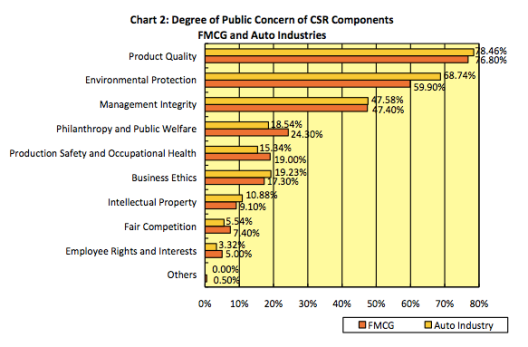
http://www.ruderfinnasia.com/files/csr-index-fmcg-and-auto-in-china-appendix.pdf

In fact, a quick search revealed that CRO Magazine even released a Top 10 list of “Corporate Responsibility PR firms” back in 2008, that placed Ruder Finn at No. 5. But how do you decipher such a ranking? If Ruder Finn was already being lauded for “CSR PR (?)” in 2008, what propelled them to create a new division now three years later?

And the big question: What is the differentiator in this burgeoning industry? 

I turned to Coles who will be leading the new practice and has spent 13 years in PR with the last seven at Ruder Finn, for some answers.

Sarah Coles, SVP, Ruder Finn

“When I started working with clients on CSR strategy, it wasn’t called CSR. Many were doing this without realizing it was called CSR. For example, at Novartis, we didn’t see our work in malaria treatment as CSR per se. It was part of their core mission, part of everyday business.”

“My first contact with CSR was when I started working with Gerber on childhood nutrition and later with Novartis. In the five years that followed, I got the chance to really see the effects of giving back to your community. I got to meet some of the patients and really saw firsthand the challenges that we in the western world would otherwise never understand. The whole experience really changed my impression of what needs to get done.”

The Case For CSR: What were the main motivations behind setting up a new practice focusing on CSR?

“There is a demand today to put together more strategic CSR programs; programs that are distinguished, unique to the company, and meaningful.”

“Consumers are pretty smart these days: They can see when something is reactionary and when it has been a longterm commitment. They trust brands that have longterm missions and whose programs are in sync with brand value.”

“A great example is the latest Tide for Hope campaign. It’s a perfect example of how core competencies can help provide value. This builds way more trust than something thrown together in a short-term cycle.”

“Ruder Finn also strongly believes that this is not only an opportunity to grow our practice but also to help define what the industry means by CSR and educate companies the issue to ensure that it continues to build as a best practice.”

The Nature of PR: Aren’t most programs reactionary in nature at first contact?

“It’s certainly a mix. Some companies who have been doing this for a long time are doing well and CSR contributes to that reputation. They build trust. Others are more reactionary but won’t be sustained or provide strategic value in the long run.”

“There is a real business case for CSR and companies are beginning to see that. Companies that have longterm Initiatives don’t have to resort to crisis management and there is value in that.”

Strategizing CSR: What then is the underlining ethos of the new practice?

“We learned a lot from working with PepsiCo on their Dream Machine recycling program. Today, we see a real opportunity in helping clients with cause marketing initiatives that reinforce their business practices and core competencies.”

“We counsel clients to do corporate social responsibility strategically. To build something that looks inside the company…dig around and see what they are already doing, what they stand for, what their core values are, and then create a campaign that captures all of that.”

Implementing CSR: How is implementing a CSR strategy going to differ from PR campaigns?

“We’re moving into pure strategy now. It’s not about short-term projects anymore. CSR is more about what makes sense for the business. How can I create something that my company stands for and does good for our community at the same time?”

“These programs go to the root of what CSR is all about: Good business sense that also provides value.”

Comments? Thoughts? Leave a comment or connect with me @AmanSinghCSR.

Share this:

  • Tweet
  • Email a link to a friend (Opens in new window) Email
  • Share on Reddit (Opens in new window) Reddit
  • Print (Opens in new window) Print
Like Loading...

As Steve Jobs Departs, A Review of Our Love-Hate Relationship With Apple…and Sustainability

24 Wednesday Aug 2011

Posted by Aman Singh in CSR

≈ 1 Comment

Tags

aman singh, aman singh das, Apple, brand management, brands with purpose, BSR Conference, Business, Carol Cone, cause marketing, CEO Network, consumer education, consumerism, corporate social responsibility, CSR, Edelman, Good Purpose Study, Green, In Good Company, Leadership, Management, Matthew Bishop, Performance with Purpose, Steve Jobs, Sustainability, sustainability, sustainable business, sustainable technology, technology, Work culture


As we slowly recover from the stupor of the not completely unexpected news that Steve Jobs has stepped down as Apple’s CEO, here’s a post from recent months that’s worth a retake.

Context: At Business for Social Responsibility’s (BSR) annual conference last year, Edelman’s Managing Director for Corporate Citizenship Carol Cone released the 2010 Good Purpose Study with a dramatic declaration: “Cause marketing is dead.”

The main overarching finding of the study, as regular readers will recall, was this:

87 percent of consumers worldwide believe that business needs to equate at least equal weight on society’s interests as on business interests.

Accompanying Cone at the release were panelists from Levi Strauss, PepsiCo and a personal favorite: The Economist‘s Matthew Bishop, who amid the hype and hoopla of the report, quietly asked: “Are we really going to stop buying Apple because of its crappy environmental policies?”

An excerpt, originally published on Vault’s CSR blog: In Good Company:

The GoodPurpose study by Edelman

“Cause marketing is dead”

That controversial statement is how Cone opened the panel, adding, “That [cause marketing] world is way over. Purpose has replaced cause marketing and branding.” Companies aren’t building marketing plans around a cause anymore, she argued. Rather, “they are infusing their very strategy and business model with purposeful corporate citizenship.”

Defining real purpose

Picking up where Cone left off, the always-entertaining Matthew Bishop began with a prediction: “If we continue the current road toward demanding transparency and corporate social responsibility, within the next five to 10 years, we will begin to see corporate board meetings being live streamed to select people.”

Chuckling about the ambitiousness of his own statement, he went on to note, “Likewise, the real question is how much of this data [in the Good Purpose study] is picking up on aspirations rather than real choices [of consumers].”

PepsiCo: Performance with Purpose

Alleging that PepsiCo’s latest mantra of “Performance with Purpose” was indeed a verification of this shift from cause marketing to purposeful corporate citizenship at companies, Communications Director for PepsiCo Americas Beverages Melisa Tezanos gave high points to CEO Indra Nooyi for pushing for a company-wide cultural change that today drives all their business functions.

[READ: Pepsi Takes Performance with Purpose to Heart: An Interview with Chief Personnel Officer Cynthia Trudell]

“However, Nooyi is completely unapologetic about giving ‘performance’ as much importance as the ‘purpose’ part and she makes no bones about it,” said Tezanos, adding that this helps everyone across the company stay committed to a culture of profitability with purpose. Explaining the drivers behind PepsiCo’s highly successful Refresh project, she further stated, “For millennials, social responsibility is huge. We’ve seen through research again and again that their purchase intent goes up significantly when the brand is associated with a good cause.”

And finally, referring to the findings of the Edelman study—and Cone’s earlier comment, she said, “Marketing used to be blamed for being short-termism. Today, marketers are the biggest defenders of long-termism.”

But would you give up Cola…or Apple?

Bringing the conversation back to a level plain field, Bishop concluded with a sobering thought, “But what is real and what is fake with purpose? Will Pepsi ever move beyond the heart of its products, i.e., increasing obesity? Are we really going to stop buying Apple [products] because they have crappy environmental policies?”

———————————–

Just some food for thought as we go on a whirlwind ride with the media in coming days on the history, the present, and the future of America’s favorite company, Apple. Don’t forget to add your perspective by leaving a comment or connecting with me @AmanSinghCSR.

And if you haven’t already, share your opinion on whether social media engagement make better brands or more effective leaders by taking this new BRANDfog survey on social media and leadership.

More on Edelman’s Good Purpose study: Encompassing 7,259 respondents in 13 countries, the study was conducted by consulting firm StrategyOne with the objective of analyzing whether—and how much—purpose plays into purchase decisions worldwide, and further, how these transform into consumer activism via social media.

Share this:

  • Tweet
  • Email a link to a friend (Opens in new window) Email
  • Share on Reddit (Opens in new window) Reddit
  • Print (Opens in new window) Print
Like Loading...

CSR and Sustainability in Mainstream Media: Citizen Journalism Or Simply Shared Value?

18 Thursday Aug 2011

Posted by Aman Singh in CSR

≈ 16 Comments

Tags

alberto andreu, aman singh, aman singh das, Business, Career advice, cause marketing, corporate governance, corporate social responsibility, creating shared value, CSR, CSR communications, CSR reporting, examples of CSR, henk campher, jobs in CSR, journalism best practices, Leadership, philanthropy, reporting standards, risk management, shared value, Social Media, social media, social responsibility, Stakeholder Engagement, Sustainability, sustainability, sustainability jobs, sustainable business, Work culture


One of my most common complaints, after “Why Don’t Executives ‘GET’ CSR?” is why mainstream media hasn’t been giving due diligence to sustainability, corporate governance, employee engagement, social responsibility, the confluence of business, society and the environment, and everything else that connotes CSR.

2010: Professor Aneel Karnani’s Case Against CSR and Michael Porter’s Creating Shared Value

In 2010, there were a few noteworthy attempts. Aneel Karnani’s editorial in The Wall Street Journal on The Case Against Corporate Social Responsibility, which evoked numerous blogs, response pieces, live panels and tremendous conversations.

[READ: Why There Is a Case for Corporate Social Responsibility, Despite WSJ’s Obituary]

Then came Michael Porter’s piece on Creating Shared Value in Harvard Business Review. Not only did Porter start a flurry of debates, white papers and panels, the report even introduced new hashtags for Twitter users: #CSV and #sharedvalue; and a new hangtag for consultants.

Everyone understood shared value, they could contextualize the term, even measure it, and therefore, make a better case for business and social responsibility.

Debating Semantics: CSR vs. Sustainability

At Vault and more recently at Forbes, my effort has always been to highlight issues that needed addressing, questioning, cajoling, and analyzing. Soon after Porter’s piece, I asked two experts in the field to take on the debate, which often gets lost as semantics: Henk Campher, SVP for CSR and Sustainability with Edelman, and Alberto Andreu, Chief Reputation and Sustainability Officer with Telefonica accepted the challenge.

Campher took us through the evolution of the term “CSR,” concluding that corporate social responsibility, does indeed, fit best.

Here’s an excerpt:

We should look at the description of CSR itself. Why do we use these very specific three words to describe what we do? I would argue that the concept is actually a very good description of what we do today. Here’s why:

Corporate implies that this is about business.

  • It not only describes that we are busy with a discipline involving business but goes deeper.
  • It is about profits – how we make them and how we can make more of them today and tomorrow.
  • It is not about charity.
  • It is about building a sustainable business model that will continue to deliver business results for stakeholders – especially shareholders.

Social tells us this is about society.

  • It is about the impact business has on society and how we can manage this impact to ensure both business and societal benefit.
  • Even the environmental part of CSR is about society – how we can minimize environmental impact to benefit society in the end of the day.
  • The new developments in CSR – sustainability – further continue to prove that CSR is about a mutually beneficial relationship between product and service development, and societal value chains.

Responsibility reveals that business does carry a responsibility in this world–to do business in a way that benefits both business and society. Further, this responsibility gives business the opportunity to create new solutions to the needs of society. I would even argue that it is their responsibility to develop these new solutions and benefit by capturing new avenues of sustainable profit.

All three concepts—Corporate, Social and Responsibility—tell us exactly what we do today. CSR is also the perfect reminder of the relationship between business and society, and the responsibility they have towards each other. None of the other concepts proposed today actually tell us what we are doing and what we should be doing.

Andreu on the other hand, prefers sustainability over CSR. His key points:

Using CSR as an expression is not an academic problem but one that has very tangible consequences for companies.

Organizational: The classic case of the left hand not knowing what the right is doing. Most of the time, the rest of the company doesn’t know what the CSR team/executives do.

Defined functional areas don’t suffer from the same vagueness. HR is dedicated to people, the finance team crunches numbers, the operations team is in charge of systems and back up, etc. But how do you identify the team dedicated to such a vast array of duties, i.e., diversity and inclusion, environmental management, climate change, ethics, corporate volunteer management, social sponsorships, entrepreneurship, multistakeholder engagement, transparency, SRI, reputation, and human rights?

What we get instead is a big mess.

Structural: If CSR is about philanthropy, management will accordingly participate in sponsorship, PR and communications exercises because their objective is maximizing the return of investment in reputation building, not responsible and ethical business. For most companies, in fact, it is common practice for the CSR manager not be associated with evaluating social and environmental risk.

Budgetary: Let’s be honest. We all know that it is much easier to ask for a budget to implement philanthropic programs than for mapping out a business’ core environmental risks, or implementing an ethics code, or auditing the supply chain. Even in the best case scenarios, other areas of an organization will manage these issues as part of their day-to-day work but the reality is that when something is difficult to communicate, resource allocation becomes a much harder task.

Management: It’s easy to measure the impact your donations are having by stringing out the appropriate key performance indicators (KPI) for any given year. But what KPI efficiently summarizes responsible behavior? The resulting scorecard is usually so large and convoluted that even the most dedicated executives give it up because of its sheer confusion and lack of focus.

His conclusion:

The concept of CSR has been exhausted, we have to expand it for effective impact, and for that, we have to adopt sustainability. And that’s why I say, “It’s sustainability, stupid!”

The reason these debates work is because they compel people to chime in, share from their own experiences and research, and crowd-source solutions that everyone can agree on. While the debate elicited several comments on Vault, the tweets, comments, advice and feedback continued to pour in for weeks after publication.

Citizen Journalism Or Simply Responsible?

At the end of the day, media — and journalists — have a responsibility to business, to society, and to a global audience as well. Back in India when I was making the leap from kindergarten to first grade, it was The Times of India and other newspapers that became my primary sources of reading, grammar, comprehension and GK (a common monicker for ‘general knowledge’ used by school kids, at least in those days!).

Today, journalists are expected to inform and engage a vocal audience of readers. Bring in social media tools and you have a vocal and ready consumer base willing and confident to discuss, debate and make choices in real time with you. And this is where the CSR debate with Campher and Andreu did well.

For me, as a journalist and a resolute CSR practitioner, it is indeed heartening to see that those small, infrequent attempts are now becoming frequent analogies and commentaries within the circles of mainstream media.

In fact, here are three reports in recent weeks that came to my attention:

  • Sustainability Jobs Get Green Light At Large Firms: by WSJ’s Careers Reporter Joe Light
  • Doing Good to do Bad? by WSJ‘s Justin Lahart
  • ‘Shared Value’ Gains in Corporate Responsibility Efforts: by NY Times‘ Steve Lohr

While I give kudos to Light, Lahart and Lohr for highlighting these, we — the journalistic community — must evolve to a state of journalism where good and bad business practices and sustainability are part of everyday reporting and dialogue.

The incredible work of Alice Korngold and Ann Charles on Fast Company, my fabulous co-contributors on Forbes’ CSR blog, and Marc Gunther at Fortune must become more commonplace, much more grassroots, more mainstream.

Some call it citizen journalism. For me, it’s just plain professional responsibility. We owe it to our organizations, the economy, future generations, our planet, and at the end of the day, to ourselves.

More:

The 2011 CSR Debate: CSR is an Evolution, Not a Revolution
The 2011 CSR Debate: “It’s Sustainability, Stupid!”

Share this:

  • Tweet
  • Email a link to a friend (Opens in new window) Email
  • Share on Reddit (Opens in new window) Reddit
  • Print (Opens in new window) Print
Like Loading...
Newer posts →

Let's Talk!

Virtual
732-322-7797
amansinghdas@gmail.com

Blogs I Follow

  • Nonprofit Chronicles
  • Learned On by Andrea Learned
  • Angry African on the Loose™
  • csr-reporting
  • The CSR Blog
  • In Good Company: Singh on CSR

My Cloud

Capitalism 2.0 CSR CSR reporting CSRwire ESG Guest Author HR Stakeholder Engagement Sustainability Uncategorized

Recently written…

  • Rationality is Ruining Us: Mayors, presidents and governors join major businesses in charting way forward on climate change
  • 2015: the year businesses recognize that climate change is real – and 4 other themes
  • Hardcore lessons of sustainability – ’10 Words or Less’
  • Brewing a Better Future [#BaBF] with Heineken: Examining the Many Flavors of Local Sourcing
  • From Conflict to Collaboration: Kimberly-Clark and Greenpeace Participate in LIVE Twitter Chat

What others are reading

aman singh aman singh das Brand Management Business corporate social responsibility CSR CSR reporting CSRwire ESG Leadership Stakeholder Engagement supply chain Sustainability sustainability Work culture

Categories

Most Read

  • None

Create a free website or blog at WordPress.com.

Nonprofit Chronicles

Journalism about foundations, nonprofits and their impact

Learned On by Andrea Learned

Angry African on the Loose™

I have opinions. I am from Africa. I live here now. I blog.

csr-reporting

Connecting the dots between Business, Society & the Environment

The CSR Blog

Connecting the dots between Business, Society & the Environment

In Good Company: Singh on CSR

Connecting the dots between Business, Society & the Environment

Privacy & Cookies: This site uses cookies. By continuing to use this website, you agree to their use.
To find out more, including how to control cookies, see here: Cookie Policy
  • Subscribe Subscribed
    • In Good Company: Singh on CSR
    • Join 119 other subscribers
    • Already have a WordPress.com account? Log in now.
    • In Good Company: Singh on CSR
    • Subscribe Subscribed
    • Sign up
    • Log in
    • Report this content
    • View site in Reader
    • Manage subscriptions
    • Collapse this bar
 

Loading Comments...
 

    %d